'It's not the end': Lithuania revives Russian assets push despite $90B loan

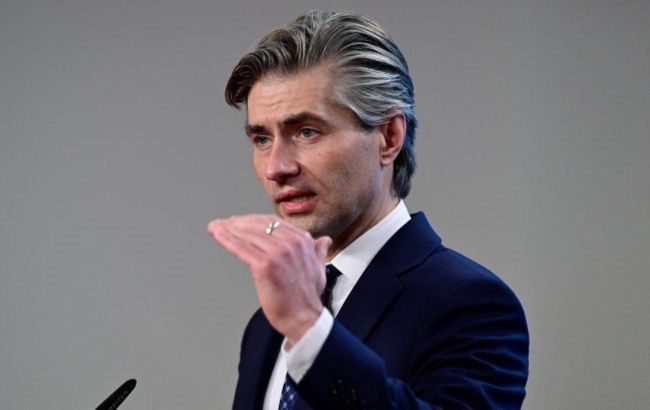 Lithuanian Foreign Minister Kęstutis Budrys (photo: Getty Images)
Lithuanian Foreign Minister Kęstutis Budrys has called on the European Union to bring the issue of using frozen Russian assets to finance Ukraine back onto the political agenda, as last year's agreement on a loan for Kyiv merely postponed the dispute, according to Politico.
'It's not the end'
Speaking at the GLOBSEC forum in Prague, Budrys said Europe should revisit the issue of frozen Russian assets, exploring ways to provide financial support to Ukraine and increase pressure on Moscow to reach a peace agreement.
He said the agreement on a €90 billion interest-free loan for Ukraine was a useful step, but not a final answer to Kyiv's long-term needs. "It's not the end," the minister said, referring to the debate over the assets.
He described immobilized Russian state assets in Europe as "the real resource of support to Ukraine" and "the real leverage to force Russia to negotiate."
Why EU chose loan
The EU opted for an interest-free loan of €90 billion for 2026 and 2027, financed through EU borrowing rather than the direct use of frozen Russian assets.
The decision was driven by legal objections from Belgium and political resistance from several countries, including Hungary.
Later, Hungary lifted its veto on the loan, but the issue of the assets remains unresolved, as EU leaders retain the option to use them to repay the debt if Russia fails to pay reparations.
Issue not closed
When asked whether he wants the frozen assets issue to return to the agenda, Budrys responded affirmatively.
"I'm looking forward to discussing it. It's not closed," he said.
The minister stressed that Ukraine will require significant funding even after the current support package is exhausted.
"Who believes that there will be no need for money for the upcoming years after these two years?" Budrys said, adding that Kyiv still faces a budget shortfall this year for security and defense needs.
Earlier, on April 23, the European Council approved a €90 billion loan package for Ukraine.
In mid-May, the EU was preparing to finalize the loan terms, which would have paved the way for the first tranche of more than €9 billion in June.
According to Politico, the funds are primarily intended for defense, including drone procurement.
The issue of frozen Russian assets remains open. In May, the Netherlands attempted to revive EU discussions on a mechanism to transfer up to €210 billion in Russian assets to Ukraine to finance defense.
Previously, countries including Bulgaria, France, Italy, and Malta opposed the use of these funds, while the European Central Bank warned about risks to confidence in the euro.