ISW uncovers Russia's real motive behind Zaporizhzhia nuclear plant disinformation

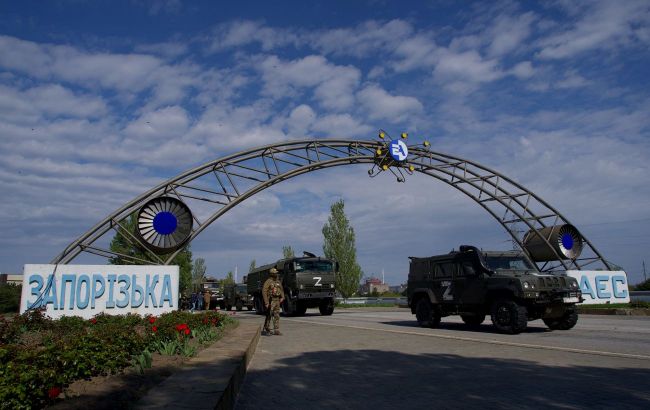 Photo: The situation at the Zaporizhzhia Nuclear Power Plant: The ISW explains Russia’s latest accusations against Ukraine (Getty Images)
For the second time in two days, Russia has accused Ukraine of striking the Zaporizhzhia Nuclear Power Plant. This may be linked to preparations for a new round of striking Ukrainian cities, according to the Institute for the Study of War (ISW).
On May 30 and 31, the ZNPP's occupation administration reported two alleged Ukrainian strikes on the plant. According to them, the machine room of the sixth power unit was damaged on May 30, and the transport workshop on May 31.
Both the Ukrainian Ministry of Foreign Affairs and the Southern Defense Forces denied the allegations. The Ministry of Foreign Affairs emphasizes that Russia launches a new wave of such statements ahead of every meeting of the IAEA Board of Governors.
On May 31, IAEA representatives at the plant confirmed damage to the machine room consistent with the effects of a drone strike. However, the agency did not determine whether the drone was Ukrainian or Russian.
Why Russia needs these fakes?
The Institute for the Study of War explains the Kremlin's logic. Russia systematically fabricates accusations of Ukrainian strikes on the Zaporizhzhia Nuclear Power Plant and civilian facilities to:
- Justify its own escalatory actions
- Justify large-scale strikes deep into Ukraine.
In the near future, Russia may use these attacks as a pretext for a new massive offensive. Ukrainian President Volodymyr Zelenskyy warned of such a threat on May 29 and 30.
Dmitry Medvedev, Deputy Chairman of the Russian Security Council, used information about the alleged strike to issue retaliatory threats. He stated that Russia would carry out symmetrical strikes on Ukrainian or NATO nuclear power plants if the Zaporizhzhia Nuclear Power Plant were destroyed.
On May 31, the National Security and Defense Council’s Center for Countering Disinformation debunked yet another Russian disinformation claim about six destroyed buses and two cars on the grounds of the Zaporizhzhia Nuclear Power Plant's transport workshop. The Center described this as a continuation of yesterday’s disinformation campaign regarding an alleged strike on the plant’s sixth power unit.
Meanwhile, the Ukrainian Ministry of Foreign Affairs had already responded to Russia's initial accusation and called Rosatom's statements an information operation ahead of the IAEA's June session.