How Ukrainian drones use AI and 'autopilot' to outsmart Russian jamming

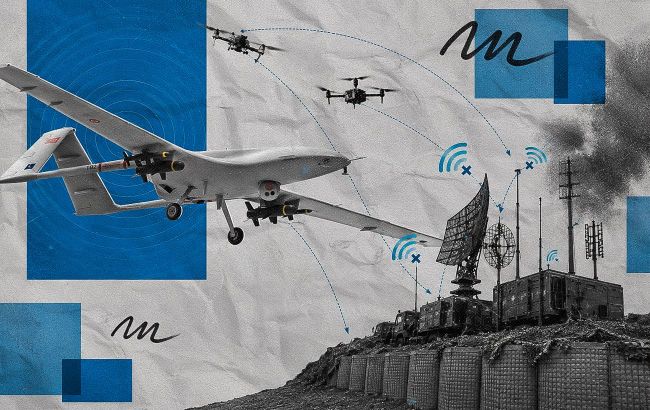 Photo: How Ukrainian drones outsmart Russian electronic warfare (RBC-Ukraine collage)
Using artificial intelligence, Ukrainian drones are learning to overcome Russian electronic warfare (EW) systems and penetrate enemy air defenses.
RBC-Ukraine explains when Russia began actively deploying EW systems, how Ukrainian engineers are training AI, and how these technologies are helping bring down Russian missiles.
Key points:
- Electronic warfare has been used in armed conflicts for more than a century. Its first documented use dates back to 1904.
- Drones are not equipped with electronic intelligence systems to detect EW equipment. Instead, they indicate to the operator that they have entered a jamming zone through a rapid weakening or complete loss of the control link.
- AI cannot be entrusted with selecting targets on its own. It could make mistakes and strike civilians or civilian vehicles, so ethical concerns remain a major obstacle to fully autonomous weapons.
- Ukrainian EW systems disrupt Russian cruise missiles by interfering with their radar altimeters and optical navigation correction systems.
How does electronic warfare work against drones?
Electronic warfare systems primarily counter drones in two ways.
The first is jamming. EW systems generate powerful radio interference that severs communication between the drone and its ground control station.
The second is GPS spoofing, which involves transmitting false satellite signals. As a result, the drone receives incorrect coordinates, deviates from its route, or loses orientation entirely.
In a comment to RBC-Ukraine, Maksym Teftul, Product Owner for the EW division at TAF Industries, explained that EW systems target radio receivers.
"In the pilot-drone system, there are two such receivers: one on the drone, which receives control commands from the pilot and signals from positioning systems, and another in the operator's controller, which receives the drone's video feed. A drone is effectively neutralized if either its control link or its video transmission is disrupted."
The performance of a radio receiver depends on its ability to distinguish the desired signal from background electromagnetic noise. To do that, the signal must exceed the noise level by a certain margin.
EW systems generate radio signals on the frequencies used for a drone's control or video transmission, artificially reducing the signal-to-noise ratio below the receiver's sensitivity threshold. To successfully jam a drone, the interference generated by the EW system must be stronger at the drone's or operator's antenna than the legitimate signal.
In other words, it is essentially a battle of signal strength. That is why EW systems generate interference with output power of 50 watts or more, far exceeding the transmission power of the pilot-drone system. As a result, some EW systems are designed to block the drone from receiving control commands, others disrupt the operator's video feed, while others interfere with the drone's satellite navigation signals.
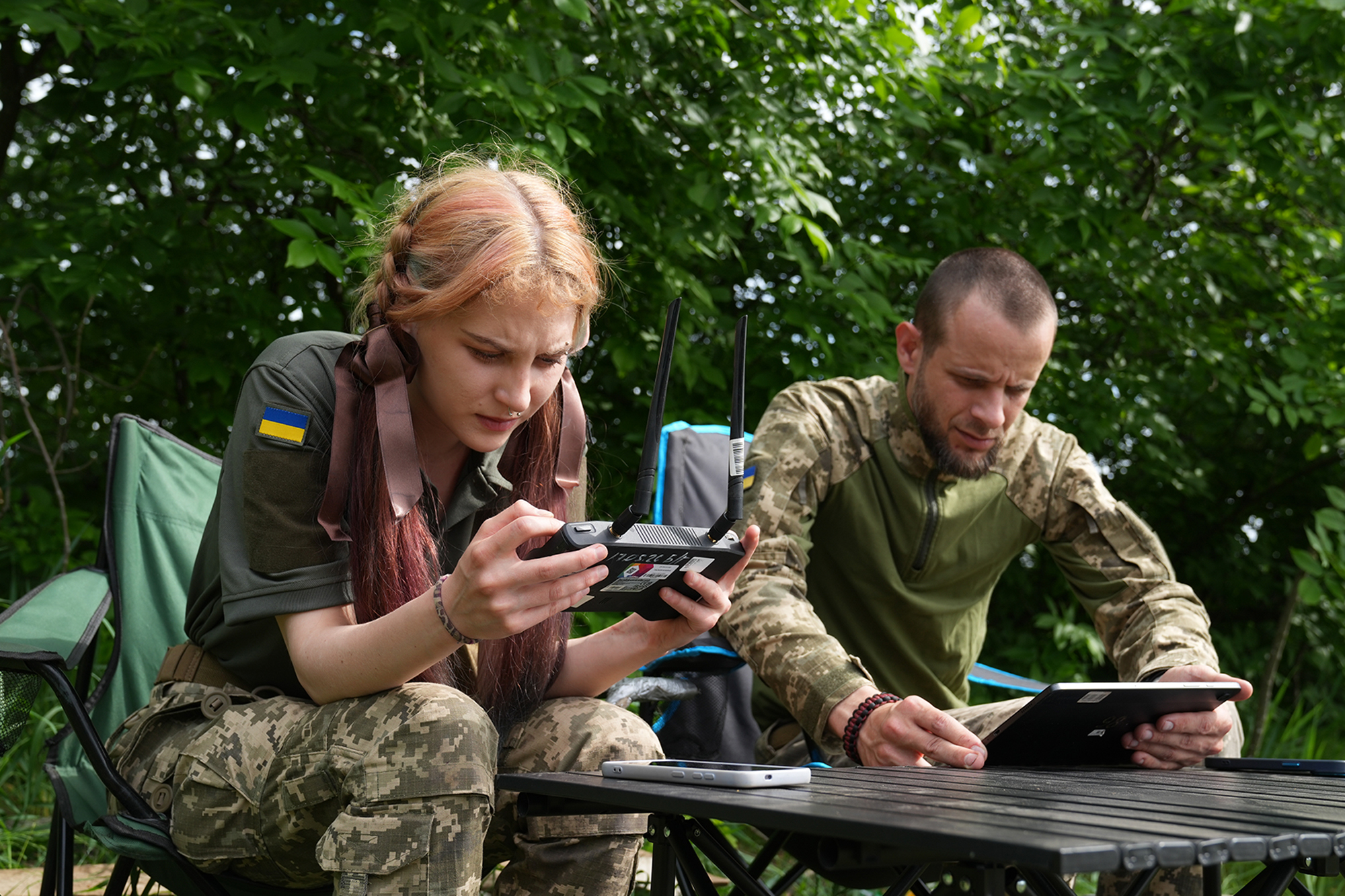
Photo: EW systems manipulate multiple parameters during drone operations (Getty Images)
When affected by electronic warfare, a drone may lose communication or its ability to navigate. Depending on its onboard algorithms, it may automatically return to base, make an emergency landing, hover in place, or crash uncontrollably.
When did EW systems appear on the battlefield?
Electronic warfare is far from a new technology. It has been used in military conflicts for more than a century, with the first documented case dating back to 1904. In the current war, however, Russia has been using advanced EW systems extensively against Ukrainian drones and communications since the first days of its full-scale invasion.
According to Ukrainian drone manufacturer Athlon Avia, which spoke to RBC-Ukraine, the first use of modern Russian electronic warfare systems was recorded back in 2014. During the war in Donbas, Russia tested large-scale systems such as the Zhitel and Leer-3.
After the full-scale invasion began in 2022, the use of EW became widespread. Today, it includes not only large military systems but also compact jammers mounted directly on armored vehicles or deployed at frontline positions.
TAF Industries notes that Russia has long possessed powerful operational and strategic-level EW systems based on heavy military vehicles. Dating back to the Soviet era, these systems were designed for conventional large-scale warfare similar to World War II, while also countering NATO's modern communications, command-and-control, and electronic intelligence capabilities.
The rise of drone warfare created demand for tactical EW systems - compact units designed to protect individual soldiers, military units, combat positions, or vehicles from drones. These systems typically feature modular designs and can be deployed at fixed positions or mounted on vehicles and armored equipment.
Electronic warfare became truly widespread in late 2023, when the standard 915 MHz control frequency used by FPV drones became increasingly vulnerable. Pilots had operated on that frequency with little difficulty until Russian forces began jamming it on a large scale.
How do Ukrainian drones detect and counter Russian EW systems?
Ukrainian drones are constantly evolving to overcome Russian electronic warfare.
For example, the Furia drone uses software-defined radio (SDR) modules, enabling narrowband data transmission with code-division channel separation, dynamic encryption, and continuous monitoring of the radio spectrum.
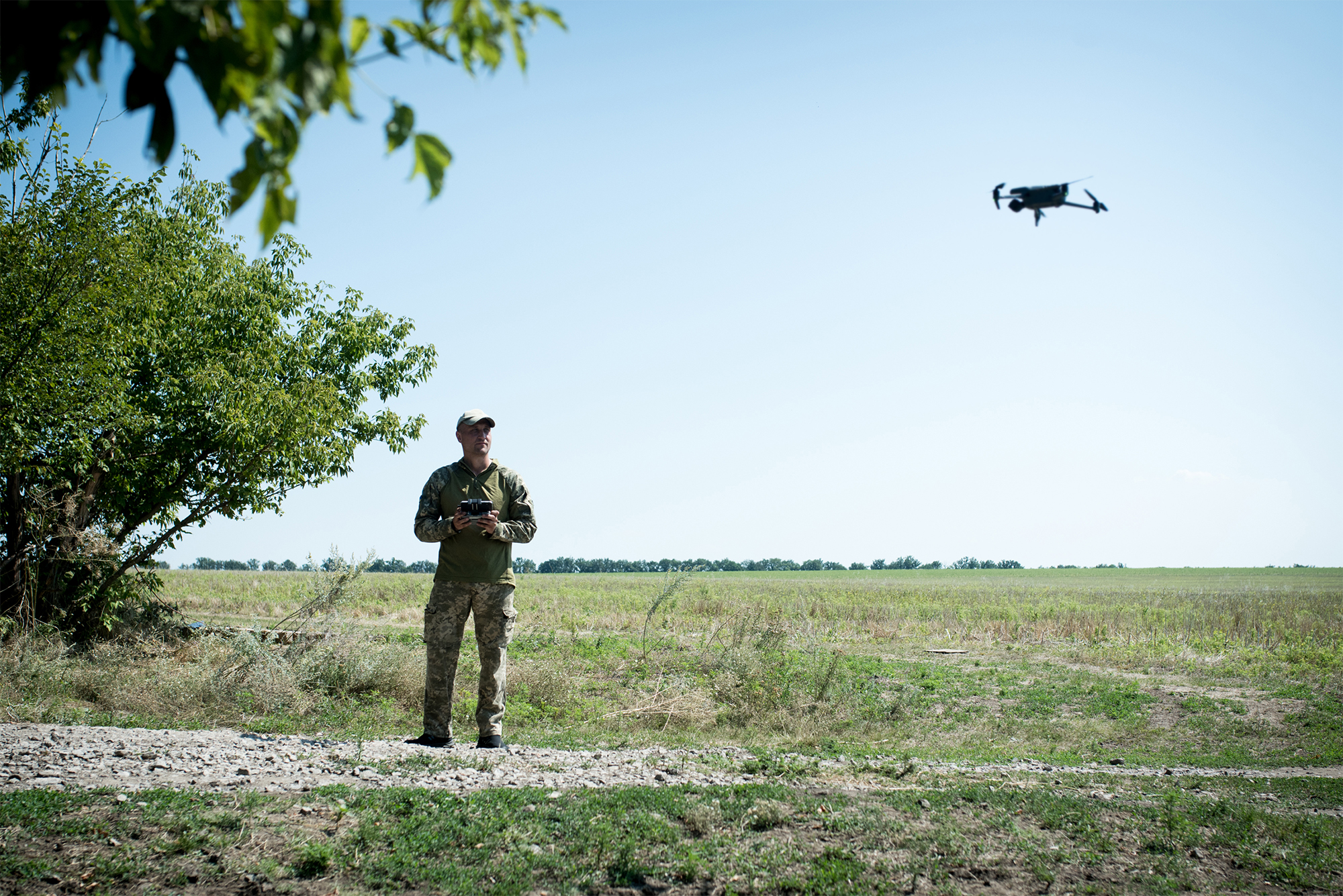
Photo: Ukrainian drones are learning to outsmart electronic warfare using AI (Getty Images)
According to the company, the system continuously scans preselected frequencies for interference and background noise. If it detects that the current communication channel is being jammed by an EW system, the drone automatically switches to a backup frequency within microseconds. This allows it to maintain a stable connection even in heavily contested electromagnetic environments.
Speaking to RBC-Ukraine, Andrii Atamanenko, Product Owner for FPV drones at TAF Industries, stressed that drones are not equipped with electronic intelligence systems capable of detecting EW equipment. Instead, the drone alerts the operator that it has entered a jamming zone through a rapid degradation or complete loss of the communication link. This may involve losing the video feed, control, or both.
According to Atamanenko, the most effective way to improve resistance to electronic warfare is dual-band communication. This enables the drone to operate on two widely separated frequency bands. If one band is jammed, control automatically switches to the other.
More broadly, autonomy is becoming an increasingly important feature of modern drone systems. Artificial intelligence, for example, enables a drone to lock onto a target and complete the final stage of guidance even without an active radio link to the operator.
Another growing technology is optical navigation. In this approach, the onboard computer compares real-time images of the terrain with maps stored in its memory, allowing the drone to navigate without relying on GPS.
Developers are also advancing radio navigation systems, in which a drone determines its position relative to fixed ground-based radio beacons. Its coordinates are then displayed at the control station without depending on satellite navigation.
New drones are also being equipped with AI-assisted terminal guidance. The operator locks the drone onto the target from several hundred meters away, after which the onboard electronics autonomously guide it to impact. If an enemy EW system is operating near the target, it cannot disrupt this final phase.
However, Atamanenko emphasized that AI cannot be allowed to choose targets independently because it could make mistakes and strike civilians or civilian vehicles. For Ukraine, ethical considerations remain a key barrier to fully autonomous weapons.
Another feature built into the automatic terminal guidance module is cruise control. Besides helping drones overcome enemy electronic warfare, it also allows them to pass through friendly EW zones, where many drones also lose communication.
When the control link is lost while searching for a target, the drone switches to autopilot and continues flying along its preset course and altitude until communication with the operator is restored.
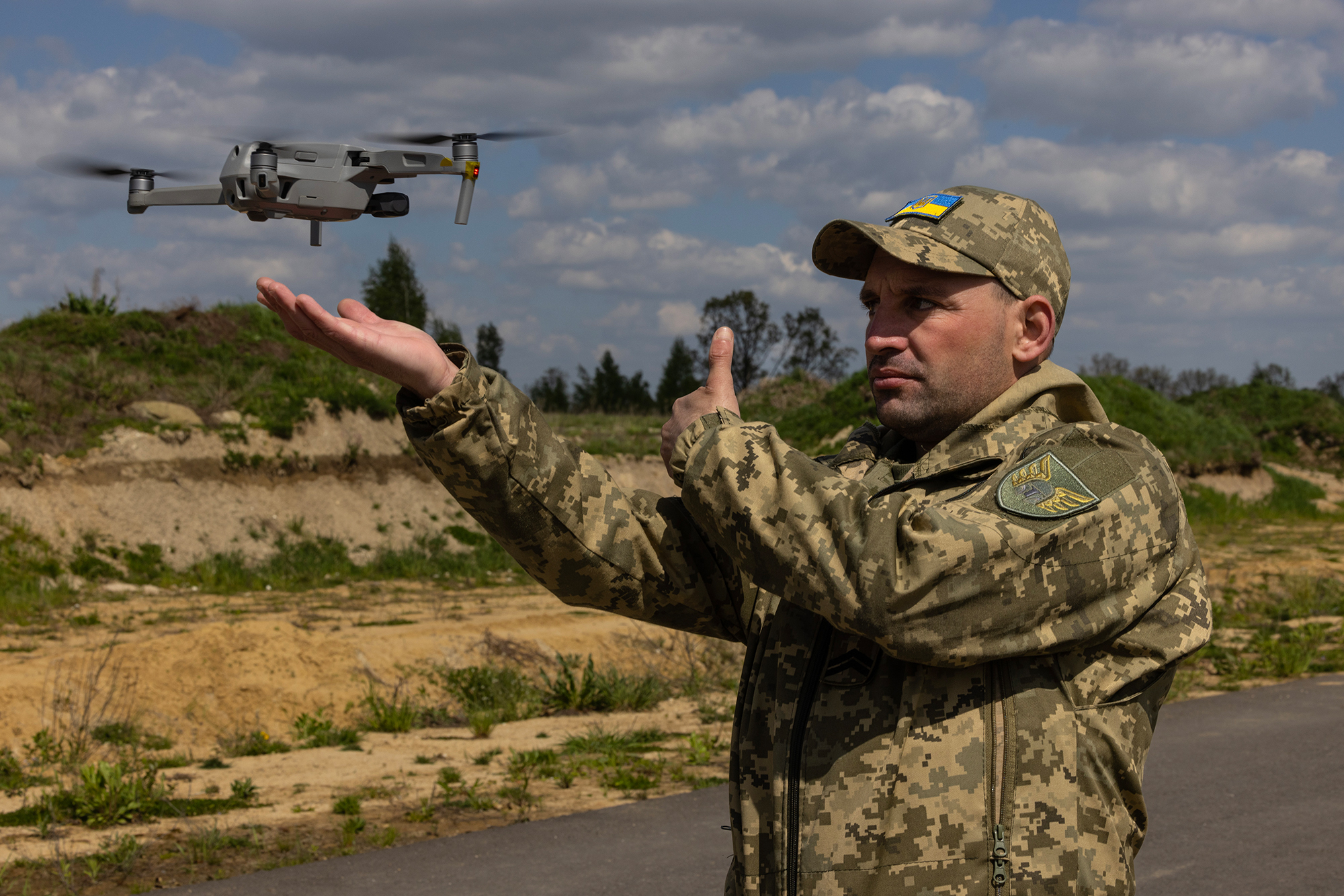
Photo: Modern drones are equipped with a "cruise control" function (Getty Images)
Another important way to counter EW systems that disrupt the video link between a drone and its operator is the use of modern digital video systems. Leading Ukrainian manufacturers equip their drones with digital cameras that encode the video feed and transmit it through high-power video transmitters. Such video streams are extremely difficult to intercept or jam.
How Ukrainian EW systems counter Shahed drones and cruise missiles
According to developers, Ukrainian EW systems are the first in the world capable of successfully disrupting Shahed drones as they approach cities, provided they operate in coordination with electronic intelligence systems and radar. Depending on the type of communications system installed on a Shahed drone, this requires between two and ten tactical-level EW systems working together.
These are fixed, directional EW systems designed to jam mesh communication networks. Combined with the suppression of CRPA (Controlled Reception Pattern Antenna) systems — a difficult but achievable task — they can force a Shahed drone to circle until it runs out of fuel. At the same time, GSM communications must also be disrupted.
Some Ukrainian EW systems also spoof GPS coordinates and altitude data transmitted to Shahed-type drones. As a result, the drones lose their intended flight path, waste their fuel reserves, and crash before reaching their targets.
Ukrainian EW systems can also interfere with cruise missiles. They disrupt radar altimeters and optical navigation correction systems, causing missiles to lose orientation and crash before reaching their intended targets.
Developers stress that electronic warfare is not designed to protect a specific facility, such as a port, factory, or grain terminal. Instead, its purpose is to disorient and suppress incoming enemy weapons before they reach their targets.
Because different types of drones and missiles rely on different navigation systems and communication links, there is no universal solution. Effective defense requires complex combinations of EW systems configured to work in close coordination with other air defense assets.
Who will ultimately prevail: EW or next-generation drones?
The drone manufacturers interviewed by RBC-Ukraine agree that the battle between drones and electronic warfare is a classic technological contest between sword and shield that never stands still.
Drone developers introduce new frequencies, communication protocols, and AI-powered capabilities. For a period of time, enemy EW systems struggle to counter these innovations, allowing drones to operate more effectively. But within a few months, the opposing side analyzes captured drones, updates its EW systems to counter the new technologies, and drone effectiveness declines once again.
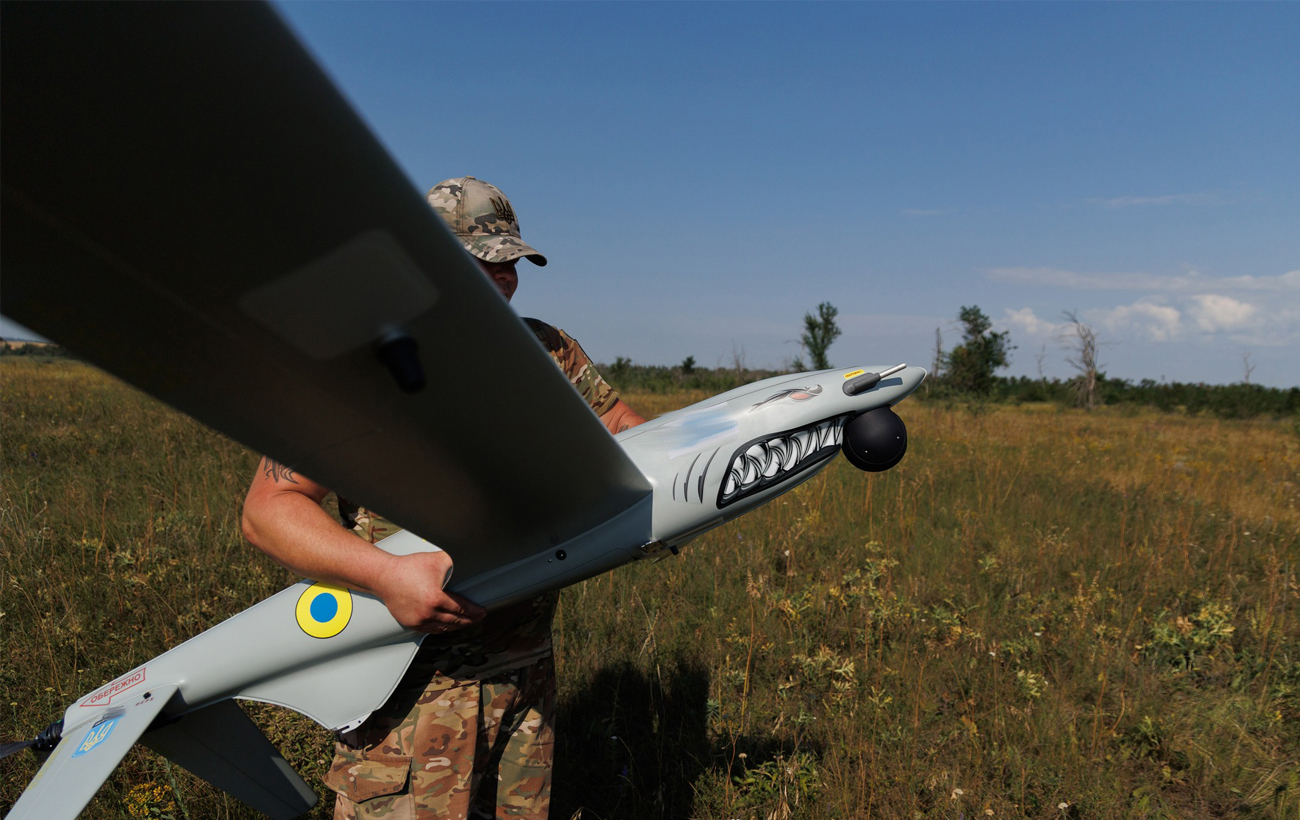
Photo: Drones and electronic warfare systems will continue to evolve side by side (Getty Images)
Developers then introduce new solutions, including greater autonomy, improved navigation methods, and more resilient data transmission. At the same time, electronic warfare systems continue to evolve. As a result, it remains a constant technological race in which neither side is likely to gain a lasting advantage.
BlueBird notes that electronic warfare is not an impenetrable shield. Technologies such as artificial intelligence, computer vision, and autonomous navigation allow drones to continue carrying out missions even after losing contact with the operator or satellite navigation in a jammed environment.
However, the process works both ways. The same advanced technologies are also being incorporated into increasingly sophisticated and adaptive electronic warfare systems.
"If a drone relies on radio communication, there will always be an EW system capable of jamming it. You can't argue with the laws of physics. But if a drone is independent of radio communication, EW systems become ineffective against it — as is the case with fiber-optic drones or drones that use automatic terminal guidance during the final approach to the target," Maksym Teftul, Product Owner for the EW division at TAF Industries, told RBC-Ukraine.
He added that AI operating without ethical constraints would eventually outperform electronic warfare systems. However, this would likely be followed by the rapid development of alternative countermeasures designed to physically disable drones by damaging their onboard electronics.
Technical specialists at BlueBird also told RBC-Ukraine that the winner in the drone-versus-EW race will not be a particular technology, but the side that can innovate faster and adapt more quickly to changing battlefield conditions.
Q&A (FAQ)
Q: How do electronic warfare systems affect drones?
A: Electronic warfare systems primarily counter drones in two ways. The first is jamming, in which powerful radio interference disrupts communication between the drone and its ground control station. The second is GPS spoofing, which involves transmitting false satellite signals that cause the drone to receive incorrect coordinates and lose its way.
Q: When was electronic warfare first used?
A: Electronic warfare has been used in military conflicts for more than 100 years. Its first documented use dates back to 1904. In the current war, Russia has employed advanced EW systems extensively against Ukrainian drones since the beginning of its full-scale invasion.
Q: How can drones overcome electronic warfare?
A: Artificial intelligence allows drones to lock onto a target and complete the final stage of guidance even without an active radio link to the operator. Another solution is optical navigation, in which the onboard computer compares real-time images of the terrain with stored maps, enabling navigation without GPS.
Q: How do Ukrainian EW systems affect Russian missiles?
A: Ukrainian electronic warfare systems disrupt the radar altimeters and optical navigation correction systems of Russian cruise missiles, causing them to lose orientation and crash before reaching their intended targets.