How people fought procrastination 100 years ago: Shocking story

 The unusual brain helmet invented to fight procrastination (photo: Science and Invention)
Procrastination is the silent killer of genius, driving us to do anything to avoid work. Today, we might delete social media or play music to stay focused, but in July 1925 the magazine Science and Invention proposed a radical solution: the Isolator helmet.
IFL Science reports on this incredible device from the past, which promised 100 percent productivity but nearly became a deadly trap.
The bucket helmet, a procrastinator’s worst nightmare
The inventors argued that even when alone, a writer or scientist is not safe from outside noises that can kill an idea before it is born. To create perfect silence, they designed a contraption that looked like a huge wooden bucket for the head, similar to the modern image of British politician Lord Buckethead.
The first prototype was made from solid wood, lined with cork on both sides, and covered in felt. Three pieces of glass were installed for the eyes, and a partition in front of the mouth allowed the wearer to breathe while blocking noise. This design reduced sound by 75 percent.
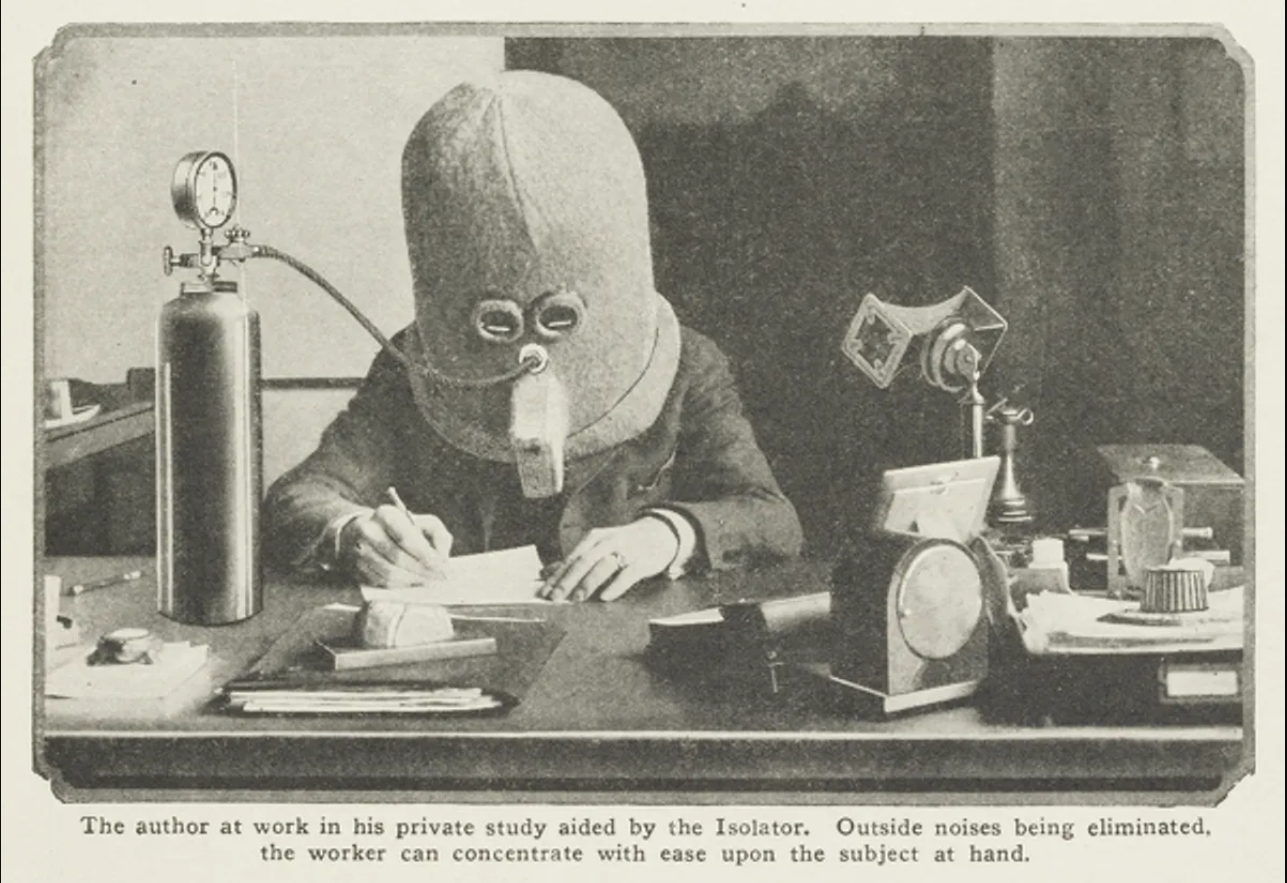 The Isolator blocked out all distractions, cutting off sight, hearing, and even restricting breathing. (Source: Science and Invention / scan from Syracuse University)
Brain sauna and oxygen hazards
Later, the inventors added an air pocket inside the helmet, which allowed it to block up to 95 percent of noise. However, a serious problem arose: after just 15 minutes in this sealed construction, the wearer would start to fall asleep. It turned out that the Isolator became a stifling brain sauna.
To keep the thinker alert, they attached an oxygen tank to the helmet. The inventors believed it would improve breathing, but they overlooked the risks:
-
Toxicity. Excess oxygen can be poisonous.
-
Deadly CO2 buildup. Without proper ventilation, the wearer would start inhaling their own carbon dioxide.
Anesthesiologist Dr. Daniel Fannell explains that a system without an exhaust would quickly lead to CO2 accumulation in the blood, which can be fatal. The tank would have to be replaced every half hour, a price too high for mere concentration.
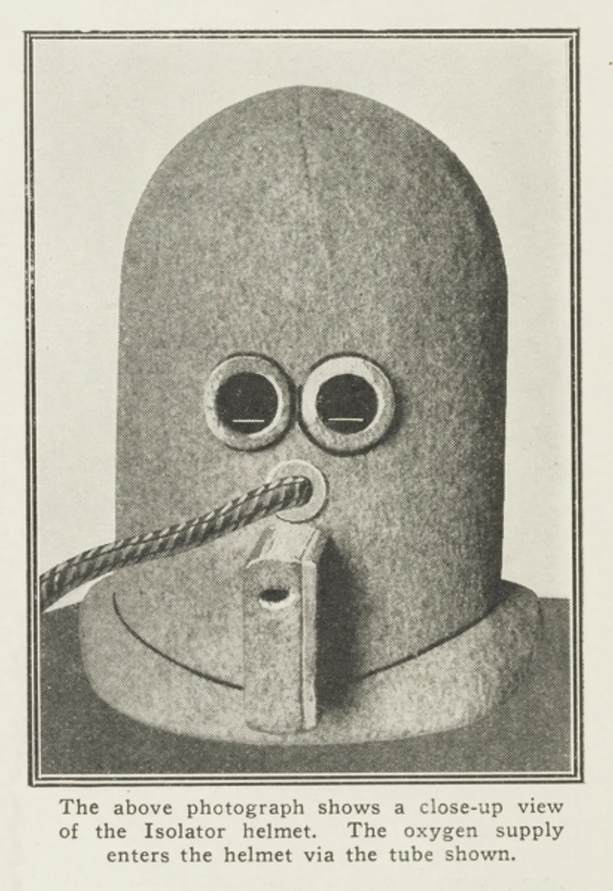
Special gadget to fight procrastination in 1925 (Source: Science and Invention / scan from Syracuse University)
Tunnel vision: working without cats or distractions
For those who weren’t claustrophobic enough, the Isolator completely restricted vision. The glass windows were painted black, leaving only two narrow horizontal slits. This created a tunnel vision effect.
The idea was to protect the wearer from any visual distractions, from a cute cat to a colleague who might accidentally light a cigarette near your explosive oxygen supply.
Whether this strange invention actually worked is unknown. But the fact that scientists barely even mention this helmet today shows that the Isolator never caught on.
Earlier, we wrote about the Ukrainian who actually discovered X-rays first.