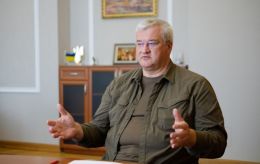
Hegseth surprised by scale of Iran attacks — Time

 Pete Hegseth (photo: Getty Images)
The Pentagon reports the destruction of 90% of Iran's missile potential and the elimination of Ali Khamenei during the Epic Fury operation. However, the scale of Iran's retaliatory strikes caught the US off guard, according to Time.
Consequences of the Epic Fury operation
According to the article, Pentagon estimates indicate that the US military operation was highly effective.
So far, they have managed to degrade or destroy 90% of Iran's missile potential and neutralize about 70% of its launchers. In addition, over 150 military vessels have been put out of action.
The main result of the strike was the elimination of Iran's supreme leader, Ali Khamenei, and many senior regime officials.
Despite military successes, analysts doubt that the administration of US President Donald Trump will be able to quickly achieve its strategic goals - the complete dismantlement of the nuclear program and regime change in Tehran.
Miscalculations and Iran's reaction
Tehran did not limit itself to symbolic retaliation but launched large-scale attacks across the region.
American and Israeli targets in countries long considered beyond the reach of the conflict, Kuwait, Bahrain, Saudi Arabia, the UAE, and Qatar, came under attack.
Sources at the edition note that US Secretary of Defense Pete Hegseth was caught off guard by the intensity of Iran's actions, as he had previously counted on the enemy's restraint.
"He was caught off guard. There’s no question. He was expecting the Iranians to fight back in some form. When they started attacking virtually the entire region, it sort of hit him like, ‘Whoa, we’re really in this now,'" said a source familiar with the Pentagon chief's thinking.
Meanwhile, Hegseth's spokesman, Sean Parnell, denies any lack of preparedness, stating that the US military anticipated all escalation scenarios - from the weakest response to the most extreme.
Situation in Iran and negotiations
Earlier, Donald Trump announced the destruction of the strategically important B1 bridge connecting Tehran to Karaj. The American leader confirmed that the facility was put out of action through the joint efforts of the US and Israel, and emphasized that it is time for the Iranian authorities to make a deal.
At the same time, the diplomatic process remains complicated due to Tehran's new conditions. As CNN reported, a point about recognizing Iran's sovereignty over the Strait of Hormuz has appeared on the list of Iran's demands for ending the war. This represents an expansion of the regime's previous ambitions, which had not previously included such a categorical stance.
Meanwhile, according to WSJ sources, Donald Trump has expressed willingness to end the military operation even without the immediate opening of the strait. The US president has made it clear to his aides that he is ready to compromise on this issue if the main military objectives inside Iran are achieved, and the operation to unblock trade routes can be postponed to a later date.