Growing food in space: Which plants could sustain life on Mars?

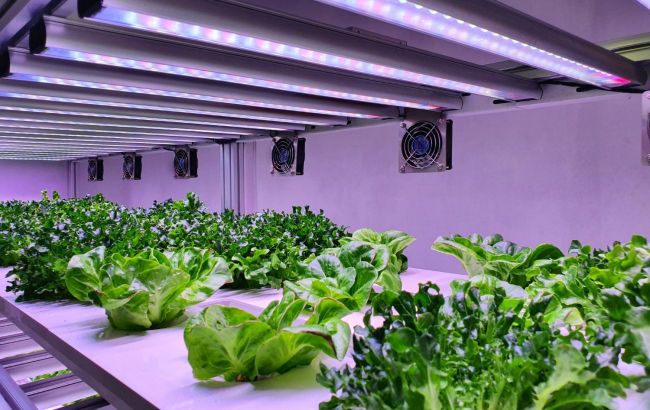 Most important for plants in space – low demands on soil and lighting (photo: Freepik)
Colonizing space is impossible without creating autonomous life-support systems, in which plants play a central role. Scientists have already identified “favorites” with the best chances of becoming the foundation of future colonists’ diets on the Moon or Mars, according to Candidate of Biological Sciences Oleksii Kovalenko.
Key points:
- The most promising crop for space is lettuce – it has already been successfully grown in orbit.
- For protein, scientists focus on legumes and cereals due to their nutritional value and short growth cycles.
- Martian soil contains sharp regolith crystals, so future colonists are unlikely to grow potatoes there; algae and fungi have better chances.
What is already flowering and growing in space
Experiments on space stations have shown that plants can not only grow but also complete their full life cycle in microgravity. Zinnias, for example, even flowered.
“Lettuce has the highest chances of ‘conquering’ other planets; it has already been grown in space. Many other plants can be cultivated too, as long as they are not too demanding in terms of substrate, lighting, etc.,” says Kovalenko.
Another promising space crop is legumes. They are considered a primary source of plant protein for astronauts. In addition, they naturally enrich the soil with nitrogen, which is critical for future greenhouses.
“Cereals are also a great choice for space because they have a short growing cycle and are less demanding than many other plants,” adds the scientist.
Will potatoes be grown on Mars?
At the same time, the scenario from the popular sci-fi movie The Martian, where the main character grows potatoes on the Red Planet, is questioned by the scientist.
“Martian soil has sharp regolith crystals, which negatively affect plants. If there are colonies on Mars, it is unlikely that potatoes will be grown right away. The most promising candidates will be algae and fungi,” says Kovalenko.