Gold at cost of poisoned water: Dangerous plan in occupied Luhansk

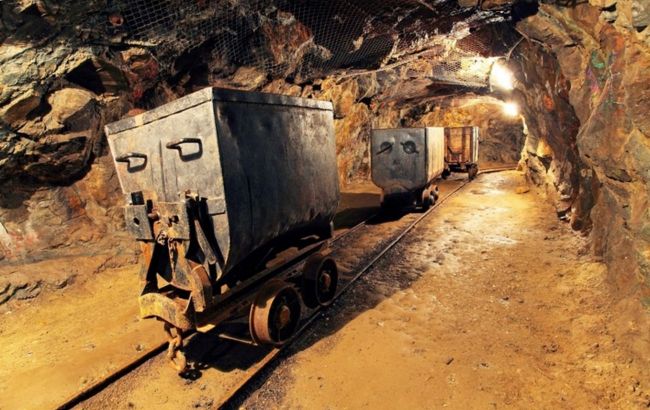 Gold mining in the temporarily occupied areas of Luhansk region (Illustrative photo: Shutterstock)
In the temporarily occupied Luhansk region, the Russian administration is rolling out yet another scheme for the illegal exploitation of natural resources, according to the National Resistance Center (NRC).
In the Antratsyt district, four so-called licenses have been issued for the exploration and extraction of gold, copper, and zinc.
According to the NRC, all permits were granted to a single entity, LLC Mining Company “Severnaya,” which has effectively been granted control over an area of more than 250 square kilometers.
According to NRC sources, this company was specifically created to operate in the occupied territories, with no real environmental standards or social responsibility.
The Russian authorities have granted it privileges, simplified approvals, and a closed control regime. This allows the company to start exploration and extraction without full environmental assessments or public oversight. The planned operations will use cheap and hazardous methods, including cyanide leaching and mercury.
Environmental experts warn that these technologies will inevitably lead to water contamination. Toxic substances will enter groundwater, rivers, wells, and boreholes. As a result, water will become unsuitable even for industrial use, while local residents risk chronic poisoning. This could lead to increases in kidney and liver diseases, cancer, and heavy metal poisoning.
The impact on soil and air is equally serious. Mining will destroy agricultural land, while lead, cadmium, and arsenic will accumulate in the soil and enter the food chain. Dust from quarries will spread for tens of kilometers, causing respiratory and cardiovascular diseases.
The entire process is completely closed to the local population: people are not informed about the scale of operations or the level of pollution.
“In essence, this is an accelerated extraction of resources from occupied Luhansk region, carried out simultaneously with the destruction of the environment and the undermining of basic living conditions for the civilian population,” the NRC warns.
Exploitation of mine water in the occupied territories
As RBC-Ukraine reported, the Russian authorities in temporarily occupied Donetsk have begun an information campaign to prepare the population to use mine water as an “alternative” to drinking water.
Experts estimate that mine water in the Donbas is highly mineralized, contains heavy metals, sulfates, petroleum products, radionuclides, and industrial chemicals - even Russian environmentalists acknowledge it is suitable only for technical use.
It has also been reported that the Russian authorities in Luhansk are selling off property.
Russian authorities in Luhansk have officially acknowledged a funding shortfall and announced plans for large-scale privatization.