Occupation authorities in Luhansk region sell off property, says Center for National Resistance

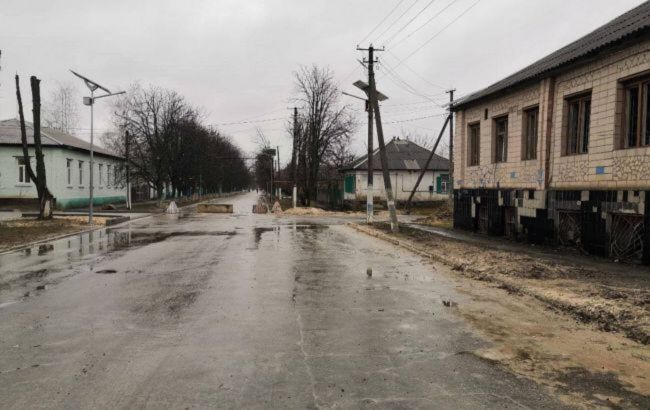 Photo: Luhansk Oblast (t.me/itsdonetsk)
In the temporarily occupied territory of the Luhansk region, plans have been announced to sell off so-called state property. The decision for 2026 is being presented as a way to cover budget shortfalls, but in reality points to growing financial problems, according to a publication by the Center for National Resistance.
Occupation structures in the Luhansk region have officially acknowledged a funding shortfall, announcing the launch of large-scale privatization.
The sale of assets is being framed as "expenditure optimization," but the figures and mechanisms cited point to emergency measures and a lack of sustainable revenue sources.
Privatization as budget crisis sign
The minimum plan предусматривает proceeds of at least 120 million rubles. This figure directly indicates a budget deficit in the occupation entity and a reduction in financial transfers from Russia.
The structures have virtually no own-source revenues, making asset sell-offs the primary means of plugging budget gaps.
Any assets at risk
Under the category of "unused property" may fall administrative buildings, enterprises, and elements of infrastructure.
These are assets that belong to the people of Ukraine but are being used by the occupation administration as a source of quick cash.
Closed schemes and loyal buyers
According to insiders cited by the Center for National Resistance, participation in the privatization will be restricted.
Buyers are expected to be entities linked to the administration, with closed procedures, manual approvals, and undervalued asset pricing. As a result, property is being redistributed in a controlled manner among affiliated groups.
No development, but colonial approach
This "privatization" is not aimed at economic recovery. It represents the sell-off of Ukrainian state and municipal property to temporarily patch budget holes.
Resources in the temporarily occupied territories are being used to sustain the regime rather than serve residents.
Separately, numerous cases of streptoderma have been recorded among schoolchildren in the temporarily occupied city of Alchevsk. Despite this, in-person schooling continues as usual, with no quarantine measures or distance learning introduced, significantly increasing the risk of infection spread and posing a direct threat to children’s health.
In Yalta, areas on the Ai-Petri Plateau initially earmarked for ski infrastructure development are being actively diverted to private construction. Even after public backlash and official decisions to dismantle illegal structures, most of these buildings remain in place.