Global oil market on brink of collapse. Production drops to historic low, says IEA

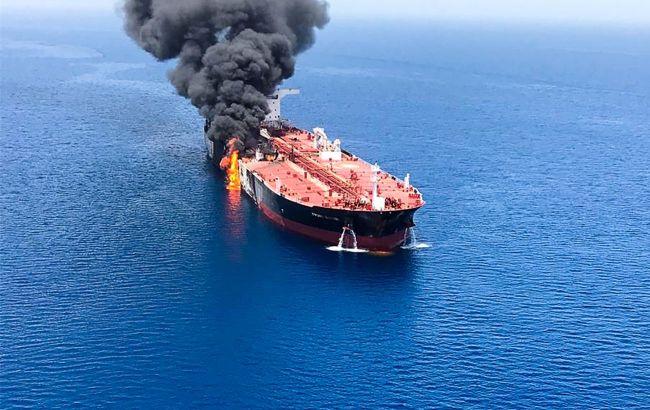 Photo: oil production fell by 10 million barrels due to the war (Getty Images)
The global oil market is experiencing a historic shock due to the large-scale war in the Middle East. Disruptions in tanker traffic and attacks on infrastructure have reduced oil production in the region by millions of barrels, triggering a surge in prices, according to a report from the International Energy Agency (IEA).
Causes and scale of the crisis
The report emphasizes that the war in the Middle East has led to an almost complete halt of shipping through the Strait of Hormuz — a key waterway for global fuel exports. Oil flows have dropped from 20 million barrels per day to a historic low.
Due to the inability to export crude and the overfilling of storage facilities, the Gulf countries have been forced to reduce production by at least 10 million barrels per day.
The most difficult situation is being observed in Saudi Arabia, the UAE, Kuwait, Iraq, and Qatar.
In addition, ongoing attacks and the lack of markets have caused oil refining capacities of over 3 million barrels per day in the region to come to a standstill.
Market reaction and demand forecast
Brent crude oil prices sharply rose following US and Israeli airstrikes on Iran on February 28, reaching over $120 per barrel. By mid-March, prices had somewhat stabilized at around $92 per barrel.
IEA analysts have lowered the forecast for global oil demand growth in 2026 by 210 million barrels per day.
The main reasons were:
-
Mass cancellations of flights in the Middle East;
-
Disruptions in liquefied natural gas (LNG) supply;
-
Global economic instability due to high energy prices.
IEA emergency measures
To stabilize the situation, IEA member countries on March 11 made an unprecedented decision to release 400 million barrels of oil from their emergency reserves onto the market.
It is noted that global fuel reserves are currently at their highest level since 2021 (over 8.2 billion barrels), providing a certain "buffer" to mitigate the impact of the conflict.
Situation in the oil market
Oil prices exceeded $100 per barrel immediately after the outbreak of large-scale hostilities in the Middle East.
Due to the sharp jump in fuel prices, the US administration began preparing radical measures to stabilize the domestic market.
At the same time, Republicans in Congress criticized the administration’s actions, pointing to the need for long-term solutions in energy security.
In particular, the White House considered the possibility of using the strategic reserve to release over 100 million barrels onto the market.
It was also reported that the International Energy Agency proposed releasing the largest oil reserves in history to counter the sudden rise in oil prices caused by the US and Israeli war against Iran.