Germany ready to secure Hormuz Strait if conditions met

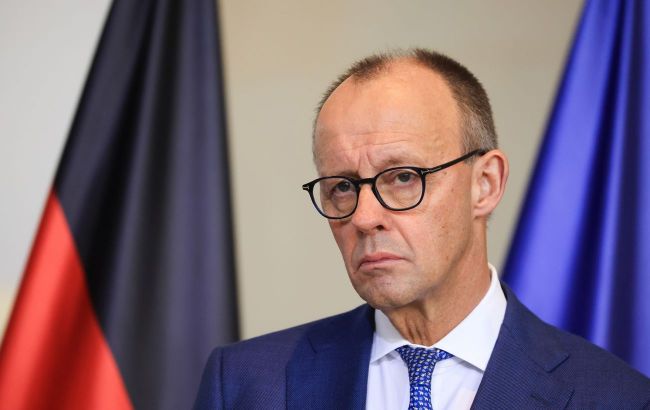 Photo: Friedrich Merz (Getty Images)
German Chancellor Friedrich Merz has expressed his willingness to support a mission to ensure the safety of shipping in the Strait of Hormuz, but stressed the need for an international mandate, according to Bloomberg.
Condition for Germany’s participation
Germany can join the mission to protect shipping lanes in the Strait of Hormuz only if there is an international mandate. Chancellor Friedrich Merz announced this after a conversation with US President Donald Trump.
According to him, the optimal option is a UN Security Council resolution, although the process is influenced by the position of permanent members, particularly Russia, which holds a veto.
"I told President Trump again yesterday during our conversation that we are prepared to help, for example, secure passage through the Strait of Hormuz following a peace agreement," Merz says.
US requests and allies' role
Washington expects concrete commitments from its European partners regarding their participation in ensuring regional security after the end of hostilities in Iran.
In particular, the US is calling on its allies to present their own plans as soon as possible.
At the same time, a coalition led by the United Kingdom, which includes more than 40 countries, including European nations, Japan, and Canada, has already expressed its readiness to facilitate the opening of the strait.
About 20% of the world’s oil and gas supplies pass through it, so its blockage has caused a sharp rise in prices and fears of an energy shortage.
Political nuances and NATO
The Chancellor also emphasizes that Germany’s participation requires approval from the lower house of parliament. According to him, the American side understands this.
"The American president knows this, and he respects it as well," Merz notes.
Separately, the parties discussed the situation surrounding NATO.
Previously, Donald Trump had criticized allies, accusing them of providing insufficient support, and even raised the possibility of the US withdrawing from the alliance.
Secretary of State Marco Rubio also spoke of a possible reassessment of relations following the end of the war in Iran.
Merz emphasizes his intention to continue the dialogue with Washington ahead of the NATO summit and stressed the importance of preserving the alliance for Europe’s security.
"It’s my firm intention to do everything possible to maintain NATO’s protection for Europe," Merz says. "This alliance is, at least for the time being, irreplaceable."
US President Donald Trump announced that he had agreed to a two-week ceasefire with Iran, during which the parties intend to bring the negotiation process to a conclusion and agree on a final deal.
NATO Secretary General Mark Rutte reported that US President Donald Trump has expressed significant disappointment over the allies’ unwillingness to join military action against Iran.