German company Quantum Systems reveals its first naval drones

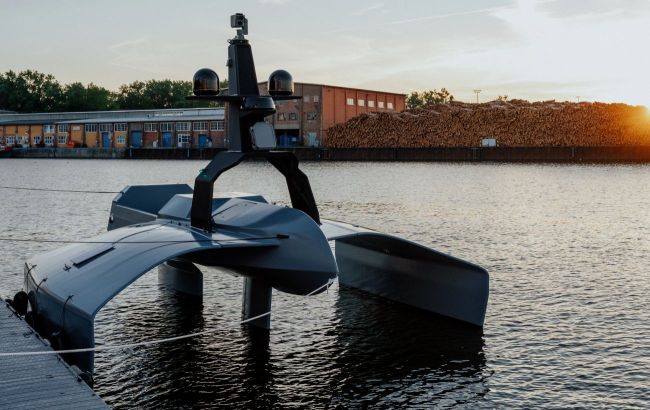 Photo: Maritime drone made by German company (Quantum Systems)
German company Quantum Systems, whose drones have been used in Ukraine for several years, is moving into the maritime domain. The company has unveiled two new unmanned systems, Seavex and Subvex, designed for persistent surveillance, critical infrastructure protection, and countering enemy drones, according to Quantum Systems.
What Seavex and Subvex can do
The systems were unveiled in Portugal during NATO exercises jointly organized by the Portuguese Navy, the University of Porto (FEUP), NATO CMRE, NATO JCGMUS and the European Defence Agency. Both systems will undergo maritime trials to validate their performance parameters under operational conditions.
Seavex is an unmanned surface vessel (USV) designed for persistent reconnaissance missions and can remain at sea for up to two months. It is equipped with a surveillance radar, a drone-detection radar and electro-optical sensors with onboard data processing.
Seavex can also launch and recover UAVs, as well as dock with, recharge and retrieve data from underwater drones.
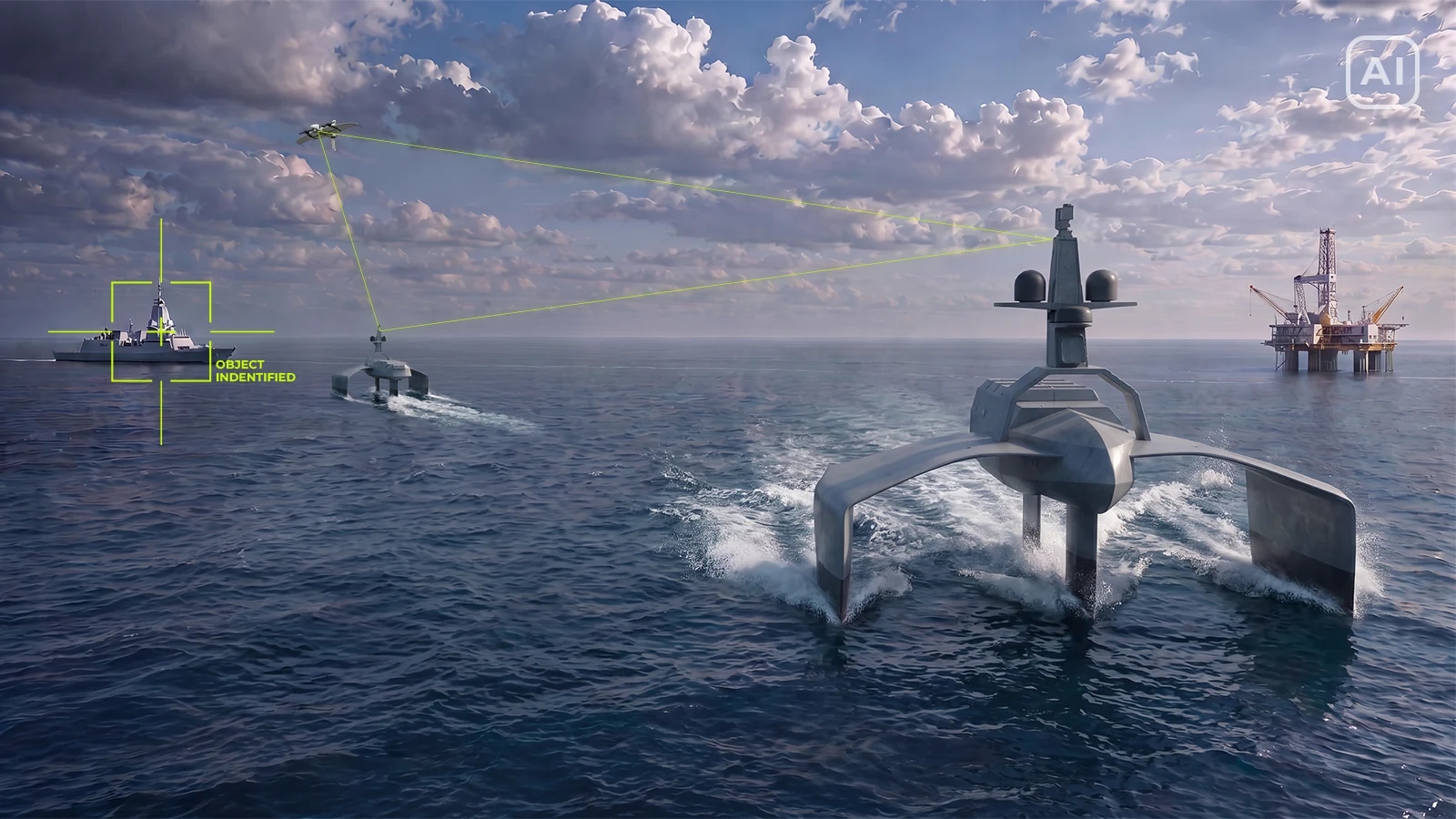
Photo: An infographic showing how the German manufacturer's maritime drones operate (Quantum Systems infographic)
Subvex is an unmanned underwater vehicle (UUV) powered by artificial intelligence and capable of operating at depths of up to 6,000 meters. It is equipped with sonar and acoustic sensors, can operate autonomously for up to four days and can work in groups of several vehicles simultaneously.
In passive mode, Subvex can remain on the seabed for weeks while conducting covert surveillance.
Together, the systems expand surveillance capabilities from the surface to deep-water areas. They can be used to protect marine infrastructure, guard maritime borders, conduct anti-submarine surveillance, and perform broader maritime monitoring.
How it fits into Quantum Systems' strategy
Both new systems are integrated into the MOSAIC UXS software platform, which already connects the company's aerial and ground unmanned systems. This allows a single operator to receive data from different domains through one interface and integrate systems made by different manufacturers.
"We started in the air, expanded to land, and now we are going to sea. But the real step forward is not adding another domain. It is connecting them," Quantum Systems co-founder and co-CEO Florian Seibel said.
According to Dirk Zademack, vice president of Quantum Maritime, the main challenge in maritime operations is the vast areas that need to be monitored with limited numbers of crews and equipment. That is why the company is bringing the same concept of collaborative unmanned systems it already uses in the air and on the ground to the maritime domain.
The maritime launch is not Quantum Systems' first move beyond purely reconnaissance drones. Earlier this year, the company announced an investment in Ukrainian manufacturer WIY Drones to expand production of the STRILA anti-aircraft drone, its main interceptor capable of destroying targets such as Shahed drones.
WIY Drones and Quantum Systems later upgraded the drone. The STRILA-2 received a rocket booster adapted from the German Jäger drone, allowing it to take off almost vertically and climb several kilometers in seconds. It also received AI-powered software that enables the interceptor to identify and lock onto targets autonomously, even when the enemy is actively using electronic warfare.