Fico pushes for direct Ukraine-Russia communication line ahead of EU summit

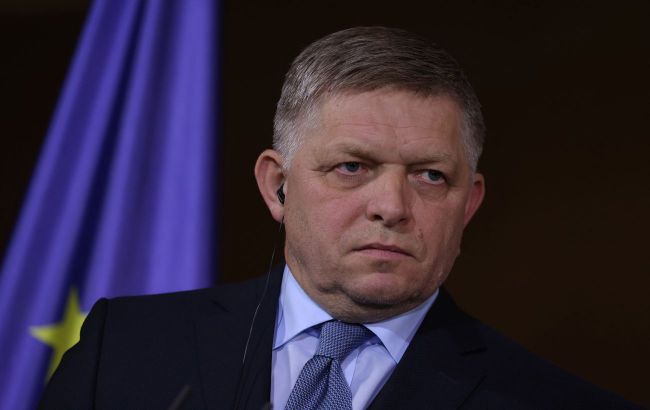 Photo: Slovak Prime Minister Robert Fico (Getty Images)
Slovak Prime Minister Robert Fico wants to propose that the European Union establish a direct communication line between Ukraine and Russia, according to aktuality.sk.
According to the outlet, Fico is set to meet Hungarian Prime Minister Peter Magyar in person for the first time today ahead of the European Council meeting.
He will also hold talks with Ukrainian President Volodymyr Zelenskyy regarding the future of relations between the two countries.
"I assume that we will primarily discuss Ukraine's accession process to the European Union," Fico said.
The Slovak prime minister stated that he sees no reason why he should not support the joint communiqué on Ukraine following the summit.
At the European Council meeting, Fico intends to propose the establishment of a direct communication line between Russia and Ukraine.
He stressed that if Ukraine has no prospects after the war ends, "we could witness a massive expansion of organized crime."
Fico also noted that he has never rejected Ukraine's interest in joining the EU.
"The government I lead will not support any shortcuts, exemptions, or alternative paths around the regular accession process to the European Union. Ukraine must meet all conditions," he emphasized.
The Slovak prime minister also argued that the EU is not capable of playing a decisive role in negotiations aimed at achieving peace in Ukraine.
He repeated his call for replacing the EU's High Representative for Foreign Affairs and Security Policy, a position currently held by Kaja Kallas.
Fico also said it was a major mistake to reject former German Chancellor Gerhard Schröder as a potential European negotiator in peace talks on Ukraine.
"A negotiator should be someone who knows both sides," he said, adding that Schröder's work in the region is well known and that the idea should be reconsidered.
Europe's role in Ukraine-Russia negotiations
As a reminder, discussions about Europe's participation in peace negotiations intensified following a meeting in Cyprus in May.
At that time, Ukrainian President Volodymyr Zelenskyy urged EU leaders to become more actively involved in the negotiation process between Kyiv and Moscow.
Earlier, Politico reported that the European Union has been discussing the possibility of appointing a special representative for negotiations with Russia.
Potential candidates reportedly included António Costa, Alexander Stubb, Mario Draghi, Sauli Niinistö, and Jean-Claude Juncker.
The name of former German Chancellor Angela Merkel was also mentioned, but she indicated that she does not consider herself a suitable candidate.
Meanwhile, the candidacy of former German Chancellor Gerhard Schröder, proposed by Russian President Vladimir Putin, was publicly rejected in both Berlin and Brussels.
EU foreign policy chief Kaja Kallas directly described Schröder as a "lobbyist for Russian state-owned companies."
Recently, Zelenskyy stated that Europe could be represented in negotiations by the E3 countries — France, Germany, and United Kingdom.
Media outlets also reported that a senior adviser to European Council President António Costa held two phone conversations with a high-ranking Russian official from Putin's inner circle.
Costa reportedly approached the Kremlin with a request to open a communication channel. It was the first such move by the EU since Russia's full-scale invasion of Ukraine began.