Fatigue is not surrender: Most Ukrainians reject Russia's ultimatums, poll shows

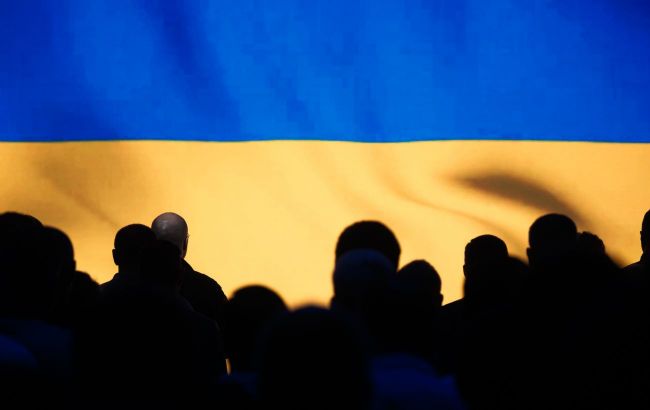 Russia is perceived as an existential threat in Ukraine (Illustrative photo: Vitalii Nosach, RBC-Ukraine)
Public opinion on war and peace in Ukraine has not changed drastically in recent times. There is a certain consensus among people, says Anton Grushetskyi, executive director of the Kyiv International Institute of Sociology (KIIS), in an interview with RBC-Ukraine.
Why Ukrainians are not an obstacle on the path to peace
According to a recent KIIS survey on war, peace, trust in Western partners, and the domestic situation, public opinion on war and peace has not changed drastically in recent times.
“There is a certain consensus among people: on the one hand, most Ukrainians are open to negotiations and even to difficult compromises,” the expert said.
At the same time, the trend remains that the absolute majority of Ukrainians reject an option that would provide for:
- Official recognition of part of Ukrainian territories as Russian;
- Withdrawal of troops from territories controlled by Ukraine;
- A significant reduction of the army;
- The absence of reliable security guarantees for Ukraine.
“More than 70% of Ukrainians reject that, approximately the same as in September,” Grushetskyi noted.
In general, Ukrainians are not an obstacle to achieving peace through political and diplomatic means.
“More than 70% of Ukrainians were ready to accept the option proposed by Europe. The one that includes freezing the front line, but Ukraine receiving certain security guarantees. And, of course, without any official recognition of the territories occupied by Russia as an official part of the Russian Federation,” the head of KIIS said.
He added that Ukrainians have an understanding: “We are ready for peace even with a freezing of the front line, but agreeing to the demands put forward by Russia is unacceptable for Ukrainians.”
“63% say that we are ready to endure the war for as long as necessary to achieve conditions acceptable for Ukraine,” the expert acknowledged.
What emotions do Ukrainians feel today?
Grushetskyi shared that even despite exhaustion, Ukrainians are not ready to give in.
“One of the emotions Ukrainians feel is psychological exhaustion. About 70% of us, in response to a direct question about what they feel, say that their psycho-emotional health has worsened since the start of the Russian invasion. And there is quite high anxiety,” he said.
Another emotion Ukrainians are experiencing now, according to him, is uncertainty.
“If you ask how long the war will last, one third of Ukrainians will say: we do not know. We do not know and cannot say, because the situation is very uncertain,” the head of KIIS explained.
At the same time, “Ukrainians realize that we are not only capable, but must resist,” since “Russia is perceived as an existential threat.” And it leaves not much room for compromise.
Do Ukrainians believe the war will end soon?
When asked “What is Russia’s goal in the war?” 60–70% of citizens consistently answer that “Russia’s goal is the physical destruction of Ukrainians or the destruction of the Ukrainian nation.”
“There is a clear understanding that Russia poses an existential threat,” Grushetskyi said.
A large percentage say: even if Russia does not want to destroy the Ukrainian nation, it definitely wants to seize most of our territories and establish a puppet regime there.
“People understand that Russia is not going to stop, that it is going to continue its aggression,” the expert added.
He noted that only a small part of Ukrainians believe that there are any simple solutions.
“As some partners tell us: ‘Give up Donbas and the war will end.’ Ukrainians do not share this point of view,” Grushetskyi emphasized.
In a recently published survey, “only 9% of Ukrainians expect the war to end before the beginning of 2026, and only another 14% expect it at least in the first half of 2026.”
“One of the reasons is that people understand: it is not that agreements cannot be reached, but that Russia itself is not going to end the war,” the expert explained.
He recalled that “even in the case of a peace plan that provides reliable security guarantees for Ukraine (the Ukraine–Europe plan), in September about 60% answered that Russia would most likely attack Ukraine again.”
How hostile attacks affect people’s mood
The moods prevailing today among the majority of Ukrainians completely destroy the thesis of hostile propaganda that Ukrainians are ready to surrender if the war continues (if attacks continue, blackouts occur, etc.).
“In October 2022, immediately after large-scale attacks on Ukraine’s energy infrastructure and power outages began, we asked Ukrainians: ‘Let’s imagine Russia destroys our energy sector. What is better for us — to go to negotiations, to make difficult concessions, or to continue resisting?’ The majority answered that we should continue resisting,” Grushetskyi said.
He added that the situation now is similar.
“Attacks only strengthen the feeling that Russia is a terrorist, Russians are terrorists, and they will continue destroying our infrastructure,” the expert stressed.
He noted that what the president spoke about recently is what sociologists hear from their respondents from all corners of Ukraine.
“What we need first of all is not questions of territories, but security parameters against renewed Russian aggression. Ukrainians want to hear: ‘How will you ensure that Russia does not attack again?’” the head of KIIS explained.
According to his personal observation, “2022 was a romantic year.”
“Despite the difficult situation and Russia’s offensive from different directions, at that time, people thought that Western partners had finally seen the light and that we would receive all-encompassing support to repel the aggressor’s attack. That we were expected in the EU, in NATO, and that we were moving there as fast as possible,” Grushetskyi said.
In his opinion, if in 2022 Ukraine had been offered the equivalent of NATO’s Article 5, people would have “perceived it with great hope.”
“And now Ukrainians have become so pragmatic and even cynical. And when we ask about an analogue of NATO’s Article 5 now, they answer: ‘And what exactly does this mean? Does it include military supplies? Will troops be sent to Ukraine?’ Ukrainians have begun to treat this topic with distrust and demand more specifics,” the expert concluded.
The United States offered Ukraine guarantees similar to Article 5 of the North Atlantic Treaty.
According to Politico, the United States gave Ukraine “a few days” to accept such an offer. Americans allegedly warned that the next proposals would be worse.
Meanwhile, President Volodymyr Zelenskyy expressed the opinion that removing the course toward Ukraine’s accession to NATO from the Constitution is not necessary, since the position of allies on Ukrainian membership in the future may change.
Read also about Ukraine’s progress in negotiations with the United States on a peace plan.