F-35A deployment: US strengthens military footprint near Russia and North Korea

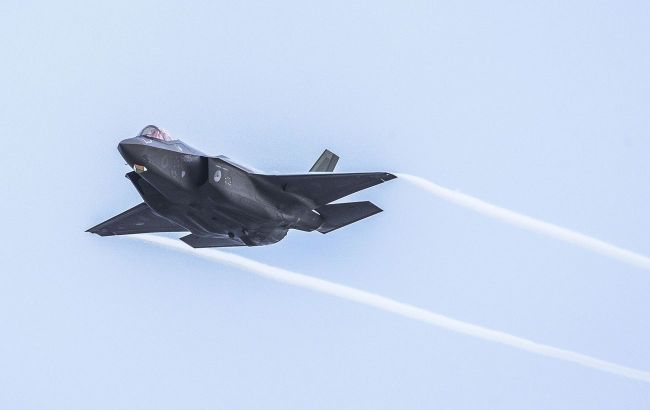 Fifth-generation fighter F-35A (Illustrative photo: Getty Images)
The US has moved to decisive action in strengthening the eastern flank. The deployment of fifth-generation F-35A fighters to Japan is a direct response to the aggressive rhetoric of the dictatorial regimes of Russia and North Korea, according to a report in Defense‑Blog.
On March 28, 2026, the first fifth‑generation F‑35A Lightning II fighters arrived at the strategic Misawa Air Base. According to US President Donald Trump's plan, this will fundamentally change the rules of the game in Asia. From now on, the skies over the region will be controlled by "flying computers" capable of operating undetected by enemy radars.
Indeed, this deployment is part of the Pentagon's plan to bolster the defense capabilities of allies near Russia's and North Korea's borders.
Why these aircraft change the balance of power in the region
- Stealth capabilities: The F‑35A can penetrate the densest enemy air defense zones while remaining undetected by radar.
- Information superiority: Thanks to its integrated sensors, the fighter acts as a coordination hub, combining data from satellites, ships, and ground systems in real time.
- Deterrence of aggression: Misawa Air Base is located in a strategically important area, allowing rapid control of airspace near Russian and North Korean territories.
The state‑of‑the‑art stealth F‑35A aircraft replaces outdated aviation platforms that had been based in northern Japan for decades.
The commander of the 35th Fighter Wing, Colonel Paul Davidson, emphasized that the arrival of the F‑35 in northern Japan is a key element of US deterrence in Asia. According to him, the deployment of these aircraft guarantees enhanced security for allies and demonstrates America’s unwavering commitment to the principles of a free and open Indo‑Pacific region.
In turn, military analysts link this move to the strengthening military cooperation between Moscow and Pyongyang, as well as frequent provocations in the Sea of Japan. The US is effectively creating a technological gap that adversaries currently have no means to counter.
Joint front with Japan
A distinctive feature of this deployment is the full integration with the Japanese Self‑Defense Forces, which are also actively transitioning to the F‑35. This allows the creation of a unified battle management network in which American and Japanese pilots can operate as a single cohesive unit, leveraging shared infrastructure and logistics.
US President Donald Trump wants to bring Japan into the military conflict against Iran, against the backdrop of a lack of adequate support from European allies.
Earlier, Donald Trump stated that Washington is not yet ready to end the operation in Iran but will do so in the near future.