F-16 to get hypersonic missile developed by former SpaceX engineers


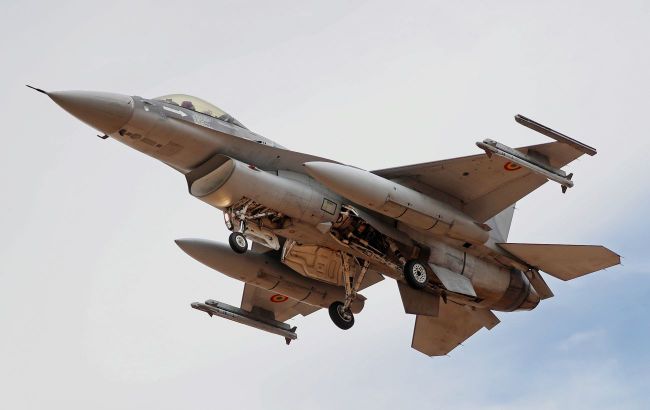 Photo: F-16 fighter jet (Getty Images)
US startup Castelion has received a contract modification from the US Air Force Research Laboratory (AFRL), allowing it to begin integrating its Blackbeard hypersonic missile onto the F-16 fighter jet, according to a statement by Castelion on Twitter (X).
US company Castelion has received a modification to its existing contract with the US Air Force Research Laboratory (AFRL). It allows work to begin on integrating the Blackbeard hypersonic missile onto the F-16 fighter jet. The company announced this on October 26. Castelion had previously worked on the missile for the US Navy and Army.
"Castelion has been awarded a contract modification to its existing work with the Air Force Research Laboratory to begin Blackbeard integration activities with the F-16. We are grateful to the Air Force for their trust," the company wrote on Twitter (X).
Castelion did not disclose the cost of the modification, how long the work would take, or when the first missile launch from an F-16 might take place. The US Air Force did not comment on the award.
Blackbeard is designed to fly at speeds exceeding Mach 5 and maneuver within the atmosphere. This makes it harder to intercept than a ballistic missile, which follows a predictable trajectory. Castelion aims to manufacture the missile at low cost and in large quantities. The company was founded in 2022 by former SpaceX engineers and is based in Torrance, California. It is building a plant in Rio Rancho, New Mexico, designed to produce 500 missiles per year.
In September, AFRL increased the value of its existing contract with Castelion by $16.4 million, bringing it to $37.2 million. The contract covers an affordable, mass-produced, long-range missile and runs through June 2028. Castelion did not specify whether the new modification is part of this contract.
What is known about Blackbeard’s cooperation with the US Navy and Army
The US Navy is working most actively on the missile. In April, it allocated $105 million to integrate Blackbeard onto the F/A-18E/F Super Hornet aircraft and conduct combat testing in the Indo-Pacific region.
In June, the Navy ordered 50 missiles for early operational use. In August, it allocated nearly $90 million to transition the missile to a formal weapons program, including capabilities intended to accelerate sales to allies. In September, the Navy placed its first production order, worth up to $200 million, for 444 missiles.
In October 2025, the US Army awarded a contract for a ground-launched version of the missile that can be fired from a HIMARS launcher.
The F-16 is significantly more widely used than the Super Hornet. It is the most numerous fighter jet in the US Air Force and is also operated by more than two dozen other countries. Castelion did not disclose whether the current work covers export versions of the F-16.
In September, the commander of Ukraine’s F-16 fleet, call sign "Phantom," said that a critical shortage of air-to-air missiles was forcing Ukrainian pilots to conserve ammunition. According to him, they sometimes have to shoot down targets using the aircraft’s onboard cannon.
In early October, the Ukrainian Council of Armaments explained that aircraft and surface-to-air missiles remained the most effective means of shooting down jet-powered Shaheds, maintaining an interception rate of 55–60%, but missile supplies were insufficient.
In late October, RBC-Ukraine reported that Lockheed Martin was offering Ukraine a special version of the F-16 equipped with an AESA radar and greater range.
.
nt.
In late October, RBC-Ukraine reported that Lockheed Martin was offering Ukraine a special version of the F-16 equipped with an AESA radar and greater range.