Everyone wants a safe home: Scientists reveal best place in universe

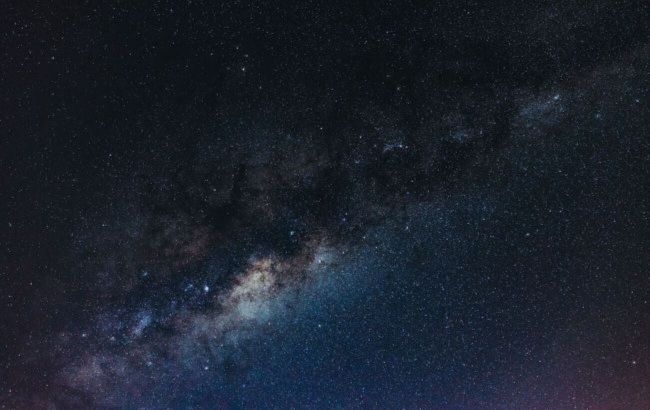 The universe is slowing down in its production of safe planets (photo: Jonathan Borba)
Scientists have identified a "safe place" for life in the universe: the Milky Way and the Solar System are among the regions most favorable to biological life, according to a scientific study published in the Monthly Notices of the Royal Astronomical Society (2026).
EAGLE simulation, search for a 'galactic habitable zone'
To assess the cosmic environment, scientists used the EAGLE project (Evolution and Assembly of GaLaxies and their Environments), one of the most accurate digital models of the universe's evolution.
The computer simulation accounted for the expansion of space, gravitational forces, gas physics, star formation, and the behavior of supermassive black holes across regions spanning hundreds of millions of light-years.
In their analysis, the researchers looked not only for the chemical elements needed to form rocky planets like Earth, but also for the absence of factors that could destroy a biosphere.
Scientists explain that an excessively high concentration of heavy elements can lead to the formation of 'hot Jupiters'—giant gas planets that migrate and disrupt the orbits of smaller planets.
They add that galactic centers are also too dangerous because of the high density of stars and the activity of giant black holes, whose powerful radiation can strip a planet of its atmosphere.
Why Milky Way is an 'ideal home'
In addition to black holes, the simulations accounted for threats from supernova explosions and powerful gamma-ray bursts, which can sterilize the surrounding region.
Some paleontologists believe a nearby cosmic explosion may have caused the Ordovician mass extinction on Earth 450 million years ago.
Another threat is passing stars coming too close to planetary systems, potentially destabilizing their stable, circular orbits.
The study found that the Milky Way belongs to a class of galaxies that have been particularly effective at transforming the universe's primordial material into safe environments.
Our galaxy has already passed through its turbulent, energetic evolutionary stage and entered a quieter phase. Calculations suggest that even over a billion years of wandering through the Milky Way, fewer than one in a thousand stars risk experiencing the destructive effects of an extreme cosmic catastrophe.
By contrast, small galaxies, which are far more numerous in the universe, are too densely populated and turbulent, significantly reducing the chances of complex life surviving there over long periods.
Read also: Mystery of Earth's greatest mass extinction finally solved: What killed nearly all life