Europe wants independence from US but doesn’t trust its own armies - Politico

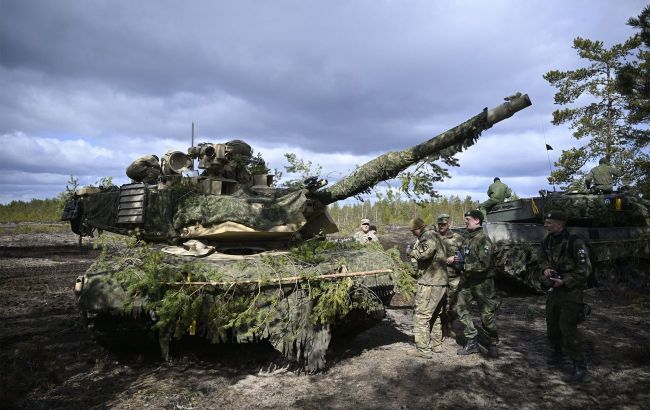 Soldiers of one of the European armies (Photo: Getty Images)
Europeans are increasingly seeking to rely on their own strength in defense matters, reducing dependence on the US, but they have serious doubts about the continent's real ability to defend itself in the event of an attack, according to the results of a June poll conducted by Public First in 24 EU countries, which came into the possession of POLITICO.
Doubts about combat capability and the demand for autonomy
According to the study's results, only 14% of respondents are willing to rely on military assistance from outside the continent (for example, from the US), while 40% prefer to rely on pan-European defense support.
However, opinions on Europe's real defense readiness are divided: 41% of respondents believe the continent can repel an attack, while 43% are convinced the opposite. Europeans assess their own national armies even more pessimistically – 58% of citizens believe that their country is not ready for independent defense, and only 27% are confident in their armed forces.
In addition, 46% of Europeans are convinced that EU countries need to develop their own military equipment production, even if this leads to a significant increase in defense procurement costs.
Finland is an absolute exception
The greatest skepticism about their ability to repel an attack without external help is found in frontline states bordering or near Russia – particularly in the Baltic states, Bulgaria, and Romania. These countries are consistent supporters of NATO and of maintaining the US military presence in the region.
The only exception is Finland. The vast majority of Finns (76%) are confident that their country is ready to fight independently. This is explained by the country's strong conscription system and a powerful army that has been preparing for a Russian invasion scenario for decades.
Overall, residents of only six countries – Finland, France, Poland, Bulgaria, Romania, and Greece – believe that their state should be capable of fighting alone.
France's confidence is also natural, as it is the only nuclear power in the EU with a long tradition of military independence. In the remaining 18 countries, respondents agree to rely on a pan-European security umbrella.
The issue of increasing EU countries' funding for their own security is expected to be one of the most acute topics at the upcoming NATO summit, which will take place next week in Ankara (Turkey). Despite European politicians' statements about strategic autonomy, the continent remains critically dependent on American weapons, intelligence, and logistical capabilities.
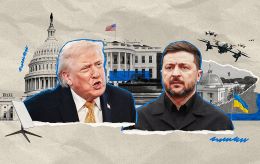
The Trump administration is reducing its military presence in Germany and demanding that European allies take on a greater share of the costs for the continent's conventional defense.
Earlier this month, NATO Secretary General Mark Rutte paid an urgent visit to Washington, where he met with US President Donald Trump. According to Bloomberg, the Alliance chief attempted to neutralize Trump's irritation with those European allies who refused to support the American campaign against Iran.
After the talks in Washington, Rutte issued a statement, noting that the North Atlantic Treaty Organization must adapt its tasks to the White House's current demands. In particular, the Secretary General emphasized that NATO is obliged to protect not only its European allies but also the continental US directly, and to ensure Washington's decisive role on the global stage.