Europe simulates Russian attack on Lithuania: Results grim

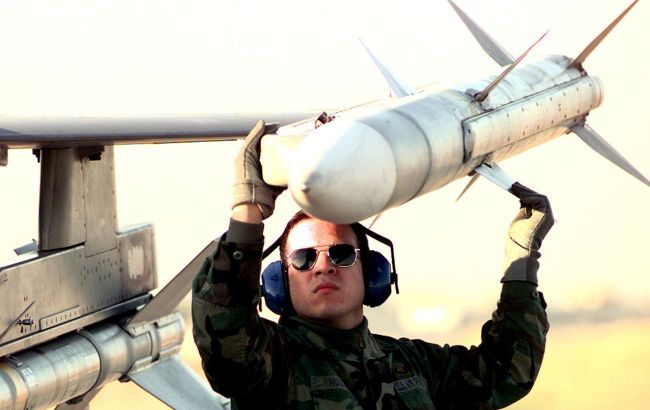 Europe simulates Russian attack on Lithuania (photo: Getty Images)
In Germany, exercises simulating a Russian invasion of Lithuania were conducted. Their results proved grim — Moscow would be able to achieve its objectives within days, the Wall Street Journal reports.
Read also: Russia shortens preparation time for war with Europe, says Ukraine's Intel chief
The staff war game organized by the German Wargaming Center at the Helmut Schmidt University of the German Armed Forces became the subject of intense debate even before its results were published.
The exercise involved 16 former senior officials from Germany and NATO, lawmakers, and well-known security experts, who played out a scenario set in October 2026.
Course of the hypothetical attack
During the exercise, Russia used the pretext of a humanitarian crisis in russian Kaliningrad to seize the Lithuanian city of Marijampolė. The idea of a humanitarian mission proved sufficient for the United States to refrain from invoking Article 5 of the NATO Treaty, which calls for allied assistance.
Ultimately, Germany proved indecisive, and Poland, although conducting mobilization, did not send troops across the border into Lithuania. A German brigade already deployed in Lithuania did not intervene, partly because Russia used drones to mine the roads leading from its base.
"Deterrence depends not only on capabilities, but on what the enemy believes about our will, and in the wargame my 'Russian colleagues' and I knew: Germany will hesitate. And this was enough to win," said Franz-Stefan Gady, a Vienna-based military analyst who played the Russian chief of general staff.
In these war games, in the absence of US leadership, Russia managed within a few days to undermine confidence in NATO and establish dominance over the Baltic states by deploying forces of only about 15,000 troops.
Differences between the game and reality
In real life, Lithuania and other allies would have sufficient intelligence warnings to avoid such a scenario, said Rear Admiral Giedrius Premeneckas, Chief of the Defense Staff of Lithuania.
According to him, even without allies, Lithuania's own armed forces would be able to handle a limited threat to Marijampolė.
According to analysts, Russia is currently not capable of claiming European hegemony, as European allies surpass it in population, economy, and thus latent military power. However, it can successfully exploit allies' indecision and theoretically achieve its objectives within a short time frame.
According to assessments by the Institute for the Study of War (ISW), Russia has already intensified information and psychological operations, which may be an element of preparation for a potential conflict with the Alliance, including through the use of false-flag provocations.
At the same time, Russian President Vladimir Putin calls the idea of a plan to attack NATO "nonsense" that is impossible to believe.