Russia shortens preparation time for war with Europe, says Ukraine's Intel chief

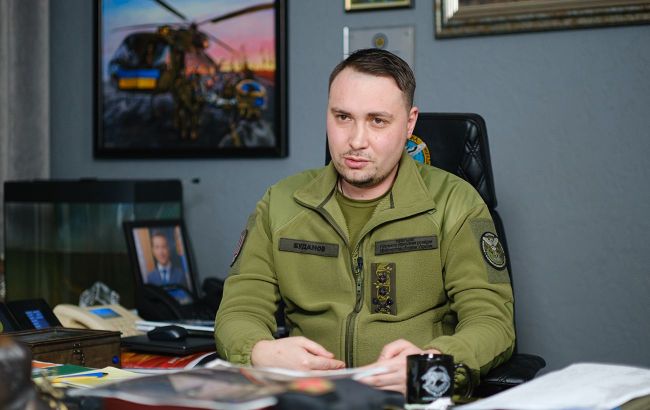 Photo: Kirill Budanov (Vitalii Nosach, RBC-Ukraine)
Russia has shortened the timeline for potential direct aggression against European countries and could be ready for such actions as early as 2027, according to the Chief of Ukraine's Main Intelligence Directorate (GUR), Kyrylo Budanov.
According to Budanov, Russia's original strategic plans targeted 2030, but these timelines have now been revised and accelerated. He identified the Baltic countries as the most likely direction for potential aggression.
"According to the original plan, Russia was to be ready to take action in 2030. Now the plans have been adjusted and shortened toward 2027," Budanov said.
Budanov noted that the Kremlin’s motivation is not purely military but also rooted in deep historical and psychological attitudes within Russian society. Russia continues to perceive itself as an empire that can exist only by constantly expanding its influence.
He explained that Russia’s possible directions for aggression are significantly limited.
"To the north is the Arctic Ocean and beyond — America. Not an option, it would be painful. To the east is the Pacific and again America. Same answer. To the south is China, which would be catastrophic — a land border with conditions similar to our war with Russia, only for them. That leaves only the west, which in their understanding, excuse the phrasing, is 'spoiled,' 'sick,' 'weak,' and 'indecisive,'" Budanov said.
According to Ukrainian intelligence, if such plans were realized, the Baltic countries could come under direct occupation. Poland, however, is considered by Russia as a target for military strikes without the intention of territorial occupation.
Russia preparing for war with NATO
Earlier, several NATO countries warned that after the war in Ukraine concludes, Russia could be ready for serious confrontation with the Alliance within three to five years.
Against this backdrop, Estonia, Lithuania, and Poland plan to allocate over 5% of GDP to defense next year, while other NATO states are also increasing military spending.
EU Defense Commissioner Andrius Kubilius noted that German intelligence has evidence of Kremlin discussions regarding a potential attack scenario on NATO countries.
According to the Institute for the Study of War (ISW), Russia has already intensified information and psychological operations, potentially as preparation for conflict with the Alliance, including the use of false-flag provocations.
Previously, Finnish Prime Minister Petteri Orpo stated that if a peace agreement regarding Ukraine is reached, Russia could redeploy its forces to NATO’s eastern flank.
At the same time, Russian dictator Vladimir Putin has dismissed the idea of a plan to attack NATO as "nonsense" and "hard to believe."