Europe sees paid transit through Hormuz as inevitable, Bloomberg reports

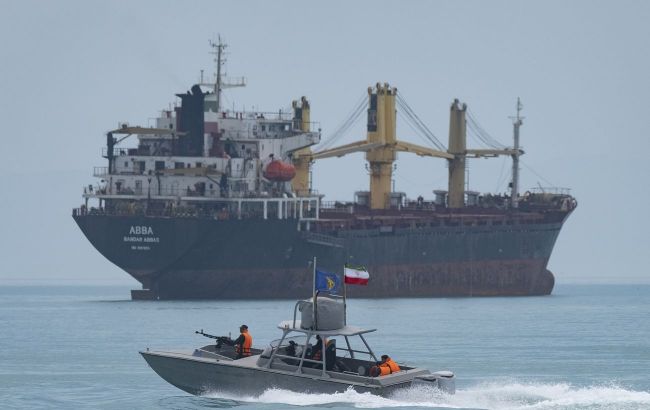 Photo: tankers in the Strait of Hormuz (Getty Images)
Europe has come to terms with the fact that tanker transit through the Strait of Hormuz will no longer be free — the only question is the price, according to Bloomberg.
Europe prepares to pay for ships to pass through the Strait of Hormuz
According to the outlet's sources, several leading European countries are accepting the idea that vessels transiting the Strait of Hormuz may have to pay fees to Iran and Oman.
Two anonymous participants in the discussions support the prospect of introducing some form of payment for services in the Strait of Hormuz. They noted that some representatives of the Arab Gulf states share this view, although it is not the official position of their governments.
However, it remains unclear what types of fees or what amounts any country would be willing to pay.
US promises a free Strait of Hormuz
Meanwhile, the United States, Saudi Arabia, the UAE, Qatar, Kuwait, and Bahrain continue to insist that any charges for using this waterway are unacceptable.
They fear that such a move could set a precedent for other countries to impose fees for the use of international waterways.
Oman, for its part, has warned its allies that vessels transiting the Strait of Hormuz may be required to pay.
Europe reaches out to Iran and Oman
According to sources, European countries have accepted the prospect of additional costs. However, they have urged Iranian and Omani officials not to discriminate against vessels based on nationality.
The United Kingdom and France, for example, are pushing for the creation of an international maritime coalition to help clear mines in the Strait of Hormuz. However, its deployment will depend on the success of peace talks between the United States and Iran.
Transit routes through the Strait of Hormuz
Iran and a key Western naval coalition have already proposed one transit corridor each.
The Bahraini government has stated that it has not even hinted at approving fees or duties for vessels passing through the strait.
According to one source, Oman is studying the Strait of Malacca in Asia as a potential model that could satisfy both Iran and the rest of the world. However, such a solution would have to be approved by all Gulf states. It remains unclear whether Iran would agree.
It is worth noting that Indonesia, Malaysia, and Singapore charge vessels for navigation and security services provided in the Strait of Malacca.
Iran's blockade of the Strait of Hormuz
The Islamic Republic effectively blocked the waterway in late February, at the start of US and Israeli bombing operations. Washington later blocked vessels that prevented access to Iranian ports.
This triggered a sharp rise in energy prices and shortages of other goods. Since the beginning of the war, Iran has sought a degree of control over vessel traffic through the strait.
The United States and Iran met last week in an effort to resolve the shipping crisis in the Strait of Hormuz.
On June 28, US forces struck Iranian targets in the Strait of Hormuz area. The attack was a response to Iran's assault on a commercial tanker on the morning of June 27.