Europe revives nuclear deterrence debate for first time since Cold War

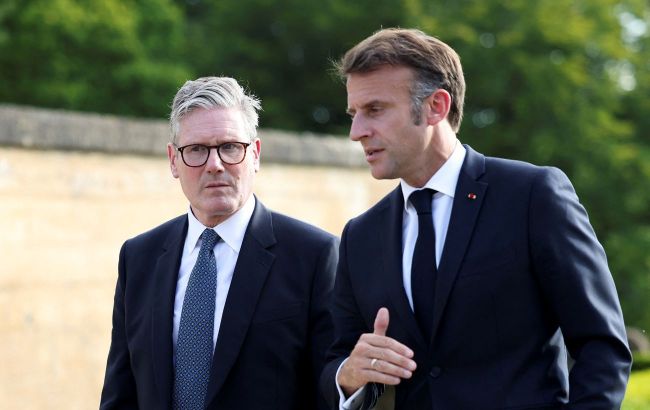 Photo: Emmanuel Macron and Keir Starmer (Getty Images)
The European Union currently relies on the US nuclear umbrella, but due to the unpredictable policies of US President Donald Trump, Europeans have begun looking for a plan B, according to Bloomberg.
Read also: From Ukraine to India: Trump touts role in preventing nuclear wars
The agency emphasizes that the EU could be left alone facing Russia, which possesses the world’s largest nuclear arsenal. Currently, nuclear weapons in Europe are held only by France and the United Kingdom.
It is expected that this month, French President Emmanuel Macron will propose extending nuclear deterrence to the rest of Europe, although the prospects of such a move remain unclear.
"Imagine that Russia invades Estonia. So, France has this calculation — they have the capability to do a lot of damage to Russia, but Russia would definitely do a lot of damage to France in response. Would that be something Paris would be willing to contemplate?" said Pavel Povdig, senior researcher at the United Nations Institute for Disarmament Research.
Replacing the US nuclear umbrella is not an option for everyone
The outlet writes that for most EU countries, replacing the American nuclear umbrella with a European one is not feasible, in particular because they are already spending vast sums on strengthening their conventional military capabilities.
At present, France and the United Kingdom together possess around 400 deployed warheads, while the United States and the aggressor state have about 1,670 each. Paris and London jointly spend around $12 billion per year to maintain their nuclear arsenals — an amount exceeding more than half of Sweden’s entire defense budget.
Investing in capabilities
Bloomberg reports that a number of countries are ready to invest in "turnkey" capabilities — meaning all the necessary components to develop nuclear weapons if needed.
However, even under such a scenario, they would require nuclear power plants, costly and complex enrichment facilities, as well as the political will to violate non-proliferation agreements.
Moreover, the implementation of this formula depends on political stability in the United Kingdom and France, where changes in government are possible. In particular, France is set to hold presidential elections in 2027, and Marine Le Pen and her close ally Jordan Bardella have openly opposed the idea of sharing nuclear deterrence.
Sweden is holding talks with the United Kingdom and France on providing the country with nuclear security guarantees in the event of hostilities in the EU.