Europe debates further dependence on US arms — Politico

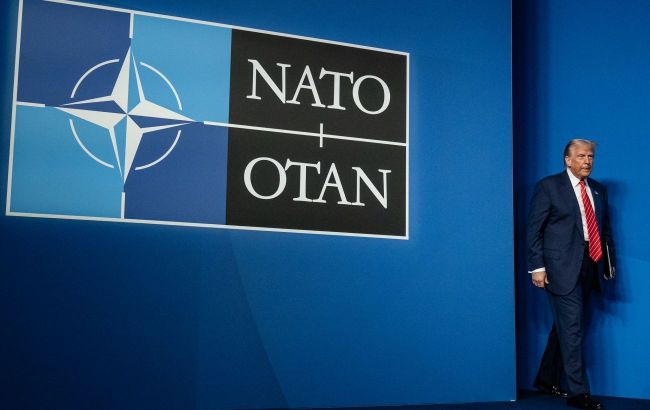 Photo: US President Donald Trump (flickr.com)
At the GLOBSEC forum in Prague, European leaders sought ways to maintain NATO’s effectiveness at a time when the United States under Trump has become a source of uncertainty for the alliance. The main question is whether Europe should continue to rely on American weapons, according to Politico.
The discussion was sparked by Trump’s reaction to the deployment of US troops in Poland.
US Defense Secretary Pete Hegseth unexpectedly canceled the planned deployment of 4,000 troops, after which Trump once again changed his position in a post on Truth Social.
According to a US diplomatic cable obtained by Politico, the conflicting signals from Washington caused significant political and psychological shock in Poland.
Polish officials described the messages from Washington as chaotic. Marcin Przydacz, secretary of state to the Polish president, emphasizes that Poland is among the countries that spend 5% of GDP on defense.
Warsaw has long maintained a policy of supporting the US: it has purchased tens of billions of dollars' worth of American weapons and refrained from criticizing Washington’s actions. Despite this, it has not received stable guarantees from the US.
Czech President Petr Pavel states that the problem lies not so much in the troop withdrawal as in the lack of information.
According to him, allies were previously informed about changes in the number of American troops, whereas the decision regarding Poland was made without coordination with NATO.
Domestic or American weapons
The discussion continued with the issue of EU defense procurement rules. Swedish Defense Minister Pål Jonson cautioned against introducing a European preference into these rules.
"Sometimes that can be from Europeans, sometimes it can be from the Americans or somewhere it can be from Asia," he says, emphasizing that the main task is to provide the military with weapons.
Other countries are seeking a balance between their own industries and cooperation with the United States. Romanian Foreign Minister Oana Țoiu notes that localizing production and investing in domestic jobs are important, but Bucharest wants to maintain room for cooperation with Washington.
According to her, Romania’s procurement plan includes over $2 billion worth of American equipment.
What's in store in Ankara
Germany is working with partners to create, as Foreign Minister Johann Wadephul put it, new defense capabilities for Europe. At the same time, he acknowledges that the US is increasingly focusing on China and the Indo-Pacific region.
The question of how to reconcile the internal interests of European countries with the need to keep the US in the alliance is expected to be one of the main topics at the NATO summit in Ankara in July.
In mid-May, the US Army unexpectedly canceled the deployment to Poland of more than 4,000 troops from the 2nd Armored Brigade Combat Team of the 1st Cavalry Division, along with their equipment.
Some of the soldiers were already in the country at that time. The Pentagon insists that the decision was not sudden but the result of a comprehensive process, and attributed it to the US Army’s budget shortfall.
Subsequently, Trump intervened in the situation. During a phone call, the President asked Hegseth why the deployment had been canceled and stated that the US should not treat Poland poorly as an ally.
Shortly thereafter, Trump announced his intention to send troops to Poland after all, this time 5,000.