Europe accelerates push for military independence from US

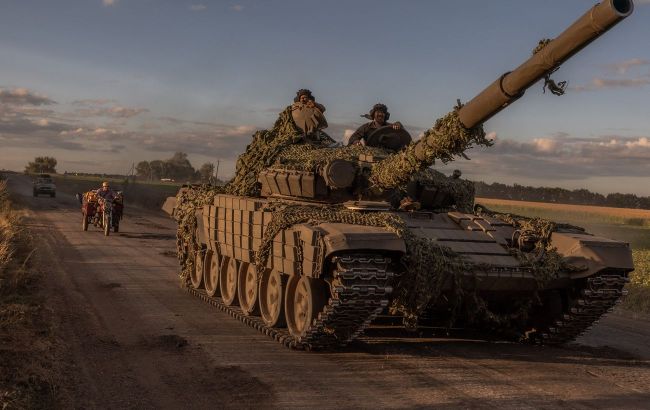 Military personnel, tank (photo: Getty Images)
Despite rising defense budgets across most EU countries, Europe faces serious gaps in weapons production that will require a trillion dollars and at least a decade to close, The Wall Street Journal reports.
European countries have significantly increased production of artillery ammunition, armored vehicles, ships, and submarines.
Thus, the German defense manufacturer Rheinmetall produces 1.5 million 155-millimeter artillery shells per year, surpassing the United States by this metric. Meanwhile, MBDA, a European missile systems company, has quadrupled production of air defense missiles. However, output still totals only 40 missiles per month —a quantity that Ukraine can expend in just a couple of nights.
At the same time, the continent still lags in the production of stealth aircraft, long-range missiles, and satellite reconnaissance.
Budgets and fragmentation
Total EU defense budgets reach $560 billion, twice as much as ten years ago, but still less than the Pentagon budget of $850 billion.
By 2035, Europe plans to reach 80% of US spending, but the main problem is fragmentation: France demonstrates a high level of independence, while Germany and Eastern European countries continue to purchase US and South Korean weapons, maintaining dependence.
Need for unity
The creation of a single European military pillar or a unified army has ceased to be an idea of bureaucrats and has become an urgent necessity. Achieving real independence from the United States will require at least ten years and significant investment.
Examples involving precision weapons such as HIMARS show that serial production of domestic equivalents will take years. Fragmentation and prioritization of national defense companies also complicate joint procurement and implementation of major projects, as seen with the FCAS fighter jet.
The European Parliament temporarily suspended consideration and approval of a trade agreement with the United States after President Donald Trump announced possible tariffs against several EU countries, creating uncertainty and halting the approval process.
French President Emmanuel Macron, in an address to the country's armed forces, emphasized the need for Europe to focus on developing its own long-range weapons systems in response to the Russian Oreshnik missile, whose range covers the territories of European states.