EU unveils new sanctions against Russia, targeting shadow fleet and banks

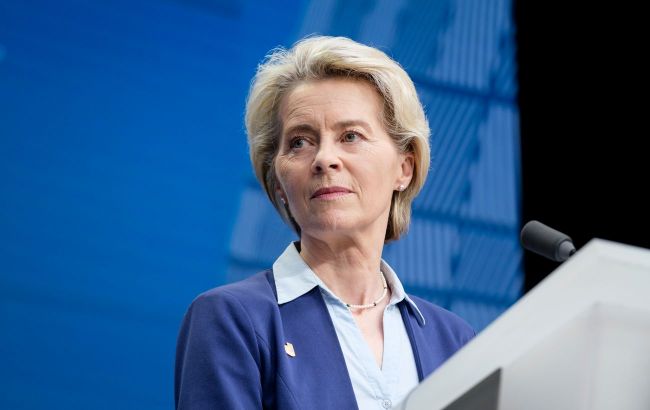 Photo: Ursula von der Leyen, President of the European Commission (Getty Images)
The Council of the European Union approved a new package of sanctions against Russia on July 23, marking the bloc's most extensive measures in four years, according to the Council of the European Union.
EU adopts its 21st sanctions package against Russia
The package introduces sweeping economic restrictions targeting sectors that play a key role in supporting Russia's economy and its ability to wage war against Ukraine.
The 21st sanctions package lists 218 individuals and entities, including:
- 48 individuals,
- 170 legal entities.
Who is targeted
The EU significantly expanded measures against Russia's financial sector, which it describes as an instrument of the country's war economy.
The new measures include asset freezes and a ban on providing funds to 94 banks and major financial institutions, as well as to a key figure in Russia's banking establishment, and a transaction ban on 33 Russian credit and financial institutions.
The package also introduces a transaction ban on a Kyrgyz bank linked to Russia's SPFS (System for Transfer of Financial Messages), as well as three other non-Russian banks accused of helping Moscow circumvent sanctions.
The EU also sanctioned four entities linked to the cross-border A7 network, including its new connections to Africa.
In addition, the bloc extended transaction bans to 14 cryptocurrency service platforms. For the first time, the package also creates a legal mechanism allowing a full ban on crypto-related service platforms provided by companies in third countries.
Russian oil price cap
The package suspends the automatic adjustment mechanism for the Russian oil price cap until July 15, 2027.
Russia's shadow fleet
The EU added another 41 vessels to its sanctions list, on top of the 632 already sanctioned.
The measures target tankers operating outside the EU that are part of Russia's so-called shadow fleet.
The EU is adding the following to its sanctions lists:
- eight entities and one individual involved in the shadow fleet ecosystem, including companies working on behalf of major Russian oil producers,
- for the first time, a crewing agency that provides services to the shadow fleet.
Sanctions on oil refineries
The EU also sanctioned 18 entities and one individual operating in the oil sector.
The list includes:
- three Russian oil refineries,
- one major Belarusian refinery,
- a company established to sell Belarusian petroleum products in Russia.
The package also creates a legal framework allowing restrictions on transactions involving listed refineries in Russia and in third countries that process or refine Russian crude oil and petroleum products.
Under these provisions, a transaction ban targeting a Georgian refinery operating through the Port of Kulevi will take effect in six months.
The EU also sanctioned five oil trading companies.
In addition, transaction bans were imposed on two Russian seaports and four airports.
The package introduces a notification obligation for the sale of LNG tankers and a possibility to introduce additional restrictions on selling such vessels to Russian citizens or companies. It also includes contractual obligations aimed at preventing their resale to or use by Russia.
Additional sanctions
The EU also added to its sanctions list:
- seven major companies in the gold mining sector,
- one of Russia's leading diamond companies,
- several entities operating in the mining and metallurgical industries.
Restrictions on Russia's defense industry
The 21st package introduces sanctions against 56 additional individuals and companies linked to Russia's military-industrial complex. Among them are 37 entities directly involved in the production and supply chains of long-range drones.
The Council also added 51 organizations to the list of entities subject to stricter export controls on dual-use goods and technologies due to their support for Russia's defense industry.
The package establishes a basis for a comprehensive visa ban on active and former members of the Russian armed forces and proxy groups involved in the war against Ukraine. The Council of the EU will decide when the measure takes effect.
The EU also expanded export restrictions to include:
- nickel powders, metals, and alloys used in corrosion-resistant jet engine coatings,
- beryllium powders used in missile fuel and high-performance alloys,
- self-adhesive films, tapes, and strips used in aerospace and defense,
- aviation-related products designed for drones,
- flight termination systems for drones and missiles.
The package also introduces additional import restrictions on products that generate significant revenue for Russia, worth more than €60 million annually, including:
- copper ores,
- nickel ores,
- lead ores,
- precious metal ores,
- unwrought zinc,
- alkaline earth metals,
- zinc oxides,
- chromium oxides,
- glass products,
- artificial pearls,
- automotive parts.
Measures against Belarus
The package also introduces new restrictions on Belarus similar to those imposed on Russia, including:
- import bans on products generating significant revenue for Belarus,
- export restrictions related to the military industry.
Sanctions on individuals
The EU imposed sanctions on eight individuals accused of spreading Russian wartime propaganda and promoting manipulative narratives about Ukraine.
The package also sanctions a Russian major general accused of war crimes, including torture, executions, and the desecration of the bodies of Ukrainian service members, including prisoners of war.
The EU also strengthened legal protections for EU operators by allowing courts in the EU and its member states to refuse recognition and enforcement of judgments issued by Russian courts in relevant cases.
The legal acts will be published shortly in the Official Journal of the European Union.
Ukraine has already begun work on proposals for the EU's 22nd sanctions package against Russia, which will include evidence of the abduction of Ukrainian children.
EU High Representative for Foreign Affairs and Security Policy Kaja Kallas said the 21st sanctions package is the bloc's strongest set of measures against Russia in the past four years.