EU unveils its toughest sanctions on Russia in 4 years

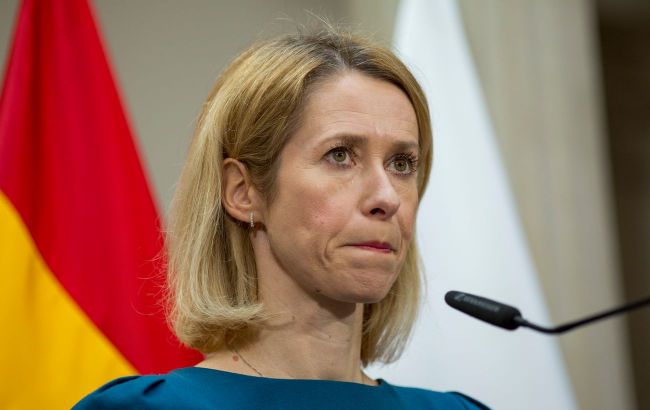 Kaja Kallas, EU High Representative for Foreign Affairs and Security Policy (photo: Getty Images)
The European Union's 21st sanctions package against Russia will be its toughest in the past four years, EU High Representative for Foreign Affairs and Security Policy Kaja Kallas said.
"This is our largest round in four years, totalling 218 listings," Kallas said.
According to her, the latest restrictions target:
-
More than 100 banks and cryptocurrency operators;
-
More than 40 vessels from Russia's shadow fleet;
-
Several oil refineries in Russia and Belarus that help the Kremlin continue the war.
Brussels also says it will not ignore Russia's continued attacks on Ukraine's civilians, infrastructure, and cultural heritage.
That is why the EU has added more than 50 defense industry companies to its sanctions lists, including key participants in the production of Russia's long-range drones.
"This comes on top of last week's sanctions on those responsible for the abuse and killing of Ukrainian prisoners of war and civilian detainees, alongside tech companies enabling the Kremlin's repressions of internet users," Kallas explained.
How Ukraine's Presidential Office views the new EU sanctions against Russia
Ukraine's presidential commissioner for sanctions policy, Vladyslav Vlasiuk, also commented on the new package.
"The main conclusion from the adopted 21st sanctions package is that the European Union has once again proven it is capable of reaching compromises and maintaining pressure. Of course, there were disputes: some partners once again tried to politicize their profits from the logistics of Russian energy exports, particularly LNG shipments. Patriarch Kirill of the Russian Orthodox Church and Lukoil founder Vagit Alekperov were also removed from the final draft," Vlasiuk said.
He also noted that several key and principled measures had been preserved. These include:
-
Oil price cap freeze ($44.1 per barrel). Against the backdrop of rising global oil prices, the automatic formula could have increased the cap, but the EU froze the review for one year to prevent the Kremlin from earning more.
-
Shadow fleet. Another 50 vessels have been added to the sanctions list. For the first time, related infrastructure has also been sanctioned, including bunker fuel suppliers, ports, nuclear power plants, and oil refineries that service or process Russian oil. Separate provisions on LNG and vessel resales were also introduced as part of a compromise, including an exemption for transporting specified volumes of LNG from Yamal to China.
-
Financial sector. Restrictions on transactions have been expanded to cover another 90 banks, cryptocurrency platforms, and oil traders in third countries. For the first time, the EU will be able to completely block crypto services used to circumvent sanctions outside the bloc.
-
Defense industry and trade. The package targets drone and military equipment production by banning exports of ground equipment for UAVs, jamming systems, and specific metals and alloys.
-
Personal sanctions and combatants. Nearly 250 individuals and legal entities have been sanctioned. For the first time, Russian military personnel who directly participated in the war against Ukraine will also be banned from entering the EU.
"I want to emphasize that a significant share of the proposals included in this package is the direct result of the analytical work carried out by the Ukrainian team. We systematically provided our partners with priorities, evidence of sanctions evasion schemes through third countries, and information about new components found in Russian weapons," Vlasiuk said.
According to him, work has already begun on the 22nd sanctions package and separate targeted measures. This time, the focus will be on those involved in the deportation of Ukrainian children and the organizers of sham elections in the occupied territories.
Earlier, Ursula von der Leyen also revealed another key element of the new sanctions against Russia.
On July 23, EU ambassadors approved the 21st sanctions package against Russia.
It was explained why so many EU member states have been slowing the adoption of these measures.