EU unveils new industrial policy law with implications for Ukraine

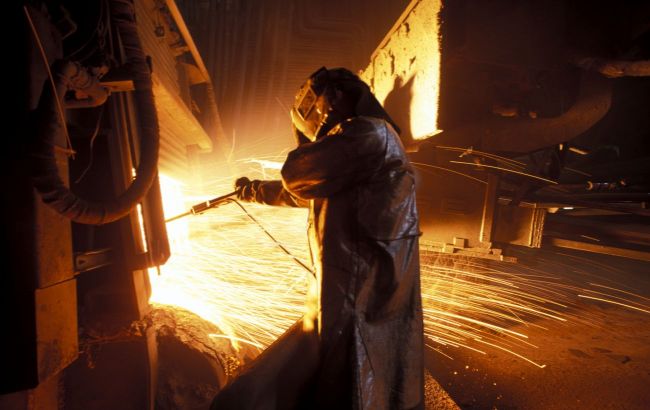 The European Union strengthens support for industry (photo: Getty Images)
Europe is building a new model for supporting industry and localizing production. For Ukraine, this could become an opportunity to join European manufacturing supply chains, according to an analysis of the EU legislative initiative in a Skadden publication.
EU focuses on industry
As the publication reports, the EU law Industrial Accelerator Act (IAA) is intended to strengthen production, localization, and European economic security.
According to the latest regulatory documents developed for this project, the key instruments of the new EU industrial policy will be:
- Support for production;
- Localization of supply chains;
- Simplification of launching industrial projects.
The European Commission directly states that the share of industry in EU GDP decreased from 17.4% in 2000 to 14.3% in 2024. That is, the EU goal is to move from an open market policy to a policy of industrial strengthening.
For Ukraine, which has EU candidate status, it is important not to remain only a supplier of raw materials or a sales market, but to become part of European manufacturing supply chains.
For Ukraine, this initiative is important as a signal: the EU is increasingly viewing industry not only as a sector of the economy, but as a foundation of security, resilience, and strategic autonomy. This approach is also critical for Ukraine's recovery strategy.
New public procurement requirements
Skadden writes that the new "made in EU" requirements for public procurement and state support programs in the law are primarily focused on energy-intensive industries, the automotive sector, zero-emission technologies, batteries, solar energy, and critical raw materials.
A separate focus is placed on steel, cement, aluminum, and transport: in public procurement, at least 25% of steel and 25% of aluminum used in construction, infrastructure, and transport must originate from the EU. For concrete and mortar, the share must be at least 5%.
In fact, the EU plans to use public procurement as a tool to support its own industry. This is important because public procurement accounts for about 15% of EU GDP, the publication emphasizes. In this way, Brussels aims to direct a significant share of demand toward products manufactured within the European market.
Industrial zones and control over foreign investments
Another important component is the creation of industrial acceleration zones: each EU member state must designate at least one such zone. They are intended to bring together industrial projects in energy-intensive sectors, the automotive industry, and clean technologies.
For Ukraine, this could serve as a guideline for rebuilding industrial regions: instead of isolated projects, the creation of industrial clusters with access to energy, logistics, financing, and simplified permitting procedures.
The document also envisions the launch of a single digital window for permits for industrial projects, as well as control over foreign investments.
In particular, the EU wants to strengthen the screening of investments in strategic sectors, including batteries, electric vehicles, solar panels, and critical raw materials. These provisions are effectively aimed at limiting excessive dependence on China in strategic technologies. This reflects a broader trend: EU industrial policy is becoming part of economic security.
It is noted that final adoption of the Industrial Accelerator Act may take place no earlier than mid or late 2027. Until then, the document will be discussed by the European Parliament and the Council of the EU.
Executive Vice President of the European Commission Valdis Dombrovskis stated that the European Union views industry as a key foundation of economic growth and security in conditions of global instability.