EU tones down Orbán criticism despite his Brussels stance — Here's why

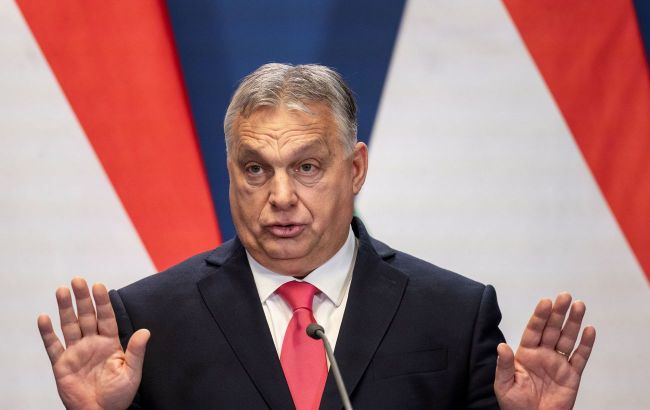 Photo: Hungarian Prime Minister Viktor Orbán (GettyImages)
The European Commission has recently toned down its public criticism of Hungarian Prime Minister Viktor Orbán and is even considering allocating new funds to his government ahead of the parliamentary elections. This is due to the EU's reluctance to appear to be interfering in the internal politics of other countries, according to the Financial Times.
Read also Zelenskyy blasts Orbán: Grows his belly instead of his army
Why Brussels changes tone
According to the agency's sources, European officials fear that harsh statements could be used by Orbán in his anti-Brussels election campaign. That is why the European Commission has become more cautious in formulating its position on Hungary, particularly on issues of the rule of law.
A representative of the European Parliament says that everything the EU institutions did would be used by Orbán and that everything they said or did not say would be used against them.
In addition, EU institutions are trying to avoid accusations of influencing the results of the elections to be held in April.
Possible pre-election funding
Despite ongoing disputes between Brussels and Budapest, according to the agency's sources, the Hungarian government may receive around €2.4 billion in new funds before the vote.
According to diplomats, this move is an attempt to minimize political risks and avoid giving grounds for allegations of external pressure.
Elections could change power balance
Opinion polls show that Orbán's Fidesz party could lose some of its support: the opposition Tisza party, led by Péter Magyar, is currently ahead by about 10 points.
Moreover, in his speech on Sunday, Magyar promised to strengthen Hungary's position in the EU.
He said that Hungary’s place was in Europe not only because Hungary needed Europe, but also because Europe needed Hungary
The opposition also called on European institutions to refrain from taking drastic steps during the election campaign so as not to influence the political process.
Orbán and his statements
According to political analysts, the long-standing rule of Prime Minister Viktor Orbán and his Fidesz party in Hungary may come to an end in the near future—in the April elections, he risks losing to the opposition pro-European party, Tisza.
Against the backdrop of the election campaign, Orbán has launched a large-scale information war against his main opponent, Péter Magyar, actively using harsh rhetoric and propaganda statements. One of the key elements of the campaign has been anti-rhetoric regarding Ukraine, which the Hungarian Prime Minister is effectively trying to portray as an enemy.
In particular, Orbán stated that Budapest would not support Ukraine's accession to the European Union in the coming decades, and also made controversial statements about the war, claiming that it is unclear who attacked whom. Kyiv reacted critically to these statements, emphasizing the manipulative nature of such arguments.
In addition, the Hungarian Prime Minister publicly stated that Ukraine was allegedly seeking to deprive Hungary of access to cheap Russian energy resources, which, according to him, could lead to higher tariffs for Hungarian consumers.