EU to eliminate Russian gas imports by 2028, von der Leyen says

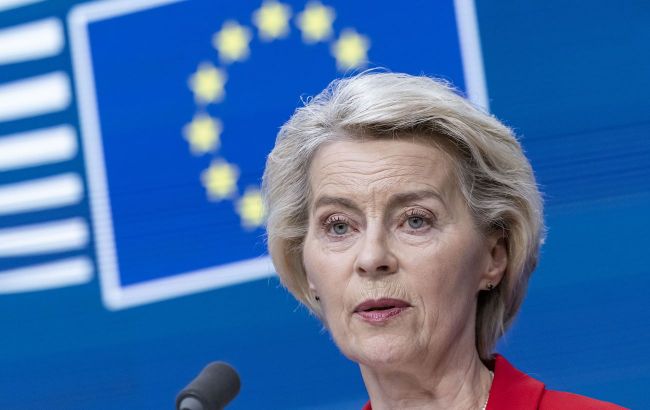 Photo: European Commission President Ursula von der Leyen (Getty Images)
The European Union intends to completely phase out imports of Russian gas by the end of 2027. Brussels has no plans to change this course, even amid the energy crisis and high prices, European Commission President Ursula von der Leyen says during a speech at the European Parliament in Strasbourg.
According to von der Leyen, Europe has already significantly reduced its dependence on Russian energy resources and will continue moving toward a complete phase-out.
The European Commission President recalls that several years ago, Russia supplied a significant portion of the EU's gas imports.
"4 years ago, Russia tried to blackmail us. At that time, 45% of our gas imports came from Russia. You remember almost overnight, almost everything was cut, but Europe stood together and we came out stronger," von der Leyen states.
Following this, the European Union began to diversify its gas supplies more actively. In addition, EU member states significantly increased investments in their own clean energy sectors.
This made it possible to substantially reduce the share of Russian gas in European imports.
"Today our import from Russian gas has fallen from 45% down to 12%, and we will reduce that to zero by the end of the year," the European Commission President states.
Despite the energy crisis, the European Union intends to reduce imports of Russian gas to zero by the end of 2027.
Europe Energy crisis
At the same time, the EU is making the decision to completely phase out Russian gas amid a new energy crisis. European consumers and industry are facing a significant rise in energy costs.
Von der Leyen states that since the end of February, gas prices have risen by 140%, while the cost of diesel fuel has doubled.
"Altogether, if we look at the imported fossil fuels, their costs for Europe are €100 billion extra, without a single molecule of energy in addition," she notes.
Despite rising prices and the challenging situation on the energy market, the European Union has no intention of returning to its previous level of dependence on Russian resources.
Von der Leyen expresses confidence that Europe will be able to weather the current crisis and emerge stronger from it.
Accordingly, the EU plans to reduce imports of Russian gas from the current 12% to zero by the end of 2027.
Despite the EU's policy of completely phasing out Russian gas, member states continue to purchase it in significant volumes for now.
At the same time, Europe is preparing for a difficult winter due to low gas reserves. In August, EU storage facilities were about 58% full—the lowest level since 2011.
The situation is particularly acute in Germany, where storage facilities were only 47% full. Berlin has, however, refused to require state-owned companies to purchase gas at current prices.