EU set to press Russia to withdraw forces from Belarus, Transnistria and other regions

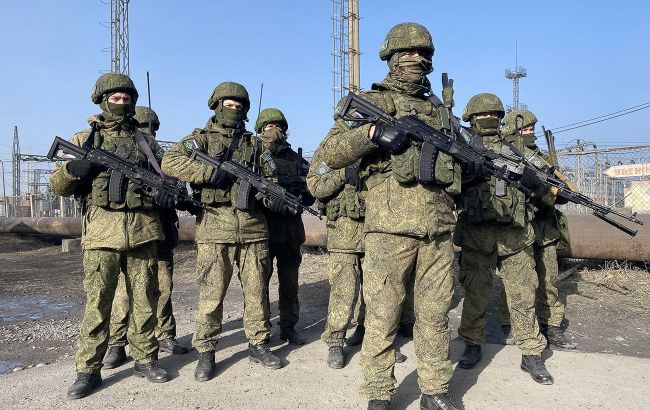 Photo: Russian military personnel (facebook.com)
The European Union wants to secure the withdrawal of Russian troops from Belarus, Georgia, Armenia, and the unrecognized region of Transnistria (Moldova) as part of a potential peace agreement on Ukraine, according to Radio Free Europe/Radio Liberty.
Read also: Belarusian opposition leader pushes to include Belarus in Ukraine peace deal
EU High Representative for Foreign Affairs and Security Policy Kaja Kallas has circulated a document among EU member states outlining demands to Russia in the context of diplomatic negotiations with Ukraine. The United States is acting as a mediator in such talks.
According to the document, the demands go beyond withdrawing troops from neighboring countries and also include reducing the size of the Russian army. The list of requirements further includes the payment of reparations and the democratization of Russian society.
Diplomatic sources told the outlet that European officials themselves describe the proposed conditions as maximalist. One diplomat explained that Europe is effectively responding in kind to Russia’s own maximalist demands toward Ukraine.
Another European official stressed that achieving peace depends not only on possible concessions from Kyiv.
According to him, it is also necessary to determine what steps Moscow must take even before the launch of any peace missions or negotiating initiatives.
The document will be discussed by EU ambassadors on February 17, and some parts are expected to be reviewed at a meeting of EU foreign ministers in Brussels on February 23.
EU's demands
- The first section of the document states that if Ukraine limits the size of its armed forces or withdraws troops from certain areas, Russia must do the same. At the same time, no de jure recognition of occupied territories is permitted, and those territories must be demilitarized.
- In the section on European security, the EU calls for an end to disinformation campaigns, cyberattacks, sabotage, airspace violations, and election interference.
- Another ultimatum requires the absence of nuclear weapons in Belarus and a ban on Russian military presence and troop deployments in Belarus, Ukraine, the Republic of Moldova, Georgia, and Armenia. Russian forces have been stationed for decades in Russia-controlled separatist regions such as Abkhazia, South Ossetia, and Transnistria, as well as at bases in Armenia and Belarus.
- The document also emphasizes compliance with international law: no amnesty for war crimes, access for international investigators, and the primacy of international obligations over Russia’s domestic legislation.
- It further provides for reparations to Ukraine and compensation for damages to European states and companies, including environmental damage. The EU has frozen about €210 billion in Russian assets and is already channeling proceeds from them to Ukraine.
- Among the internal demands on Russia are the holding of free elections under international supervision, the release of political prisoners, the return of deported civilians and children, media freedom, the repeal of repressive legislation, and cooperation in investigations into the killings of opposition figures.
Recently, media outlets reported that Ukraine and the United States discussed the possibility of concluding a peace agreement with Russia as early as March this year.
However, sources believe the timeline could shift, as the territorial issue remains unresolved.