EU divided over Ukraine aid, Russia ready to benefit

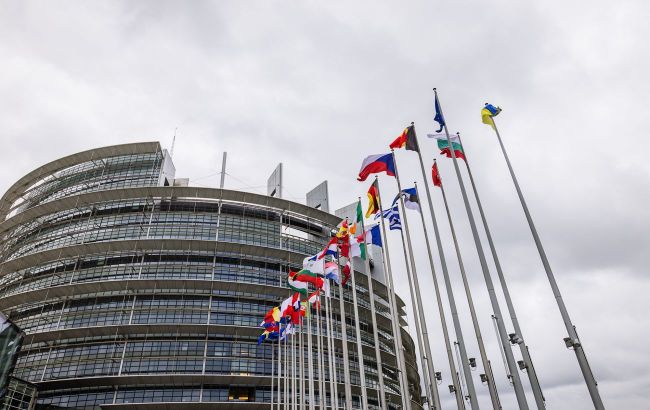 European Parliament (Photo: Getty Images)
The European Union is discussing a new mechanism for distributing financial aid to Ukraine, which could shift the balance within the bloc, reports Euractiv.
Germany proposes a new approach to aid distribution
Berlin is advocating linking spending on a future €90 billion loan to Ukraine with the amount of bilateral aid EU countries have already provided to Kyiv, according to four EU diplomats.
The initiative envisions that countries making the largest contributions would be appropriately rewarded when distributing the financial burden.
Who benefits from the initiative
The proposed approach could significantly strengthen Germany’s position, as it has been Ukraine’s largest donor since Russia’s full-scale invasion in 2022.
At the same time, countries whose bilateral support has been noticeably smaller, such as Italy and France, are expected to react negatively.
Loan instead of Russian assets
In December, EU leaders failed to reach an agreement on using frozen Russian assets to fund Ukraine.
Instead, they decided to provide Kyiv with a €90 billion loan guaranteed by the EU budget through 2027.
Of this amount, €60 billion is planned for military support, while the remaining €30 billion is intended to cover budget deficits, with the risk of shortfalls emerging as early as spring.
Divergences within the EU
According to the Kiel Institute, Germany has provided Ukraine with around €25 billion in bilateral aid, while France contributed €7.5 billion and Italy €2.7 billion.
One diplomat suggested that adjusting spending rules could encourage EU countries to support Ukraine more actively, aligning with the bloc’s common interests. Discussions on the matter are expected at the upcoming meeting of EU ambassadors in Brussels.
The European Parliament approved the use of the enhanced cooperation mechanism to launch the EU support loan of €90 billion for Ukraine. This allows the EU Council to implement the special procedure without requiring unanimous approval from all member states.
Meanwhile, the Czech government confirmed its continued political support for Ukraine but refused to act as a guarantor for its loan obligations, citing limited state budget capacity. Prague emphasized that providing guarantees is effectively equivalent to taking on debt obligations, which the country is not prepared to assume.