EU country becomes reliant on Russian gas due to Middle East war

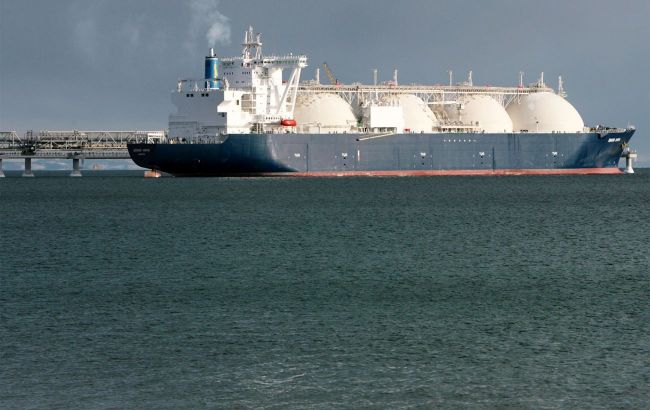 Photo: LNG tanker (Getty Images)
The war in the Middle East has affected Europe's energy market. In July, Belgium switched entirely to imports of Russian liquefied natural gas (LNG), Bloomberg reports.
High gas prices also discouraged most European buyers from purchasing LNG for winter stockpiles.
Although the volume of Russian LNG purchased by Belgium was lower than at the beginning of the year, the situation complicated the implementation of the European Union's energy policy. Since April, the EU has banned new short-term contracts for Russian LNG, while a full ban on its imports is set to take effect next year.
How gas supplies to Europe changed
According to Bloomberg, Belgium's total LNG imports in July fell by more than 40% compared with the same period last year. At the same time, the country imported about 0.4 million metric tons of Russian LNG. Belgium also continues to receive pipeline gas from Norway and the United Kingdom.
Data from German non-profit organization Urgewald show that EU countries imported 16% more Russian LNG in the first half of 2026 than a year earlier, spending nearly €6 billion on those purchases. France, Belgium, and Spain were the largest buyers.
Will the EU phase out Russian LNG?
Russia remains the European Union's second-largest supplier of LNG after the United States. Against the backdrop of low gas storage levels across Europe and uncertainty surrounding supplies from the Middle East, some experts are already questioning whether the EU can realistically phase out Russian LNG within the planned timeframe.
At the same time, officials in Brussels insist that the plan to fully ban Russian LNG imports from next year remains on track.
Earlier, Reuters reported that Europe may fail to fill its gas storage facilities to the target level of 80% before the start of the heating season.
The reasons cited include tight conditions in the global gas market and growing competition from Asian buyers, which are drawing away part of the available LNG supply.