Estonia explains why it does not want to detain Russian tankers in Baltic Sea

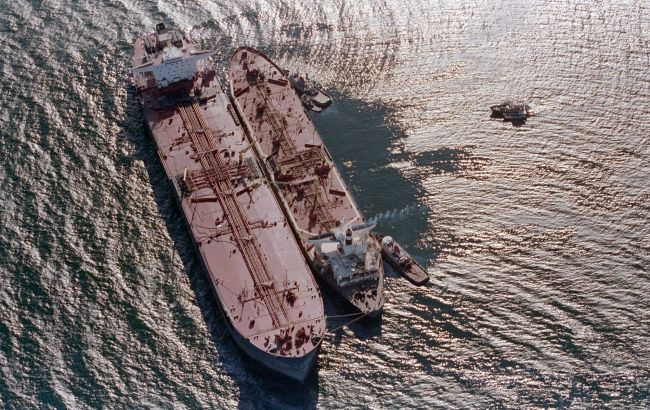 Illustrative photo: Russians have begun escorting tankers in the Baltic Sea (Getty Images)
Estonia has officially announced that it will not detain vessels of Russia’s shadow fleet in its waters due to a critically high risk of direct military confrontation with Russia, Reuters informs.
The Estonian Navy command explained its decision by the critically high risk of direct military confrontation with Russia. Moscow has begun escorting oil tankers with warships.
Estonia’s restrained position is shaped by an incident that occurred in May 2025. At that time, Estonian forces attempted to stop a stateless tanker that was violating sanctions. However, Russia scrambled a fighter jet that entered NATO airspace and escorted the vessel into Russian territorial waters.
"Since then, Moscow has launched a permanent patrol of two or three armed military vessels in the Gulf of Finland, and also deployed more ships elsewhere in the Baltic Sea, along the lanes used by tankers carrying Russian oil," the outlet reports, citing Estonian Navy Commander Ivo Värk.
At the same time, due to successful Ukrainian drone strikes on Russian ports, loading schedules have been disrupted. In Estonia’s exclusive economic zone, the number of waiting tankers has tripled to 30–40 vessels.
"The Russian military presence here in the Gulf of Finland has become much, much more evident," Värk noted.
The United Kingdom, France, and Belgium have been actively detaining aging Russian tankers in the Atlantic and the North Sea, where the presence of the Russian Navy is minimal. Estonia, however, is within range of Russian coastal forces, the outlet adds.
Situation with the seizure of shadow fleet tankers
Meanwhile, it recently emerged that the UK Royal Navy has not seized a single Russian shadow fleet tanker. This is due to concerns that such actions could violate international law.
France, as part of its efforts to counter Russia’s shadow fleet, plans to double prison sentences and fines for vessels sailing under false flags or ignoring orders to stop.
Meanwhile, on April 3, the Swedish Coast Guard detained the sanctioned tanker Flora 1, which is suspected of causing an oil spill in the Baltic Sea. The tanker, with 24 people on board, was anchored near the city of Ystad.