Economic troubles unlikely to push Putin to negotiations in coming years - CNN

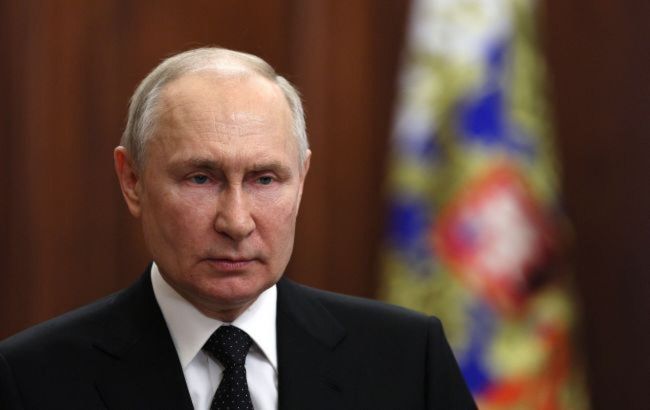 Photo: Vladimir Putin, Russian president (Getty Images)
Russia’s economy is facing mounting difficulties this year. However, this will not force Vladimir Putin to sit down at the negotiating table, according to CNN.
As the outlet reports, Russia is currently facing runaway inflation, a rapidly widening budget deficit (partly due to military expenditures), and declining revenues from oil and natural gas. Additionally, economic growth has slowed significantly.
At the same time, analysts believe that under the current level of hostilities and existing Western sanctions, the Kremlin will be able to withstand these pressures for many years.
"If you look at the economy itself, it’s not going to be that ultimate straw that breaks the camel’s back," said Maria Snegovaya, a senior fellow for Russia and Eurasia at the Center for Strategic and International Studies (CSIS), a think tank. "It’s not catastrophic. It’s manageable."
According to her, looking at the next three to five years, Russia may be able to continue fighting, although providing a reliable assessment over a longer time horizon is difficult.
A group of Russian émigré economists who oppose Putin believe the war of attrition could last even longer, arguing that the Kremlin’s ability to wage war against Ukraine is "unimpeded by any economic constraints."
Richard Connolly of the Royal United Services Institute said Western sanctions have not inflicted enough damage on Russia to change Moscow’s plans regarding Ukraine.
"As long as Russia’s pumping oil and they’re selling it at a fairly reasonable price, they have enough money to just muddle along," said the senior fellow in international security at the UK-based think tank.
Meanwhile, Snegovaya noted that Russia would be more likely to agree to an unfavorable peace deal if it were experiencing a deep economic collapse, as happened at the end of World War I and during the Soviet war in Afghanistan. However, there is a caveat.
"The current economic situation is still far from that, and it would take much greater pressure on the Russian economy and significantly more time for it to reach that point," Snegovaya said.
This, CNN notes, is bad news for Ukraine and for the Trump administration, which has conducted multiple rounds of talks in an attempt to negotiate an end to the war.
Prices and taxes in Russia to not sway society
"What has changed for Russia is that the initial economic boost driven by a sharp rise in military spending appears to have run its course, and now the Kremlin has to continue shifting the burden of the war onto Russian society," Snegovaya added.
CNN writes that this burden has manifested itself in significant increases in corporate and personal income tax rates, as well as a rise in value-added tax (VAT) to finance record military expenditures. In addition, Russian consumers are facing sharp price increases, especially for imported goods.
However, unlike in the West, high inflation in Russia “does not generate significant social discontent,” experts say, pointing to the effects of government propaganda and repression.
Connolly and other analysts also note that inflation has historically been high in post-Soviet Russia, and consumers have become accustomed to it. According to IMF forecasts, average annual inflation in Russia this year will be 7.6%, down from 9.5% in 2024.
Earlier this month, NATO Secretary General Mark Rutte said Russia is spending nearly 40% of its budget “on aggression,” one of several estimates of Moscow’s military outlays. According to an April report by the Stockholm International Peace Research Institute, those expenditures rose by 38% last year compared to 2023.
CNN explains that higher spending has created a new class of wartime economic “winners,” including defense contractors such as weapons manufacturers and industrial workers.
As a result, experts say poverty has declined in some regions of Russia, meaning Putin is under even less pressure from certain segments of society.