Earth could lose its oxygen a billion years sooner than expected

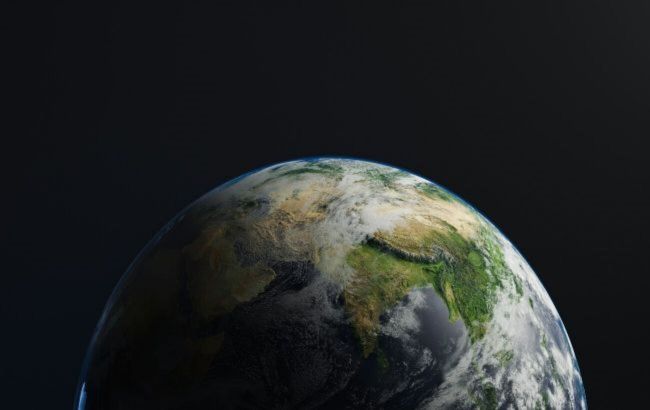 Scientists modeled the end of life on Earth (photo: Unsplash)
Earth will not have an oxygen-rich atmosphere forever—scientists have used computer models to determine when this could change. The study also revealed which scenario is most likely to lead to the collapse of our planet's biosphere, according to a study published in the scientific journal Nature Geoscience.
How was the study conducted, and what did scientists conclude?
To assess the evolution of Earth's atmosphere, Kazumi Ozaki, an associate professor at Toho University, and Christopher Reinhard of the Georgia Institute of Technology created a detailed digital model of Earth that accounts for climate and biogeochemical processes.
The scientists conducted more than 400,000 simulations, changing the input parameters each time, and reached the following conclusions:
- Earth's oxygen-rich atmosphere will last for roughly another 1 billion years
- Previously, scientists believed that the biosphere would survive for another 2 billion years before being wiped out by the Sun's increasing heat and a lack of carbon dioxide needed for photosynthesis
- After that period, rapid deoxygenation will occur, returning the atmosphere to conditions similar to those that existed more than 2.5 billion years ago, before the Great Oxidation Event.
What will Earth look like after losing its oxygen?
After catastrophic deoxygenation, the atmosphere's composition will change dramatically.
Methane levels in the atmosphere will surge, carbon dioxide will fall to critically low levels, and the ozone layer will be completely destroyed.
Under these conditions, complex organisms and plants will not survive.
Earth will once again become a world dominated exclusively by anaerobic microorganisms that do not need oxygen to survive.
A lesson for searching for extraterrestrial life?
The findings matter for astronomers searching for biosignatures (chemical traces of life) on exoplanets.
The researchers found that the oxygen-rich era accounts for only 20-30% of Earth's entire history.
This means that alien civilizations would have only a limited window of opportunity to observe Earth during the period when it has an oxygen-rich atmosphere.
For this reason, the researchers argue that humanity should also search for biosignatures associated with planets with oxygen-free atmospheres, increasing the chances of detecting life elsewhere in the universe.