Discovering Bandera volcano: Ice that lasts millennia in New Mexico mountains

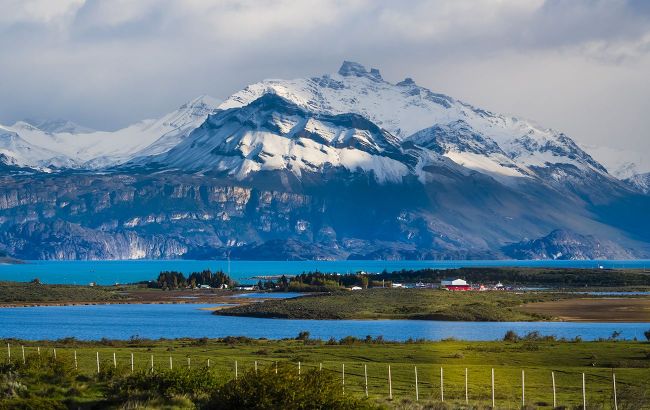 An incredible site on the US map named Bandera (photo: Getty Images)
Deep in the mountains of New Mexico, where the sun scorches the rocks, lies a glacier that has remained unmelted for millennia. Above the glacier sits a volcano that once created an entire field of lava rock around it.
RBC-Ukraine explains where the Bandera volcano is located, what is known about it, and how it got such an unusual name.
Read also: Ghosts or real danger? 10 mystical world locations permanently closed to tourists
Where this volcano is located and why it has its name
The Bandera Volcano is located in the United States, in Cibola County, New Mexico. It is part of the large Zuni-Bandera Volcanic Field and lies within the El Malpais National Monument.
The volcano sits on the Continental Divide — the line that separates the Atlantic and Pacific Ocean watersheds.
The volcano got its name back in the 18th century from the Spanish word "bandera", which means "flag" or "sign." Local residents used the mountain as a landmark in the desert.
Location details:
-
State: New Mexico
-
40 km southwest of the city of Grants
-
Part of the Zuni-Bandera Volcanic Field.
What the volcano hides
Bandera Volcano is famous not only for its enormous crater, which is 240 meters deep, but also for the Ice Cave located at its base.
The Ice Cave is part of an ancient lava tube, where unique air circulation and geological structure keep the temperature below freezing year-round.
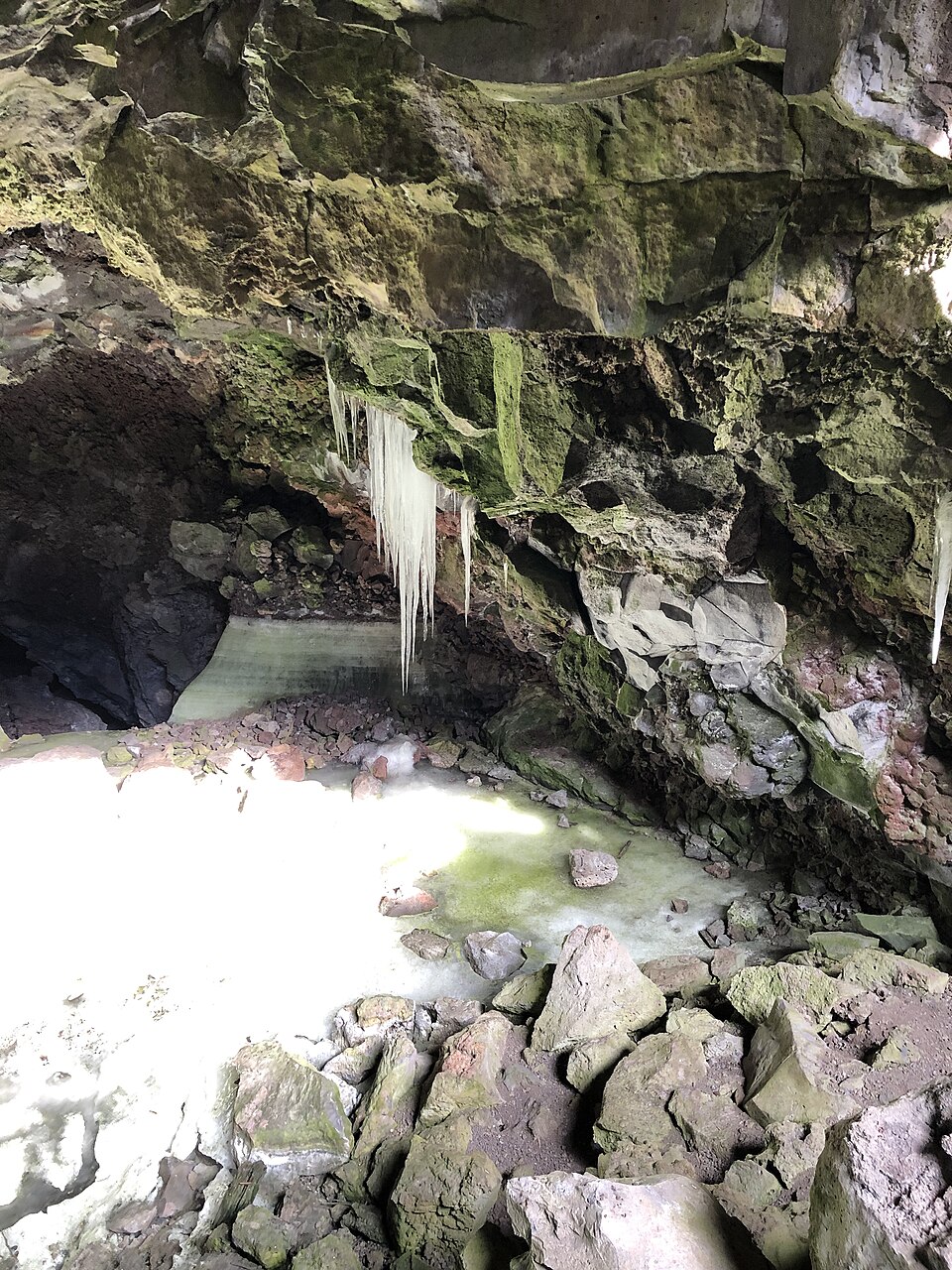
Ice in the cave beneath Bandera Volcano (photo: Wikipedia)
The ice in the cave beneath Bandera Volcano is about six meters thick and has remained unmelted for over 3,400 years, shimmering in green-blue hues due to special Arctic algae.
According to archaeologists, the late Ancestral Puebloans (Anasazi) and early Pueblo peoples inhabited the cave, leaving behind numerous stone tools, pottery shards, and many fully intact ceramic vessels. The Anasazi stacked lava rocks to form walls that insulated their shelters.
How this is possible
The secret lies in the unique air circulation:
-
Cold air becomes "trapped" inside the cave
-
The lava tube’s structure creates a natural refrigeration system
-
The ice thickness reaches several meters.
What tourists can see
Today, Bandera Volcano is a popular tourist destination. Visitors can:
-
Climb to the rim of the crater (240 meters high)
-
Descend into the ice cave
-
See the frozen lava fields
-
Explore the lava tunnels.
.jpg)
Cave beneath Bandera Volcano (photo: Wikipedia)
Not to be confused with Bandera Peak
There are other geographical features in the world associated with the name Bandera:
-
Mount Stepan Bandera (Ortsveri) – a peak in Georgia in the Caucasus (elevation 4,269 m). It was named in 2012 after a group of mountaineers from Lviv (Ukraine) climbed it. (Stepan Bandera - a leader of the Ukrainian nationalist movement in the 20th century. He remains one of the most controversial figures in Eastern European history - ed.)
-
Conchagua Volcano (El Salvador) – has two peaks, one called Ocotal and the other Bandera.
Key facts about the volcano in New Mexico
-
Age: Its last eruption occurred around 10,000 years ago.
-
Status: The volcano is privately owned by the Candelaria family but is open to tourists. The family has managed the volcano since the early 19th century — the land was purchased in 1915, and ice from the cave was historically used to cool beer in a local saloon.
-
Traditions: Nearby is a trading post selling authentic Navajo and Zuni crafts.
-
Trees: The volcano hosts a forest of Douglas firs and ponderosa pines, which grow twisted and gnarled from the lava tubes. Some of the oldest trees in the country are here, with the oldest estimated to be around 700 years old.