Ghosts or real danger? 10 mystical world locations permanently closed to tourists

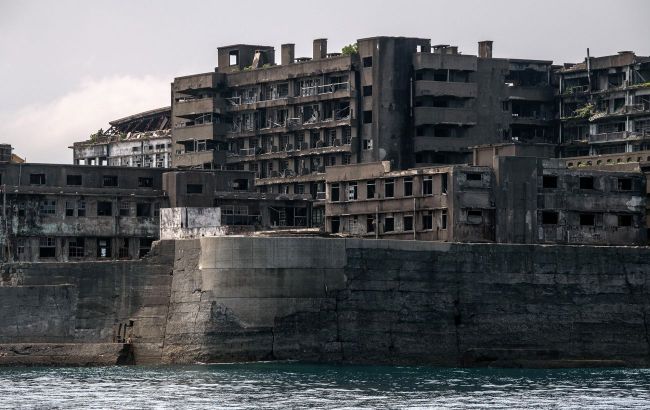 10 mystical places in the world deliberately closed to tourists (photo: Getty Images)
There are places on Earth where entry is officially forbidden. Some are closed due to dangerous ruins, while others are off-limits because of unexplained phenomena that even scientists cannot explain. Governments in several countries have imposed strict restrictions, each backed by its own story.
Far & Wide reports on 10 of the most mystical locations in the world that have become forbidden zones due to unexplained phenomena and danger.
Poveglia Island, Italy – the place of a million deaths
Between Venice and Lido Island lies a small landmass that locals prefer to remain silent about. Poveglia Island is one of the darkest places in Europe.
During medieval plague epidemics, thousands of infected people were brought here to die. According to some estimates, more than 160,000 people died on the island, most of them buried in the ground where tourists now walk. It is said that a quarter of the island’s soil consists of human ashes.
In the 20th century, a psychiatric hospital was opened here, but it lasted only a short time. Staff left en masse, and patients reported hearing voices and seeing shadows. Legend has it that the chief doctor went insane after a few years and threw himself from the bell tower.
Today, Italy officially forbids visiting the island due to dangerous structures and coastal erosion. However, fishermen passing nearby report hearing screams from the island at night.
Bhangarh Fort, India – the only place where the government officially acknowledges ghosts
Most governments never recognize the paranormal. The Archaeological Survey of India is an exception.
Bhangarh Fort, built in the 1600s in the state of Rajasthan, is officially closed from sunset to sunrise. A sign at the entrance clearly reads: “Entry after sunset is strictly prohibited.”
No other protected site in India carries a similar warning. The official reason is wildlife and unstable ruins. But local legend tells a different story: a sorcerer allegedly cursed the town after a local princess rejected his advances. The town was deserted overnight, and no one dared to live there again.
Tourists who entered after sunset despite the prohibition reported disorientation, hearing voices,
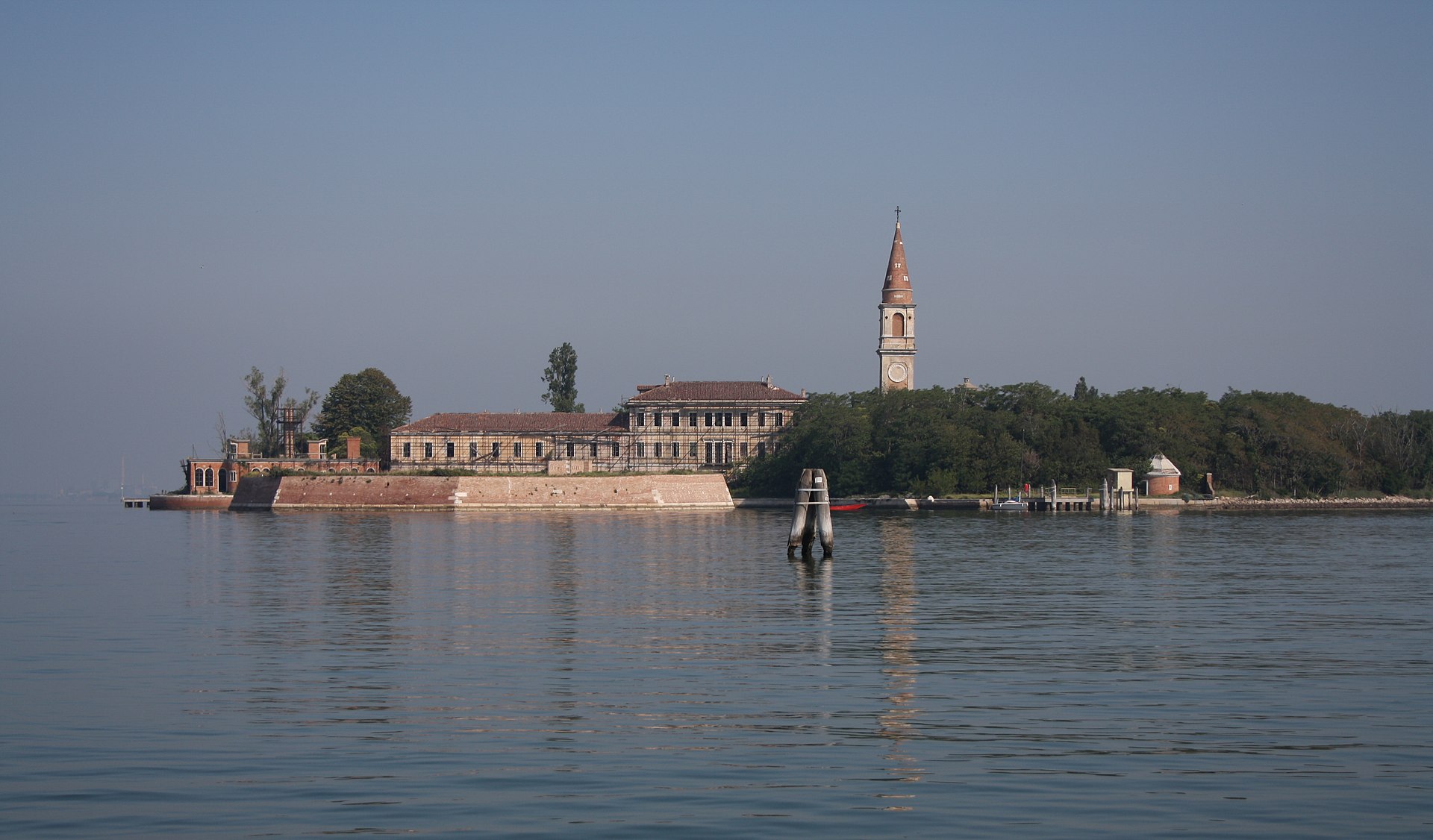 Poveglia Island, Italy (photo: Wikipedia)
Aokigahara Forest, Japan – where compasses stop working
Aokigahara Forest spans 13.5 square miles at the base of Mount Fuji and is one of the quietest places on the planet—not romantically quiet, but eerily silent. Sound barely travels here, as the dense canopy absorbs everything.
There’s another unusual feature: compasses behave strangely in the forest. The volcanic rock under the soil contains iron, which disrupts magnetic needles. Tourists who stray from the paths can lose their sense of direction even in daylight.
Japanese authorities have installed warning signs and restricted access to some trails. Rangers regularly patrol the forest and often find belongings left behind by people who entered and never returned.
Locals believe the forest is haunted by the spirits of those who did not find peace. That’s also why the trees grow in unusual shapes—twisted, bent, and contorted as if something is pulling them toward the ground.
Paris Catacombs, France – city of the dead beneath the city of the living
Most tourists know about the Paris Catacombs, but few realize that only 1.7 miles of the nearly 300 miles of underground tunnels are open to visitors.
The rest is closed. The official reason is the danger of getting lost; unofficially, there are things authorities prefer not to publicize.
The catacombs were created in the late 1700s to solve the problem of overcrowded Paris cemeteries. The remains of roughly six million people were transferred here, neatly stacked along the tunnels.
Some people, known as cataphiles, illegally explore the closed sections. They report feelings of presence, footsteps, and voices with no source. Several explorers have gotten lost in the forbidden tunnels and were never found alive.
French police regularly detain and fine trespassers, but the cataphiles continue to descend and claim that once you enter, stopping is impossible.
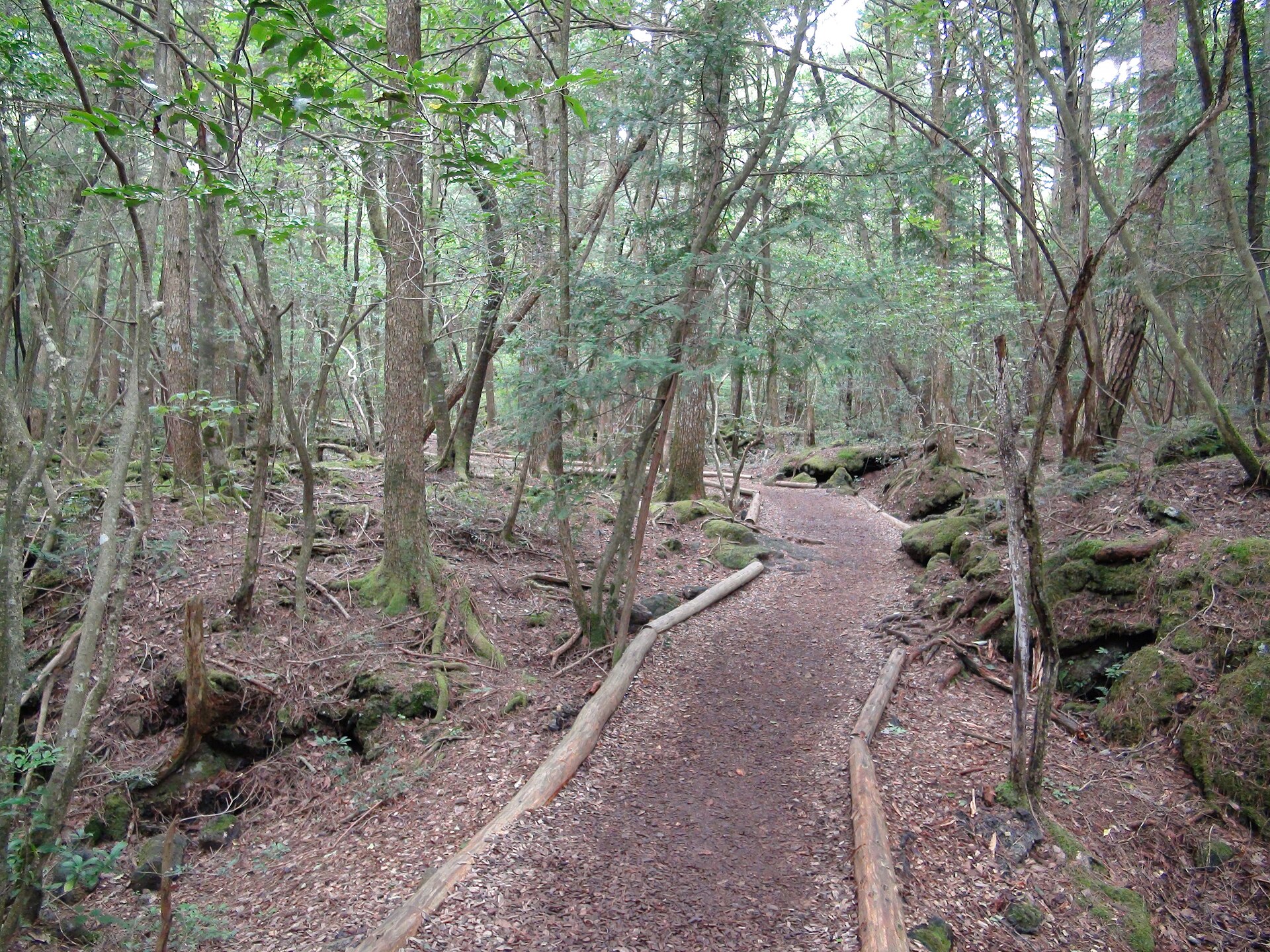 Aokigahara Forest, Japan (photo: Wikipedia)
Hashima Island, Japan – ghost town in the middle of the sea
In 1916, Hashima Island was the most densely populated place on Earth, with 835 people per square kilometer. Miners and their families lived there, and the island had schools, hospitals, and cinemas. It earned the nickname "Battleship" due to its shape and massive concrete structures.
In 1974, the coal mine closed. Within a few months, the island was completely abandoned—people left everything behind: furniture, clothing, children’s toys. No one planned to return.
Today, the concrete buildings are deteriorating under the constant pressure of sea winds and saltwater. Japanese authorities allow only limited guided tours—and only on a few safe platforms. Most of the island remains closed due to the risk of collapse.
However, tourists visiting the island report an unsettling sense of discomfort as if they are being watched through empty windows. Photographers who have visited say their photos often show strange artifacts that weren’t present during shooting.
Hoia-Baciu Forest, Romania – where trees grow in spirals
The forest near Cluj-Napoca in Romania looks like a set from a horror movie, but the eerie appearance isn’t just due to lighting. The trees grow in unusual shapes: twisted in spirals, bent at right angles, or contorted around themselves.
Scientists have identified unusual growth patterns but haven’t been able to explain them. Soil analysis revealed no anomalies.
In the mid-20th century, sheep began disappearing from the forest. Later, military patrols stationed there at night reported strange phenomena: lights without sources, voices, and sudden disorientation.
Romanian authorities officially advise against visiting the remote parts of the forest due to poor visibility and the risk of getting lost. Locals, however, have a different view: the forest chooses who it lets in, and not everyone comes out.
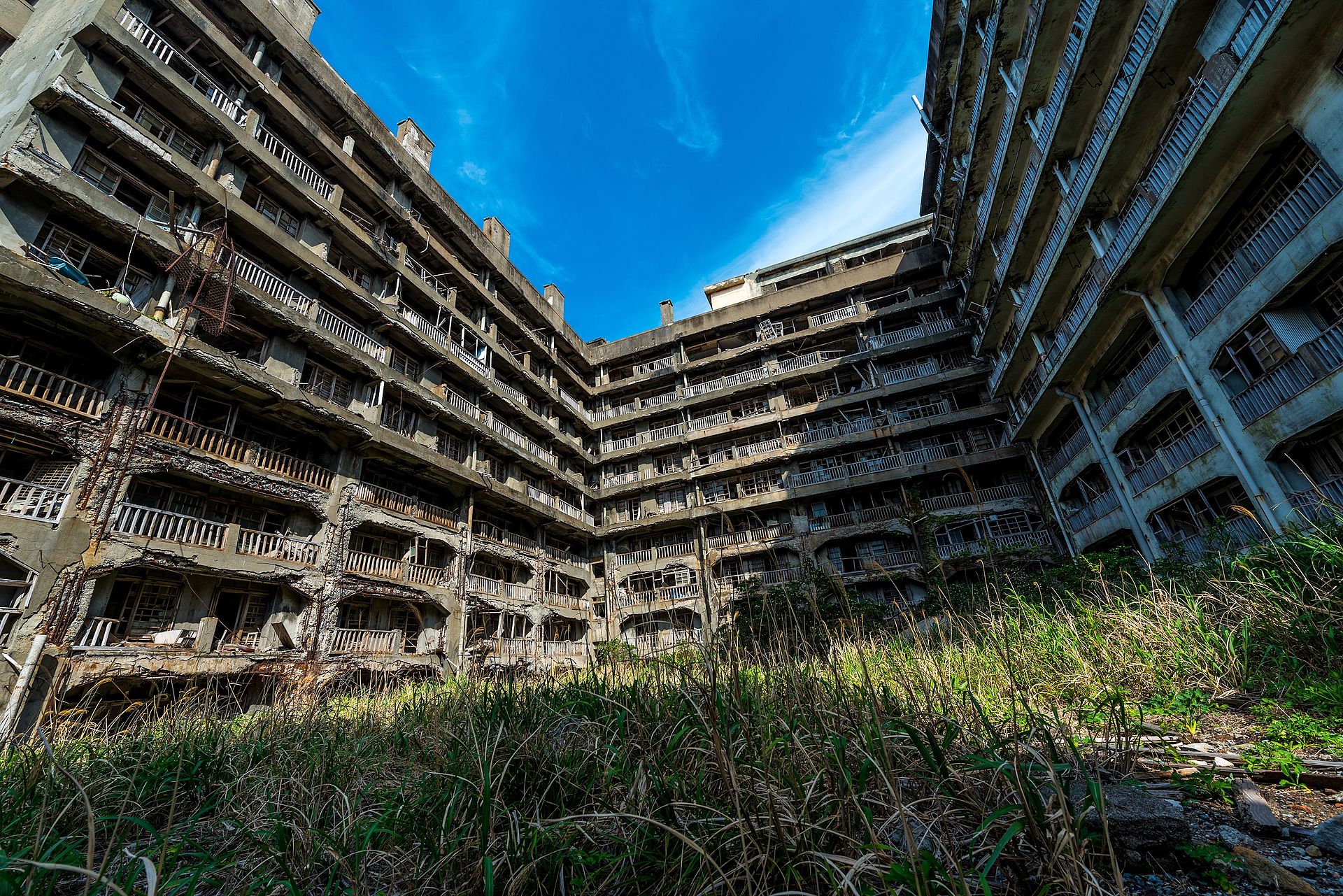 Hashima Island, Japan (photo: Wikipedia)
North Brother Island, USA – quarantine island with a dark past
North Brother Island is located just a few minutes’ boat ride from the Bronx, but reaching it is impossible. New York City strictly forbids any visits.
At the beginning of the 20th century, a quarantine hospital called Riverside was established on the island for patients with tuberculosis, typhoid, and smallpox. Survivors of the steamship General Slocum disaster in 1904, the deadliest maritime disaster in New York history, which claimed over 1,000 lives, were brought here.
After the hospital closed in the 1960s, nature reclaimed the island. Trees grew through the floors, vines wrapped around walls, and roofs collapsed inward. Today, the island is a bird sanctuary, which is the official reason for the restriction.
However, photographers who managed to access the island illegally report a haunting atmosphere in the abandoned wards where medical beds and equipment remain.
Waverly Hills Sanatorium, USA – where death walked the halls
High above Louisville, Kentucky, stands a massive building locals have called the scariest place in America.
Waverly Hills Sanatorium operated in the early 20th century as a tuberculosis hospital, an era before antibiotics, when the only treatments were fresh air and surgical procedures. Thousands of patients died here. Rumors circulated of medical experiments on the sick.
A special tunnel was built to transport bodies so living patients wouldn’t see how many were carried out each day. This "death tunnel" still exists.
After the sanatorium closed in 1961, several attempts at reconstruction failed due to safety violations. The city repeatedly restricted access. Today, tours are conducted under strict supervision and only during daylight hours. Night tours exist separately, and reservations for them can take several months.
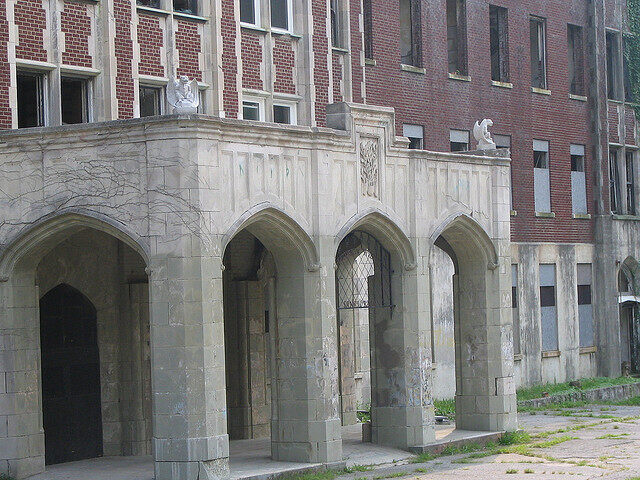
Waverly Hills Sanatorium (photo: Wikipedia)
Humberstone, Chile – ghost town of nitrates
In the Atacama Desert in northern Chile stands a town frozen in time. Humberstone thrived in the 19th century thanks to nitrate mining—and declined just as quickly as it rose.
When the nitrate industry collapsed in the early 1900s, residents left everything behind: chairs, dishes, clothing, and children’s toys. The desert preserved them—there is almost no moisture here—so the items remain as if people stepped out and never returned.
Trespassers who entered the town at night often got injured due to unstable floors and collapsed roofs. There were also cases of vandalism. Authorities closed access completely several times.
Today, Humberstone is a UNESCO World Heritage site. Entry is allowed only with an official guide and after obtaining permission. Even guides say that after sunset, something inexplicable can be felt here.
La Noria, Chile – town where the dead rise from graves
La Noria is the older and scarier sister of Humberstone. This abandoned mining town in the Atacama Desert fell into ruin even earlier.
The main horror here is not the empty houses, but the cemetery. The soil is so dry that coffins sometimes rise to the surface. At La Noria’s cemetery, one can literally see skeletons and body fragments washed out by rare rains or unearthed by erosion.
Police patrols securing the perimeter have reported unexplained movements and sounds at night.
Authorities restrict access due to unstable structures and the town’s complete isolation; the nearest settlement is several hours away. If something goes wrong, help will not arrive quickly.
 Humberstone, Chile (photo: Wikipedia)
Read also: March escape to Peru: Ancient Inca lands, turquoise ocean and cheap meals