Despite inflation and economic turmoil: Russian Central Bank unexpectedly cuts key rate

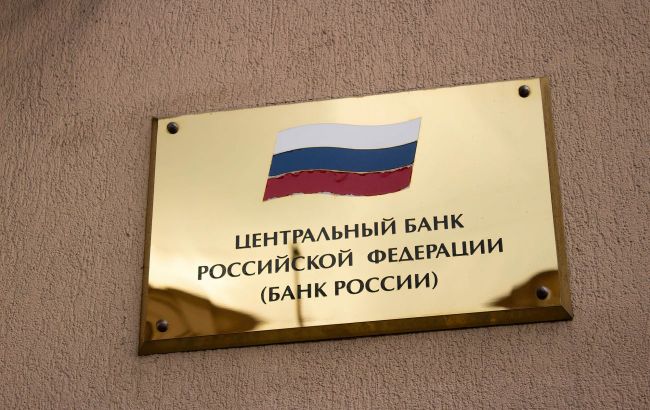 Illustrative photo: Russian Central Bank (Getty Images)
The Russian Central Bank has cut its key interest rate for the sixth consecutive time, attempting to support an economy slowing down due to war spending and sanctions. It reduced the key rate by 0.5% — to 15.5%, Bloomberg reports.
In addition, Russian Central Bank head Elvira Nabiullina said that inflation has allegedly already peaked, and further monetary policy easing is possible at upcoming meetings.
Inflation and risks
According to estimates, annual inflation in January rose to around 6.5% compared to 5.6% at the end of 2025. Business expectations have climbed to their highest level since 2022, while public expectations remain at 13.7%.
The Central Bank warned that high inflation expectations could hinder a steady slowdown in prices. For this reason, the Russian Central Bank forecasts a return of inflation to 4% in the second half of the year, but has raised its projection for 2026 to 4.5–5.5%.
Oil prices were cited as a separate risk. A further decline in oil prices could increase inflationary pressure on the Russian economy.
Pressure on the economy
Overall, the Russian economy slowed to 1% growth last year, down from 4.9% the year before. A prolonged period of high interest rates is making debt servicing more difficult for businesses, banks are increasingly restructuring loans, and large companies are turning to the state for support.
Some economists believe that the GDP growth forecast for 2026 (0.5–1.5%) is overestimated, and in the event of further slowdown, the Central Bank will have to cut rates more aggressively. The next key rate decision is expected on March 20, 2026.
Problems in the Russian economy: Details
As is known, the Russian economy ended 2025 with a sharp deterioration in indicators. One reason is that oil prices fell to a five-year low.
At the same time, Russia’s financial and institutional system is increasingly operating in what is called a “managed chaos” mode. Banks hide ownership structures, businesses operate under losses and pressure, and the burden on the population is growing.
Interestingly, in 2025, the Russian ruble unexpectedly strengthened by 45% against the dollar, trading almost at the level it was before Russia’s full-scale invasion of Ukraine. However, this caused significantly greater losses for Russia, as the ruble’s appreciation combined with sanctions led to a collapse in foreign currency earnings.