Danish startup unveils anti-drone system to protect Ukraine's Odesa from Shaheds

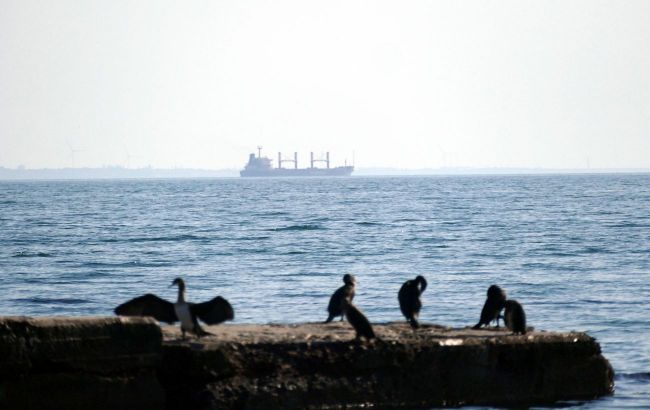 Danish startup proposes system to protect Odesa from Shahed drones (photo: Getty Images)
Danish company BlueShadow has developed the Blue Dragon system to protect Odesa from Shahed drones. The system consists of a swarm of autonomous unmanned surface vessels designed to intercept drones 10-20 kilometers off the coast, BlueShadow founder and Chief Executive Officer Charles Maher told RBC-Ukraine in an interview.
"Our technology is designed to protect the people in the coastal areas of Ukraine, especially Odesa — both the cities and the infrastructure, but also, importantly, the commerce," Maher said.
According to him, the company's goal is to protect cities, infrastructure, and trade.
"By being able to protect those key aspects of the coastal area of Ukraine, it allows the freedom to overcome the pressures of Russia and to be able to restore even after hostilities happen in a hybrid warfare situation," the company's founder emphasized.
The technology itself consists of two parts. The first is the C4ISR technology platform, which integrates swarms of unmanned surface vessels operating at sea with higher-level command and control systems such as Delta, Kropyva, and SkyMap.
The company receives information from these systems while simultaneously transmitting data collected by its own sensors.
The second part is the Blue Shadow Edge technology, an autonomy module installed on each unmanned surface vessel.
This allows the vessels to operate as a squadron united by a shared operational picture and to independently make decisions to optimize combat engagement.
If the system detects that Shahed drones are approaching from a certain direction, it can redirect individual vessels or the entire swarm to that area.
The system is specifically optimized for interception. Each vessel that establishes contact with a target determines the probability of destroying it, while the swarm decides which vessels will participate in the engagement. This is followed by target detection, tracking, classification, and battle damage assessment to determine whether re-engagement is necessary.
"We're in development right now. The core technology, the platform, is live, and we're using it for internal beta testing — so that part is demonstrated and working," Maher added.
According to him, the system is capable of destroying an unlimited number of drones.
Each vessel will carry several interceptors, while the vessels themselves are designed to be modular: they can be equipped with quadcopter drones, missiles, machine guns, and, in the future, electronic warfare systems or other energy-based interceptors.
"The real limitation would ultimately be how many vessels you have out there and how many interceptors each carries. As for the number of tracks the software can handle, it's virtually unlimited, thanks to distributed sensing and distributed compute with very powerful edge compute capability in BlueShadow Edge," the company's founder said.
Russian strikes on Odesa region
On the night of June 26, Russian forces attacked the Odesa region. Energy infrastructure was hit, causing power outages.
On June 10, Russian kamikaze drones attacked the southern districts of the Odesa region and the Black Sea waters. Two civilian cargo vessels were damaged in the strike.
On May 29, Russian forces struck a vessel traveling from one of Odesa region's ports to Türkiye. Crew members were injured in the attack.
In addition, on the night of May 18, Russian forces attacked a Chinese commercial vessel located in Ukraine's territorial waters.
At the end of April, a bulk carrier sailing under the Saint Kitts and Nevis flag, which was traveling through the maritime corridor to Odesa to load grain, came under Russian attack. The attack caused a fire on board, and the vessel's navigation equipment was disabled.