Congress moves to tighten screws on Russia with new sanctions bill

 Photo: US Congress proposes bill to tighten sanctions against Russia (Getty Images)
US lawmakers are advancing a new bill aimed at strengthening sanctions against Russia, titled "Peace Through Strength," according to the press service of Congressman Brian Fitzpatrick.
Congressman Fitzpatrick, Co-chair of the Congressional Ukraine Caucus, together with Gregory Meeks, Foreign Affairs Ranking Member (New York, 5th Congressional District), has led a broad bipartisan coalition of House members to introduce the Peace Through Strength Against Russia Act.
The legislation is described as a comprehensive initiative that transforms ongoing negotiations into decisive congressional action and moves the bill toward consideration by the House of Representatives in January.
"Negotiations do not relieve Congress of its responsibility to act. That responsibility has been clear for some time, and waiting is no longer an option. Peace through strength is the discipline of negotiating from strength—of standing with Ukraine, making unmistakably clear that Russia’s campaign of aggression will not be normalized or rewarded, and affirming that America still enforces the rules that keep peace possible," Fitzpatrick said.
The Peace Through Strength Against Russia Act builds on Fitzpatrick's sustained efforts since the start of Russia's full-scale invasion in 2022 to promote meaningful negotiations, deter further aggression, and ensure that any peace agreement is real, durable, and accepted by the free and independent government of Ukraine.
Unlike incremental sanctions, the legislation establishes a comprehensive framework that directly links Russia’s economic isolation to its willingness to pursue peace and comply with its terms.
It reflects overwhelming bipartisan support for empowering the United States to apply strong economic pressure as a tool to help bring the war to an end.
Specifically, the bill proposes to:
- Impose sanctions on senior Russian officials, oligarchs, state-owned enterprises, and entities supporting Russia's defense, energy, and transportation sectors;
- Restrict Russia's access to the global financial system, including blocking transactions with Russian financial institutions, banning US investment in Russia, prohibiting Russian companies from trading on US stock exchanges, and targeting financial messaging systems used to circumvent sanctions;
- Close loopholes fueling Russia’s war economy, including cutting off routes for importing refined oil and banning US purchases of Russian sovereign debt;
- Sanction Russia's energy influence by prohibiting new US investments and imposing sanctions on foreign actors facilitating the production of Russian oil, gas, LNG, and uranium;
- Impose sanctions for war crimes, including the abduction and illegal deportation of Ukrainian children, as well as Russia’s cooperation with North Korea in support of its illegal war;
- Increase tariffs on Russian imports to up to 500 percent to further economically isolate Russia.
The legislation also establishes a clear and enforceable off-ramp: sanctions may be lifted only if Russia signs a peace agreement accepted by Ukraine and fully ceases hostilities, subject to congressional review to prevent premature or politically motivated sanctions relief.
It is noted that while negotiations continue, Fitzpatrick and his bipartisan colleagues will keep building support to bring the bill to the House floor in January, ensuring that Congress "does its part to match diplomacy with decisive action."
US sanctions against Russia
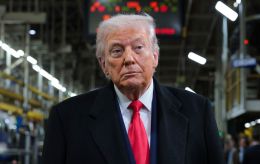
Earlier, Bloomberg, citing sources in the White House, reported that the administration of US President Donald Trump is preparing a new round of sanctions targeting Russia's energy sector.
The White House is seeking to increase pressure on Russian leader Vladimir Putin should he refuse to accept a US-developed peace plan.
In November, the United States imposed sanctions on a number of Russian IT companies and several individuals who may be linked to cyberattacks. Several IT firms from other countries were also targeted.
In October, the US also announced sanctions against Russia's two largest oil companies, Rosneft and Lukoil, as well as 36 of their subsidiaries.
The sanctions are intended to pressure Russia's energy sector and limit revenues that the Kremlin uses to finance the war and support the economy.