Clock is turning against Putin, Estonian intelligence says

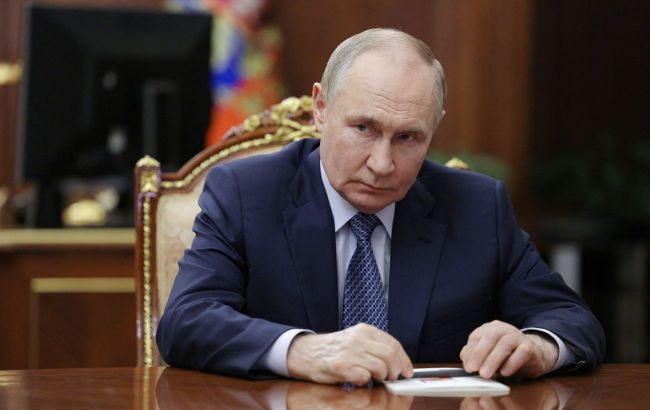 Photo: Russian dictator Vladimir Putin (Getty Images)
Russian dictator Vladimir Putin has increasingly less time to impose his terms on Ukraine in the war, as the situation on the front has stalled and economic and social problems inside Russia are intensifying, according to CNN.
The assessment was made by the head of the Estonian Foreign Intelligence Service, Kaupo Rosin. According to him, within the next four to five months Putin could lose the ability to negotiate "from a position of strength."
"Time is not in Russia's favor," Rosin said.
According to the head of Estonian intelligence, the Kremlin is no longer speaking about a "total victory," as the Russian army is failing to achieve significant battlefield gains despite heavy losses.
He noted that Moscow is losing more troops than it is able to recruit. At the same time, Russian advances have largely stalled in recent months.
According to analysts from the Center for Strategic and International Studies (CSIS), over the past two years until January, Russian forces advanced on average 70 meters per day, while around 1,000 soldiers were killed or wounded daily.
Rosin also highlighted the role of drones in the war, saying that the widespread use of UAVs by both sides is preventing large-scale mechanized breakthroughs on the front line.
Estonian intelligence believes that in order to significantly strengthen its offensive, the Kremlin would need to announce a new wave of mobilization. However, such a move could pose risks to internal stability in Russia.
"They (the Kremlin) are very concerned about internal stability, monitoring it very carefully… This is not the decision they would make very easily," Rosin said.
He recalled that the previous partial mobilization in 2022 triggered protests and a mass exodus of Russians abroad.
Additional pressure on the Kremlin is coming from sanctions, high war spending, and Ukrainian strikes on Russian oil infrastructure. According to Rosin, Ukrainian drones have already caused billions of dollars in damage to Russia's energy sector.
He also noted that the war is increasingly being felt inside Russia itself. After drone attacks on Moscow, it has become clear to Russians that the "war is coming, war is at home."
Another challenge for the Kremlin is returning soldiers. According to Rosin, they bring back violence, psychological trauma, and increased criminal activity in society, with some joining organized crime groups.
Despite this, the head of Estonian intelligence does not currently see signs of a large-scale uprising in Russia due to tight control by security services. However, he suggested that such systems may only appear stable on the surface.
"I really do not see a street revolution at this point, but sometimes such systems are very hollow inside, and if something happens, it will happen very rapidly, and we all will be surprised," he concluded.
Recently, head of the Ukrainian President’s Office Kyrylo Budanov stated that Russia is unable to achieve its initial goals in the war against Ukraine and is therefore lowering its ambitions and setting new demands.
However, the Financial Times recently reported that Russian military command has promised Putin to capture Donbas by autumn, claiming that the Ukrainian army is exhausted, the front is collapsing, and its strength is diminishing.