China hits back hard at sanctions against Russia

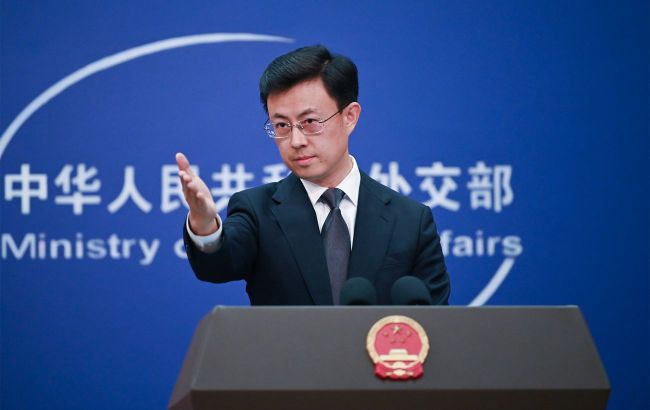 Photo: Chinese Foreign Ministry spokesperson Guo Jiakun (Getty Images)
Beijing said the new sanctions against Russia passed by the US Congress have no legal basis and contradict international law, according to Anadolu.
Chinese Foreign Ministry spokesperson Guo Jiakun told reporters in Beijing on Thursday, September 17, that China's trade cooperation with other countries is based on equality and mutual benefit.
"“China carries out economic and trade cooperation with countries on the basis of equality and mutual benefit," Guo Jiakun said.
According to him, this cooperation "is not directed against any third party and should not be disrupted by pressure from any third party."
"We always oppose long-arm jurisdiction that has no basis in international law or authority of UN Security Council," China's Foreign Ministry emphasized.
What the US law provides
The legislation gives US President Donald Trump the authority to impose tariffs of up to 100% on countries that purchase Russian energy or help Russia circumvent sanctions.
In addition, the law provides for sanctions against Kremlin head Vladimir Putin, other Russian officials, banks and the shadow fleet, while extending existing restrictions against Iran.
The bill was authored by the late Senator Lindsey Graham. The House of Representatives passed the legislation by a vote of 252 to 154 after it had previously been approved by the Senate. The bill is now headed to Trump for his signature.
RBC-Ukraine previously covered the bill's key provisions and possible consequences for the Kremlin in the article, "Sweeping blow to Russia and its allies: What the Graham-Blumenthal bill includes."
Why China and India are at risk
China and India, the biggest buyers of Russian oil, could feel the new restrictions most acutely. The tariffs could affect countries that rank among the five largest buyers of Russian energy and continue making such purchases.
China has helped Russia mitigate the effects of Western sanctions since the early days of the full-scale war by buying Russian oil and selling dual-use goods. Moscow depends on Beijing for supplies of drone components and other military equipment.
India's and Russia's reactions
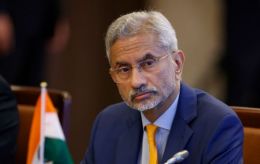
India warned that potential US tariffs could harm relations with Washington and pledged to protect its own trade and energy interests.
Russia said the new sanctions would make it more difficult to seek a peaceful settlement to the war against Ukraine. Kremlin spokesperson Dmitry Peskov called the passage of the bill an "unfriendly step."
Beijing's strong statement came at a sensitive moment for US-China relations. Next week, Washington is expected to host a summit between Chinese President Xi Jinping and US President Donald Trump.
As a reminder, the US House of Representatives gave final approval to the bill imposing "hellish sanctions" on Russia and Iran.
The final vote was 252 to 154, while the Senate approved the legislation back in August.
Meanwhile, India warned the United States that potential tariffs of up to 100% on purchases of Russian oil could harm bilateral relations.
The Indian side pledged to continue protecting its own trade and energy interests.