China calls for an urgent 'stop' to war and warns of fallout

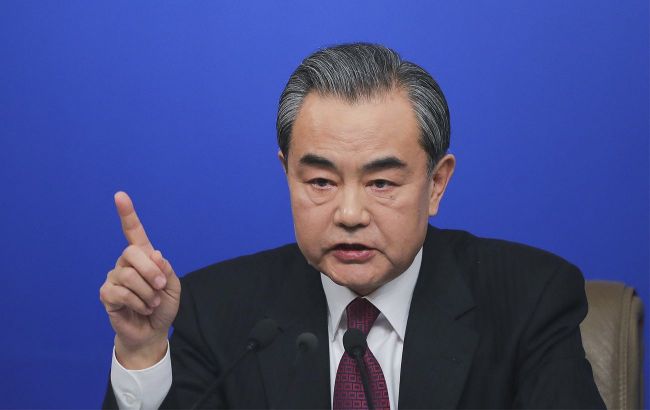 Photo: Chinese Foreign Minister Wang Yi (Getty Images)
China has called on all countries to jointly press the "stop button" in the Middle East conflict, warning that the war is affecting the entire world, states Chinese Foreign Minister Wang Yi, according to the Xinhua news agency.
What Wang Yi said
According to the minister, the prolonged conflict in the Middle East is harming local populations, undermining the regional economy, and destroying security.
"All sides should call on the parties involved to press the 'stop button' on military operations as soon as possible in order to prevent further escalation," Wang Yi said during a phone call with Egypt’s Foreign Minister Badr Abdelatty on March 12.
He also stressed that China and Egypt, as responsible states, support negotiations rather than the use of force.
Minister Abdelatty conveyed Cairo’s position, saying that Egypt is concerned about the situation in the Middle East and supports the UN Security Council resolution calling for restraint.
How China commented on the war in Iran earlier
When the United States and Israel launched an operation against Iran on February 28 and eliminated Ayatollah Ali Khamenei, Wang Yi called it "unacceptable." He held talks with Sergey Lavrov, condemned the attack, and initiated an emergency meeting of the UN Security Council.
However, Beijing did not provide any practical assistance to Iran and limited itself to diplomatic rhetoric. Now it is calling on all sides, including Tehran, to stop the fighting.
Why China is personally interested in peace
For Beijing, the Middle East is not just geopolitics but a matter of economic survival.
More than 55% of China’s total oil imports come from the Middle East, with about 13% coming directly from Iran.
The blockade of the Strait of Hormuz has already reduced maritime traffic by 70% and caused a shortage of sulfur — a raw material used in fertilizers, microchips, and metallurgy. China is one of the largest importers of sulfur in the region.
The conflict is hitting China’s economy directly: prices are rising, and supply chains are being disrupted.