Caught in China's trap: Intelligence exposes myth of Russia's technological independence

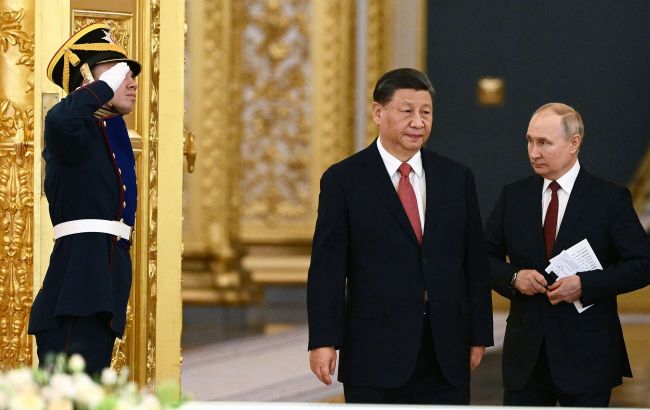 Photo: Chinese leader Xi Jinping and Russian President Vladimir Putin (Getty Images)
Despite Kremlin claims of accelerated "import substitution," the Russian economy remains critically dependent on foreign technology, according to the press service of the Ukrainian Foreign Intelligence Service.
Reality vs. propaganda
According to intelligence officials, the Kremlin aimed to achieve 70–90% independence in strategic sectors (aviation, energy, chemicals) by 2030. However, actual figures fall far short:
-
high-speed rail transport – only 15% domestically produced
-
shipbuilding and energy – 30%
-
unmanned systems production – 40%
-
industrial machinery – around 65%
New dependence on China
The intelligence service notes that instead of achieving independence, Russia has merely changed suppliers. Following restrictions on access to Western technologies, China’s share of microchip supplies to Russia has risen to 90%. This creates a long-term risk of one-sided dependence on Beijing.
Intelligence officials added that, given limited personnel and industrial resources, achieving the stated goals by 2030 is unlikely.
"The Russian course toward technological sovereignty is largely declarative and not supported by the economy’s actual capabilities," the report said.
Earlier, Bloomberg reported, citing a Russian Ministry of Digital Development document, that Moscow officials have been seriously concerned since summer 2022 about the risks of excessive dependence on Chinese technology.
The report highlighted that companies such as Huawei and China Mobile could gain a dominant position in the market, posing a security threat to the country.
According to European officials familiar with the document, this concern was shared by the Russian General Staff and the Security Council. The most vulnerable sectors were identified as microchip production, networking equipment, and electronics.