Canada and EU launch Alliance for the Future: How it will help Ukraine

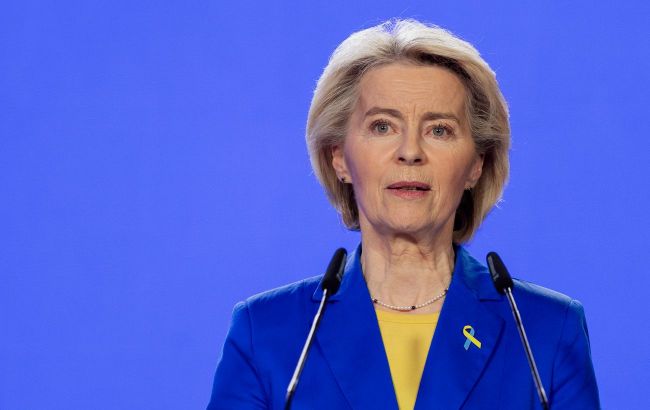 Photo: European Commission President Ursula von der Leyen (Getty Images)
Canada and the EU have established an Alliance for the Future to deepen economic and technological cooperation and counter global threats. Ottawa will also contribute to the €90 billion loan to Ukraine, The Guardian reports.
The creation of the partnership, called the Alliance for the Future, was announced by Canadian Prime Minister Mark Carney and European Commission President Ursula von der Leyen. The announcement was made on October 30 in Montreal during a two-day summit.
According to the leaders, closer ties between Canada and the European Union, which comprises 27 countries, have the potential to deliver "unprecedented stability and opportunities" for both sides.
"Our societies have been shaken by new storms," Carney told reporters, referring to the devastating effects of the climate crisis, as well as the "erosion of democratic norms" and the "weaponization of trade."
The new alliance is intended to serve as a platform for cooperation among countries that share common values and seek to respond more effectively to global threats. The initiative is also open to other countries.
What does this mean for Ukraine?
One of the outcomes of the summit was Canada's agreement to take part in providing Ukraine with a €90 billion support loan.
At the same time, the partnership will not be limited to international security issues. The parties plan to expand economic ties, reduce trade and travel restrictions, and create new educational opportunities.
Following the talks, the leaders said that further work should help create a more integrated market worth tens of billions of dollars.
For Ukraine, the agreements are important primarily because of Canada's participation in the loan support. More broadly, the creation of the alliance is expected to strengthen cooperation among partners seeking greater resilience in the face of international shocks.
Canada to gain access to European supercomputers
Another outcome of the summit was an agreement allowing Canada to join the European supercomputer network.
This will enable Canadian experts to use European computing resources to train artificial intelligence models.
How the alliance is expected to affect the economy and prices
During the summit, Carney and von der Leyen also raised the issue of the cost of living. The leaders stressed that international trade conflicts can directly affect the expenses of ordinary citizens.
Von der Leyen noted that when trade is used as an instrument of economic pressure, families feel the consequences. This affects, among other things, supermarket food prices and the cost of cars.
According to her, suppliers of energy, critical minerals and semiconductors, who were previously considered reliable partners, are increasingly becoming tools for exerting influence on other countries.
Carney, for his part, emphasized the benefits of competition. He expressed hope that cooperation between Canada and the EU would help strengthen supply chains and better withstand economic shocks.
In addition to Canada, the EU wants to involve the United Kingdom in providing additional funding for Ukraine. According to Politico, Kyiv could face a €70 billion funding shortfall in 2027, so Brussels plans to persuade London and Ottawa to increase their contributions to support Ukraine.
At the same time, the EU is considering other ways to cover Ukraine's financial needs for 2027. In particular, Brussels is discussing new joint borrowing on financial markets and the use of frozen Russian assets worth approximately €210 billion.