Bloomberg: US-Iran war could continue for months over Strait of Hormuz dispute

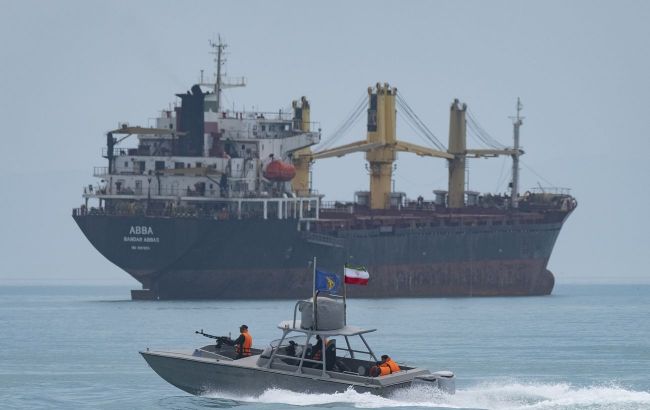 Photo: An oil tanker passes through the Strait of Hormuz (Getty Images)
Despite diplomatic contacts, a quick end to the war between the US and Iran is not expected. The main obstacle to peace remains the Strait of Hormuz, Bloomberg reports.
According to current and former officials from the US, Iran, and Europe, the war between the US and Iran is likely to drag on for several more months, as the two sides remain deadlocked over the Strait of Hormuz and have been unable to reach a lasting ceasefire agreement.
Sources with contacts among senior officials in both countries say the situation is unlikely to change anytime soon. In their view, the conflict will continue to follow a familiar pattern of limited military clashes, brief pauses, and renewed fighting.
Why the Strait of Hormuz remains the main obstacle
The Strait of Hormuz remains the biggest stumbling block. Iran insists on its right to control shipping through the strategic waterway and to levy fees on oil tankers and other vessels bound for the Persian Gulf.
At the same time, according to Bloomberg's sources, US President Donald Trump is unwilling to make concessions on the issue and is unlikely to accept a compromise unless Tehran changes its position.
Roughly one-fifth of global oil and liquefied natural gas supplies pass through the Strait of Hormuz. As a result, Iran views control over the waterway as one of its key sources of leverage over the US and a cornerstone of its own security.
Is a major escalation possible?
Bloomberg's sources also say officials in Tehran believe Washington is unlikely to pursue a major escalation because of the risk of a sharp spike in oil prices and the potential impact on US allies in the Persian Gulf.
According to one source, the surge in oil prices above $100 a barrel was one of the factors that prompted President Donald Trump to suspend daily airstrikes on Iran and shift the focus back to diplomacy.
However, White House spokeswoman Anna Kelly dismissed anonymous claims about the US president's motives.
"Comments from anonymous sources pretending to have insight into President Trump’s thinking should be discarded as mere speculation," she said. "Only the commander-in-chief knows what he will do next."
Even so, Bloomberg's sources believe neither side wants to return to the full-scale conflict seen in the spring. Instead, the fighting is expected to continue at a lower intensity while indirect talks, primarily mediated by Oman, proceed in parallel.
The latest escalation came after Iran's Islamic Revolutionary Guard Corps attacked US troops in Jordan.
In response, the US, together with Saudi Arabia, carried out strikes against Iran-backed groups in Iraq that Washington says had recently attempted to target the kingdom's oil infrastructure.
Following the attack on US forces, Donald Trump responded forcefully, vowing to launch a powerful strike against Iran.