Billions on hold: Where Tehran keeps its $100 billion and why it's frozen

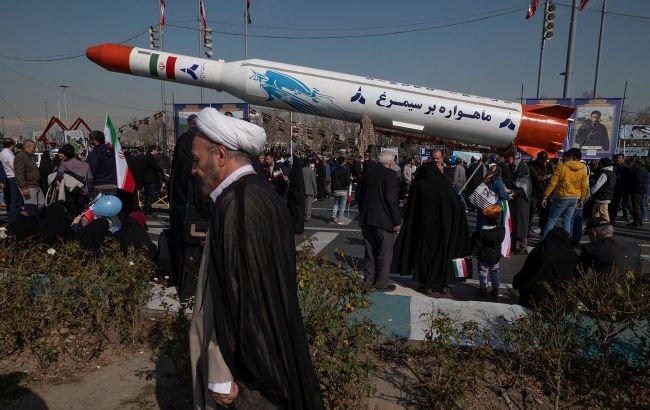 Photo: exhibition of Iranian weapons (Getty Images)
Washington and Tehran are preparing for a second round of talks, although US President Donald Trump has already said he will not unfreeze $20 billion in exchange for enriched uranium. Iranian funds have been periodically frozen since 1979 and are held across multiple countries, according to Al Jazeera.
Read also: Iran opens Strait of Hormuz to all commercial shipping
Iran's economy has been drained by sanctions, and the country is experiencing rampant inflation. It appears that Tehran sees the return of these assets as its only chance to save the economy.
Iranian Parliament Speaker Mohammad Bagher Ghalibaf, even before the first round of talks, issued a tough demand: revenues blocked in foreign banks must be returned before any official discussions begin.
However, the meeting in Pakistan produced no results, although after the start of the port blockade Iran became more willing to negotiate. The situation may become clearer as early as April 22, when the current ceasefire regime expires.
How much of Iran's money is frozen and where it is held
The exact amount of assets is disputed, but experts estimate it at more than $100 billion. This is three times higher than Iran’s annual revenue from oil and gas sales.
"This is a very substantial sum, especially for a society that has been suffering under decades of US-led sanctions," said Frederic Schneider, a non-resident senior fellow at the Middle East Council on Global Affairs.
Geography of Iran's frozen funds:
- China: at least $20 billion;
- India: about $7 billion;
- Iraq and Qatar: $6 billion in each country;
- US: approximately $2 billion directly in American banks;
- EU (including Luxembourg): $1.6 billion;
- Japan: about $1.5 billion.
Tehran's main demand now is to receive at least $6 billion as a "confidence-building" gesture.
Why Tehran's assets ended up "under lock and key"
The freeze began in November 1979. At that time, US President Jimmy Carter froze Iranian funds after American hostages were taken in Tehran. Since then, sanctions have only intensified over the nuclear program and support for terrorism.
The situation resembles a pendulum. In 2015, under Barack Obama, Iran gained access to the funds in exchange for a nuclear deal. But in 2018, Donald Trump withdrew from the agreement. The money became inaccessible again.
The latest incident occurred under Joe Biden, when he blocked $6 billion in Qatar that he had previously allowed to be transferred from South Korea. This was in response to Iran’s massive attack on Israel using drones and missiles.
Why Iran needs these billions right now
For Tehran, this money is a matter of regime survival. Roxane Farmanfarmaian, academic director at the University of Cambridge, explains that unfreezing the assets would allow the country to combat inflation and modernize infrastructure.
"It would mean being able to repatriate its funds earned in hard currency from oil sales, for example, back into its own economy. It would also give it control over its currency fluctuations," she noted.
Political scientist Chris Featherstone of the University of York believes that a US move to unfreeze the assets would be a powerful diplomatic signal. However, the unpredictability of the Trump administration makes any forecasts risky.
Latest updates on US–Iran talks
Donald Trump has promised that a deal with Tehran will be ready within "a day or two." A meeting of the delegations is expected to take place this weekend.
Media outlets have also reported that, amid rising energy prices, the US leader may make concessions to Iran. He could change tactics or sacrifice some demands in the negotiations.