Is Trump softening on Iran? Politico uncovers unexpected details

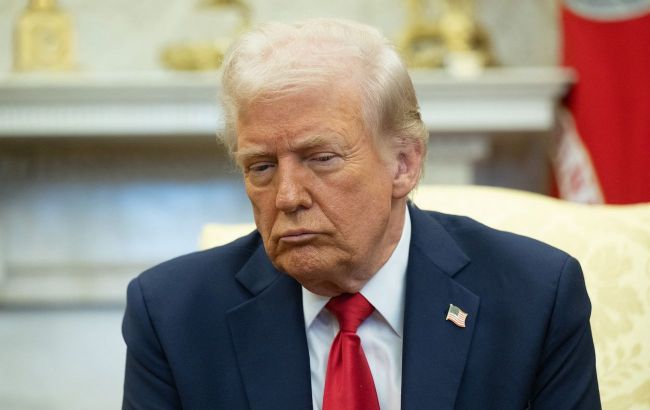 Photo: US President Donald Trump (Getty Images)
US President Donald Trump wants to end the war with Iran through negotiations. And due to falling ratings and rising prices, he may turn out to be much more accommodating toward Tehran than he publicly claims, reports Politico, citing senior officials from Persian Gulf countries and the United States familiar with the course of the negotiations.
Official: Trump really wants this to end
“I think he would accept more compromises because he badly wants this to end,” an anonymous senior official from the Persian Gulf countries said.
According to him, Trump is “is serious about talks and badly wants this to end, but the Iranians are so far refusing to give him what he needs to save face and leave.”
What is holding back a deal
Despite US Vice President JD Vance’s statement about a final offer at the talks in Islamabad, internal negotiations are ongoing. On Thursday, April 16, Trump said that a new round of in-person talks could take place as early as this weekend.
“Iran wants to make a deal, and we are dealing very nicely with them,” he told reporters before departing for Las Vegas.
But there are specific disagreements:
- Moratorium on uranium enrichment. The Trump administration proposes 20 years — Iran agrees only to 5.
- Removal of enriched uranium. The US demands that Iran transfer its stockpiles of partially enriched uranium to a third country — Tehran refuses.
- “Nuclear dust.” Trump said Iran "agreed to give us back the nuclear dust that’s way underground" — Tehran has not confirmed this.
At the same time, Trump did not rule out that Iran would enrich uranium for civilian purposes in the future. The White House did not give a direct answer when asked.
The blockade and its cost
Trump imposed a naval blockade of the Strait of Hormuz to deprive Iran of oil revenues and bring it back to negotiations. But analysts point out: the longer the strait remains closed, the higher oil prices rise — and the more this harms Trump himself.
“The longer the strait is closed, sending oil prices higher, the harder it is for the president politically,” said Eyck Freymann, a fellow at Stanford University.
About 10,000 US troops are supporting the blockade. White House budget director Russ Vought acknowledged that the administration has not yet determined even an approximate amount of funding needed from Congress for this conflict.
What cards Iran holds
Finnish President Alexander Stubb, speaking in Washington, stated bluntly: “Iran holds a lot of the cards right now. I’m afraid that is a reality.”
The head of the International Energy Agency warned that Europe has “maybe six weeks or so” of aviation fuel left before an oil shortage leads to mass flight cancellations.
If Trump stops the blockade and agrees to a deal allowing uranium enrichment in the future, it would call into question the entire logic of why this war began.
“It is difficult to justify or even explain what has happened in the past month,” said Christopher Hill, a five-time US ambassador.
The US and Iran agreed to a ceasefire on April 8, 2026 — just hours before Trump’s ultimatum to launch massive strikes. It will last for two weeks, meaning only a few days remain.
Now the US and Iran are considering extending the ceasefire. However, there are no concrete agreements yet.
We also reported that negotiations between Washington and Tehran could drag on for six months.