Between Mar-a-Lago and Kyiv: Inside a week of peace negotiations


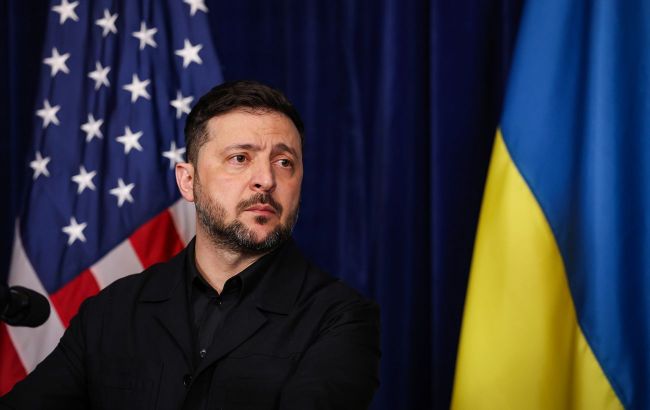 Volodymyr Zelenskyy (photo: Getty Images)
After the meeting between Zelenskyy and Trump in the US, negotiation processes on ending the Russia-Ukraine war have continued despite the holidays.
RBC-Ukraine reports on the key statements and events of a turbulent New Year's week.
Key questions:
- What were the outcomes of the Zelenskyy-Trump meeting?
- How did Russia fabricate an "attack on Putin's residence"?
- What is expected in the negotiations in January?
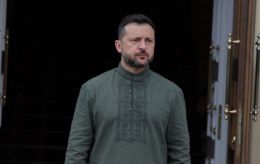
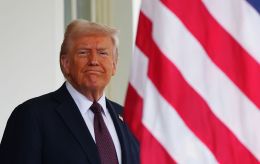
On Sunday, December 28, a Ukrainian delegation led by President Volodymyr Zelenskyy visited the US for talks with Donald Trump and his team. Before and after the negotiations, the US president held two phone calls with Russian dictator Vladimir Putin.
Commenting on the meeting with Trump, Zelenskyy said that the 20-point plan has been implemented by 90%.
"Security guarantees from the US are 100%, guarantees from the US and Europe are 90%, the military component is 100%, and the prosperity plan is being finalized," he said at a press conference.
Trump also confirmed that, overall, 95% of the agreements have been finalized. Issues related to the creation of the so-called "free economic zone" in Donbas and the Zaporizhzhia Nuclear Power Plant remain unresolved for now. However, Ukraine and the US are moving closer to an agreement on these matters.
A member of the Ukrainian negotiating team told RBC-Ukraine that the meeting was substantive and one of the most important to date.
In his New Year’s address, President Zelenskyy emphasized that Ukraine is doing everything to achieve peace, but that the peace agreement is currently 90% ready, not 100%, as global leaders have not agreed with all of Kyiv’s arguments.
According to him, Ukraine wants peace, but not at any cost. Ukrainians want "the end of the war, but not the end of Ukraine."
Europe and security guarantees
Following Zelenskyy's meeting with Trump, another round of consultations was held among Ukrainian, European and American officials.
A member of the Ukrainian delegation, Secretary of the National Security and Defense Council Rustem Umerov, said particular attention was paid to the package of measures for Ukraine's prosperity — specifically, how to "continue defining, refining and advancing these concepts."
The sides also discussed "many additional details." German Chancellor Friedrich Merz said there are signs that the peace process is moving forward.
"We are advancing the peace process. Transparency and honesty are now required from everyone, including Russia," Merz emphasized.
At the same time, Polish Prime Minister Donald Tusk believes there are grounds to assume that the war could end sooner than expected.
Sources cited by Welt say European countries are ready to send military contingents to Ukraine to monitor compliance with a ceasefire. France and the United Kingdom, in particular, are prepared to provide relevant security guarantees for Ukraine — including the use of ground troops to oversee the ceasefire regime.
Depending on the commitments undertaken, up to 15,000 troops could be deployed on Ukrainian territory during the first six months.
Kremlin fakes
Immediately after the meeting in Mar-a-Lago, Fox News reported on a possible direct conversation between Zelenskyy and Russian dictator Vladimir Putin — the first in more than five years.
However, a source in the Ukrainian president’s team told RBC-Ukraine later that such a conversation is not currently being discussed.
According to the source, the issue is not whether such a conversation is "timely" or "untimely" — other formats and approaches to resolving the war are now being discussed.
The president's team stresses that Ukraine is always ready for talks with the Russian side — in any format and in any location — if it concerns real steps toward ending the war.
At the same time, Russia attempted to sabotage the negotiations by planting a claim that Ukrainian drones had allegedly attacked Putin’s residence in Valdai. The Kremlin provided no evidence to support this claim.
"Russia’s negotiating position will be revised, taking into account the Kyiv regime’s final transition to a policy of state terrorism. The targets and timing of Russia’s retaliatory strike after the attack on Putin’s state residence have been determined," Russian Foreign Minister Sergei Lavrov said.
Putin's spokesman Dmitry Peskov later added that Russia also intends to take a tougher negotiating stance, without explaining what this would entail.
In the US, however, Russia’s claims appear not to have been believed this time. Trump reposted a New York Post article on the TruthSocial platform in which the authors explain why the alleged attack on Putin’s residence is a manipulation. It should be noted that Trump often uses reposts to signal his views without making formal statements.
The Wall Street Journal, citing its sources, reviewed a CIA assessment stating that "there was no attack on Putin." A source told the publication that Ukraine had sought to strike a military target it had already targeted before. That target is located in the same area as Putin’s country residence, but not nearby.
Meanwhile, Ukraine's Foreign Intelligence Service reports that Russia is preparing a large-scale provocation involving civilian casualties as part of a continued special operation aimed at derailing US-mediated peace talks.
"Following the so-called 'attack on the residence of (Russian dictator Vladimir – ed.) Putin,' we are recording the Kremlin’s dissemination of new fabricated information narratives to prepare Russian and foreign audiences for further escalation," the Foreign Intelligence Service said.
The expected timing of the provocation is on the eve of or during the celebration of Christmas under the Julian calendar — January 7. The site of the provocation could be a religious building or another location of high symbolic significance for Russia.
An active January
Negotiations are expected to resume after the Christmas holidays. On January 3, a meeting of the coalition of the willing at the level of advisers from more than a dozen countries will take place in Kyiv. On January 5, a meeting of chiefs of general staffs will be held, with security guarantees for Ukraine as the main topic.
"Political agreements are almost ready, but it is necessary to work out in detail how exactly these guarantees will operate in the air, on land and at sea after the war ends," Zelenskyy said.
A meeting of European leaders in the Coalition of the willing format is scheduled for January 6.
Zelenskyy has also previously said that finalization of agenda issues between Ukraine and the US is expected next week.
In particular, Ukrainian and European delegations are expected to visit Washington in January. In addition, according to Zelenskyy, some documents within the negotiation process will be ready for signing as early as January.
As before, however, the overall success of the negotiation process depends on Russia's position and its willingness to genuinely move toward ending the war. Fake stories about an "attack on Valdai" or shelling of peaceful residents of Kherson on New Year’s Eve instead point to the opposite mood in the Kremlin.