Beijing warns EU over 'Made in Europe' law

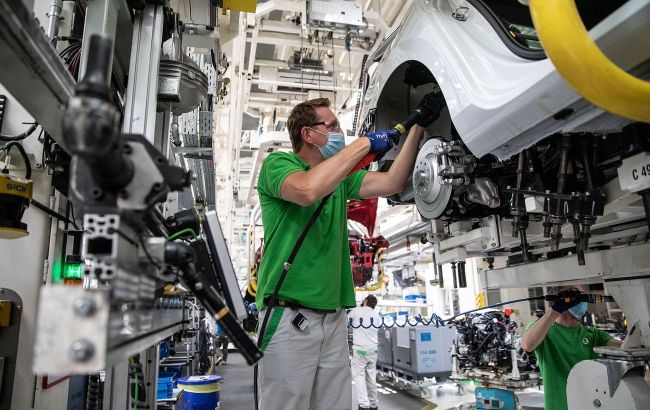 Car factory in Czechia (Photo:Getty Images)
China is officially demanding that EU countries repeal or substantially amend the new Made in Europe law. Beijing is threatening mirror sanctions and economic pressure if the document is adopted, reports Euronews.
"Chinese embassies in EU member states have conveyed China’s comments and suggestions to the governments of their hosting countries," said Suo Peng, Minister of Trade and Economy at China's mission in Brussels.
The diplomat emphasized that China does not intend to stand by and watch the process from the sidelines. Beijing is preparing a retaliatory strike. He added that if the EU insists on this punishment and discriminates against Chinese enterprises, Beijing will be forced to respond with countermeasures.
What the "Made in Europe" law provides for
The EU seeks to protect its market, and the new project, presented in March, is called the Industrial Accelerator Act. Its goal is to give priority to European goods in strategic sectors.
This applies to public procurement in the following sectors:
- Automobile manufacturing (including electric cars);
- Green technologies and renewable energy;
- Steel and aluminum industries.
Brussels also plans to establish a strict filter for foreign money. Any investments exceeding 100 million euros will be subject to special scrutiny. This applies to battery production, solar panels, and the extraction of critical raw materials.
Harsh conditions for major market players
What most outrages Beijing are the rules for market leaders. If a company from one country controls more than 40% of the global market in a particular sector, the EU will issue it an ultimatum.
Such manufacturers will be obliged to:
- Create joint ventures exclusively with European partners;
- Fully transfer their technologies to the European side;
- Ensure that at least 50% of their staff are EU citizens.
Chinese Minister Suo Peng accused Brussels of double standards. He recalled the 2018 statement in which the EU, together with the US and Japan, opposed forced technology transfer. Now, in Beijing's view, Europe is doing the same thing.
Division within the European Union: who is "for" and who is "against"
Unity in Brussels is still lacking, and EU member states have differing views on the conflict with Beijing. France advocates for the strictest possible rules. Paris wants to protect local producers at any cost.
Germany is more cautious. Berlin calls for cooperation with like-minded partners, fearing the loss of access to Chinese innovation and markets.
Some countries fear a price hike. Stricter rules could make production more expensive.
Currently, the EU insists on the principle of reciprocity. The European market will only be opened to those who allow European firms into their own markets. China does not yet have such an agreement with the EU but declares its readiness for negotiations. Beijing demands a response from Brussels as soon as possible.
What else is important to know about the EU and China's economy
Beijing is irritated by EU sanctions against the Kremlin. The fact is that the latest sanctions package included Chinese companies suspected of supplying dual-use goods to Russia.
Additionally, the EU has presented a law on a new industrial policy. Europe is building a new model of industrial support and production localization, and for Ukraine, this could be an opportunity to integrate into European supply chains.
Furthermore, Europe is becoming less dependent on Chinese lithium. Finland has opened its first lithium mine and processing plant. The €783 million project will allow the EU to reduce its dependence on Asian supplies.