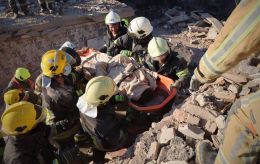
'As long as there is water, we stay': Life in Ukrainian Sloviansk 10 km from front line

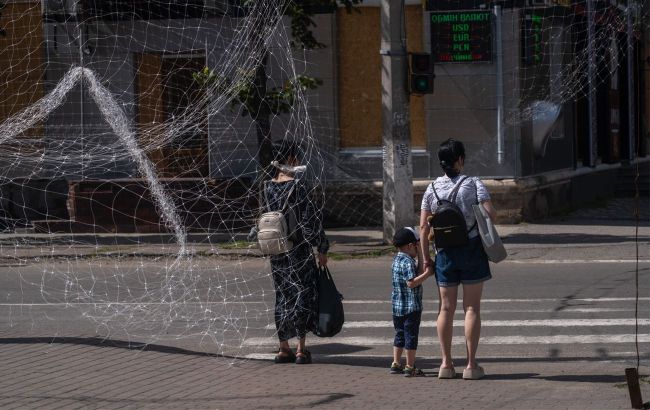 Sloviansk, July 13–14 (Photo: Oleksii Filippov)
There was another shelling in Sloviansk overnight. By morning, water was once again barely running from the tap. So nine-year-old Sasha routinely picks up a five-liter plastic bottle. He wants to help his mother bring water home from the city's distribution point. To get there, the family walks along a corridor of anti-drone nets that are now stretched over almost all the streets of Sloviansk.
RBC-Ukraine and UNICEF present a report on what life is like in the frontline city of Sloviansk.
A city survives as long as it has water
"There are nets all over our city because drones fly along the roads. They hunt for cars and buses, so the nets are put up to keep drones from reaching the roads. The nets protect us," Sasha explains, almost like an expert, describing the harsh realities of wartime life that no child should have to know.
This summer, the front line has moved closer to Sloviansk — it is now just 10–15 kilometers away. For Sasha and other children living here, this means sleepless nights, unreliable access to water, communications and medical care, and even a lack of ordinary summer activities.
"The hardest thing is seeing my hometown being destroyed and people I've known all my life leaving. We are staying for now because of our elderly relatives and our animals. But I can see how the war is taking my sons' childhood away. They spend almost all their time at home and barely interact with other children their age. We also often have no electricity, and there are frequent disruptions to the water supply and mobile communications," says Sasha's mother, 47-year-old accountant Maria, who is also raising 12-year-old Ivan.
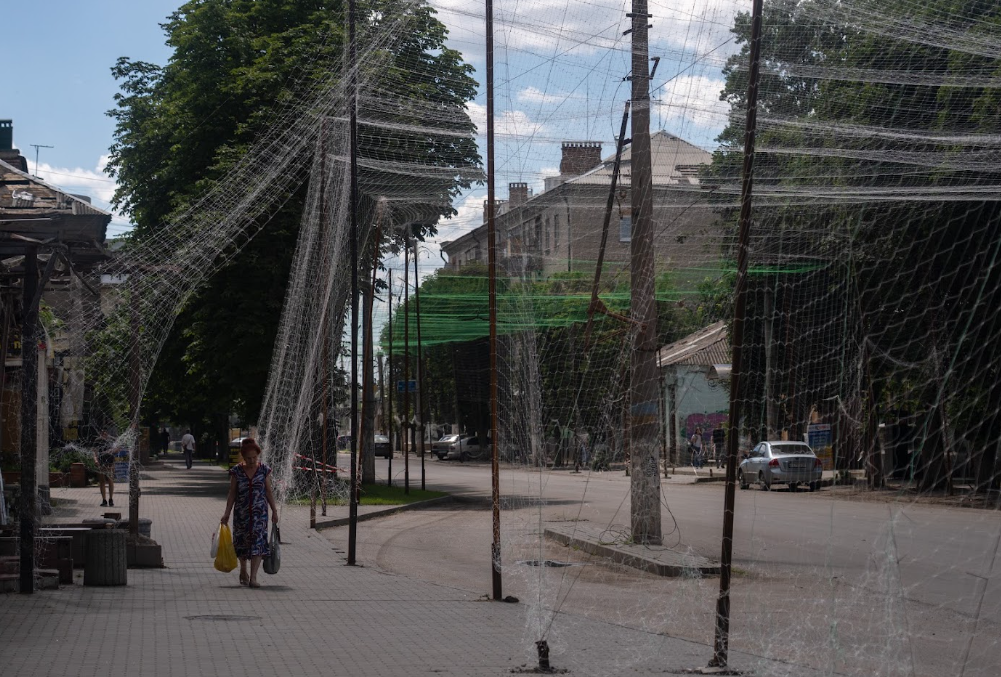
Photo: A Sloviansk street covered with anti-drone nets (Oleksii Filippov for UNICEF Ukraine)
Despite constant shelling and the hot summer weather, municipal workers and city authorities are trying to provide residents with at least reliable access to water.
A new water pipeline is currently being built in Sloviansk with UNICEF support. It is expected to significantly improve water supplies for local residents. The city's two other water pipelines are regularly damaged and require repairs.
A city where children still live
When the water is cut off, Sasha helps his mother either collect it from a well in a private residential area or, as today, get it from large blue plastic tanks at the Point of Invincibility. As part of a project by UNICEF and the Sloviansk Water Utility, the tanks are regularly filled with clean drinking water for city residents.
"My brother and I have divided up the chores: I bring the water, and he washes the dishes. And if there is no electricity, Mom heats water and washes clothes in a basin," the boy says.
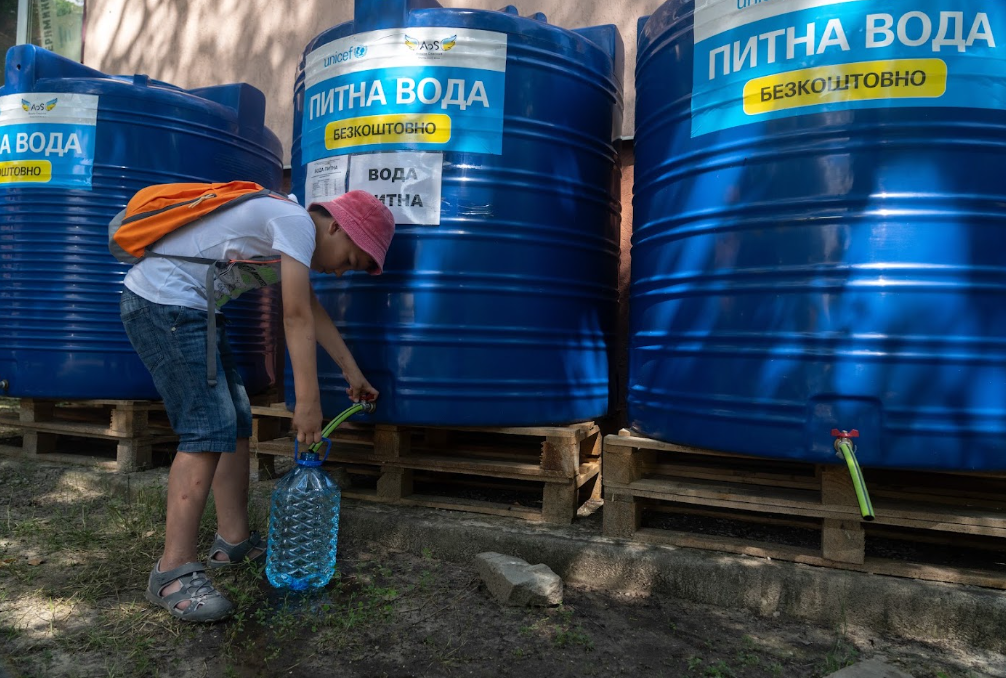
Photo: Nine-year-old Sasha collects drinking water from tanks that help residents during regular outages (Oleksii Filippov for UNICEF Ukraine)
Due to the threat of shelling, the family recently moved from the fifth floor of an apartment building to a private house. Here, the children have more space to play and spend time with their pets.
"In my free time, I also draw the lakes at Slovkurort, with their beautiful blue water. I really miss the lakes. We can't go there anymore, and it is dangerous to swim. Once I was at the beach when drones suddenly arrived. My brother and I hid behind a house, and when it was safe, we ran home," Sasha recalls, instinctively covering his head with his hands — just as he did during the drone attack on Slovkurort.
Slovkurort is one of Ukraine's oldest mud resorts. But it is now closed to visitors. As the city struggles to hold its position near the front line, the resort season is no longer possible. Large signs around the bodies of water warn of the danger.
"As for the situation in the city... While we were talking, three guided aerial bombs hit the city. So the situation is getting worse. The number of attacks is increasing, and drones are flying into the city more and more often," says Vadym Liakh, head of the Sloviansk City Military Administration.
At the same time, the city chief says municipal workers continue to keep Sloviansk running. Repair work is still underway even in the city center, where a 1.5-ton aerial bomb struck in April.
"There are currently 39,000 people living in the Sloviansk community, including 3,000 children. In some areas, mandatory evacuation of children has already been announced. People are indeed leaving. But many children still remain in the city. So municipal services, the hospital and the banking system continue to operate. All services are available. Life goes on," Vadym Liakh says.
He adds that even the maternity ward is still operating in Sloviansk.
Alternative water supply
While Sasha fills bottles at the water distribution point, work is in full swing on the outskirts of Sloviansk. Workers are digging trenches and laying pipes so that next month Sasha and hundreds of other families in the city will no longer face water shortages.
"There are still a great many people in the city, and disruptions to the water supply prevent us from providing them with a reliable supply. That's why we are building this alternative water intake together with UNICEF. It will allow us to purify water and provide people with clean drinking water," says Oleksandr Pohrebnyi, an engineer at the Sloviansk Water Utility, as he walks past bulldozers working on the construction site.
Municipal workers at the Sloviansk Water Utility have had to reinforce some of their equipment with metal mesh to protect it from drone attacks.
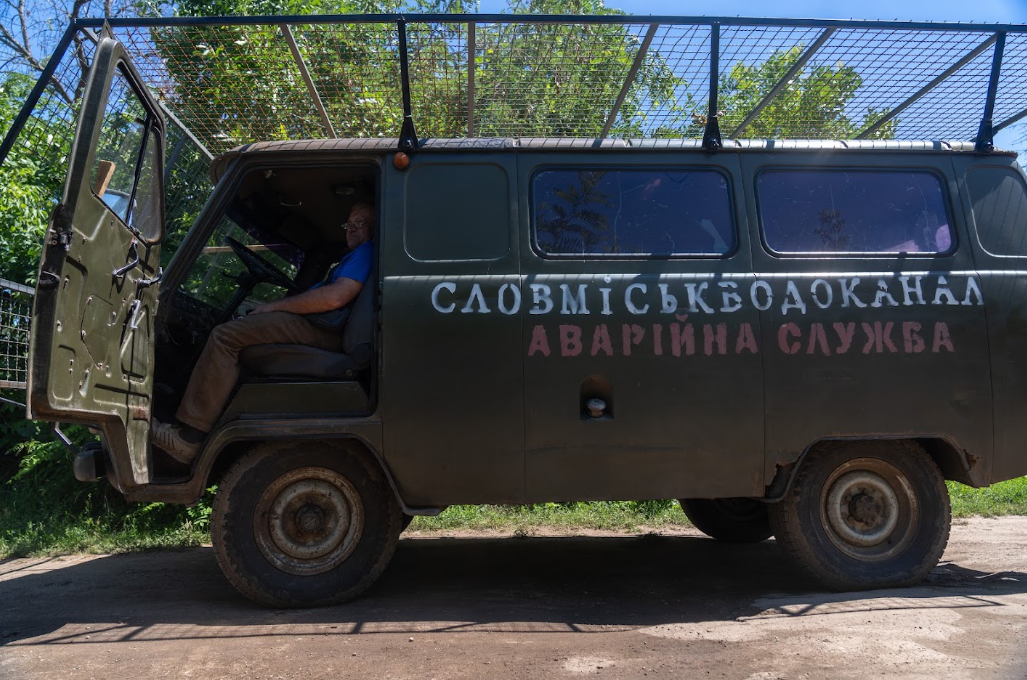
Photo: Some of the Sloviansk Water Utility's equipment had to be reinforced with metal mesh to protect it from drone attacks (Oleksii Filippov for UNICEF Ukraine)
"No one can guarantee safety here. But we will keep working as long as people need us. As long as there are people in the city, Sloviansk will stay alive. And for that, we need water and electricity," the engineer says.
As long as there is a home
After returning home with his mother, Sasha's first task is to fill bowls with water for his pets.
"I live here with a cat, two male cats, a parrot and a big dog. I'm very close with my parrot, Zhora," says the smiling boy, who dreams of becoming an astronaut one day and seeing Earth from space.
His mother Maria is happy that her sons love animals so much, but at the same time, she worries about the possibility of evacuation.
"The situation is getting harder and harder this summer. Before, there were no drones or guided aerial bombs, but now new types of weapons have appeared, and everything is being fired at us. If mandatory evacuation is ordered in our area, of course, we will leave. And it will be very difficult for everyone: leaving our jobs and home, taking my elderly mother, the children and the animals with us," the woman says.
As she watches Sasha play with his brother, her biggest dream is that the war will not take her sons' childhood or home away from them.
With the support of partners such as the European Union, the United States and the UK government, UNICEF continues to provide comprehensive support to ensure children's right to safe water, sanitation and hygiene, even in the most dangerous regions.
Earlier, we reported that on July 24, Russian forces dropped aerial bombs on Sloviansk. The attack killed local residents and injured others, while residential buildings, a business and a diplomatic mission were damaged.